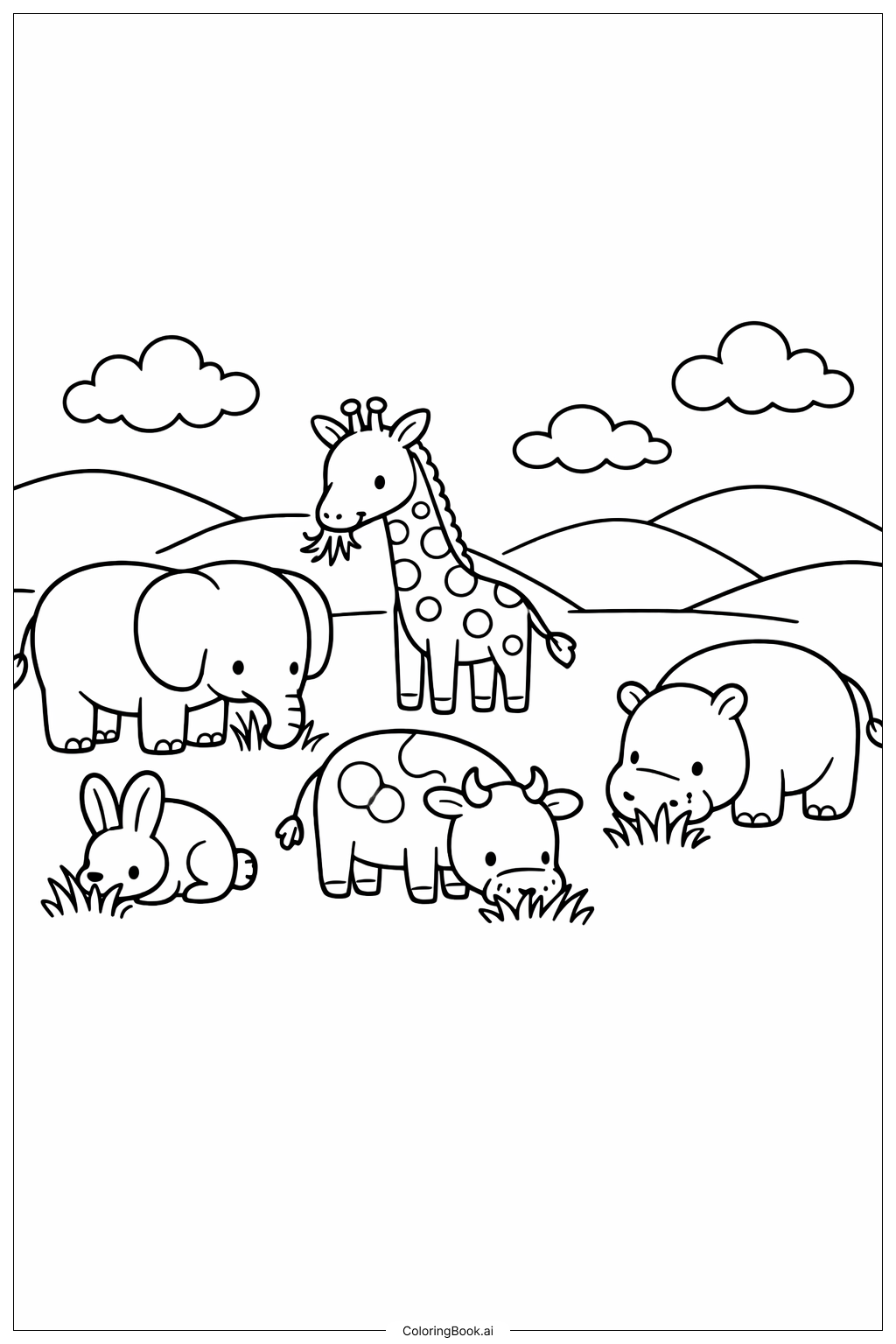
Coloring tips: How to color Jurassic Park Herbivore Meadow coloring page well?
Start with the sky. Use light blue for the open sky and soft white for the clouds. For the meadow, mix several shades of green — bright green for fresh grass, darker green for ferns, and olive green for distant trees. Give the Brachiosaurus warm gray or sandy brown tones with lighter patches on the belly. Color the Triceratops in earthy green or dark gray, with a tan or cream-colored frill. Use warm browns and deep greens for the Parasaurolophus. Add yellows, oranges, and soft purples to the flowers and shrubs to create a lively, colorful scene. The stream can be pale blue or turquoise. Use tan or gray for the Jurassic Park gates in the background. Don't be afraid to mix and experiment — prehistoric landscapes are full of color!
Coloring challenges: Which parts are difficult to color and need attention for Jurassic Park Herbivore Meadow coloring page?
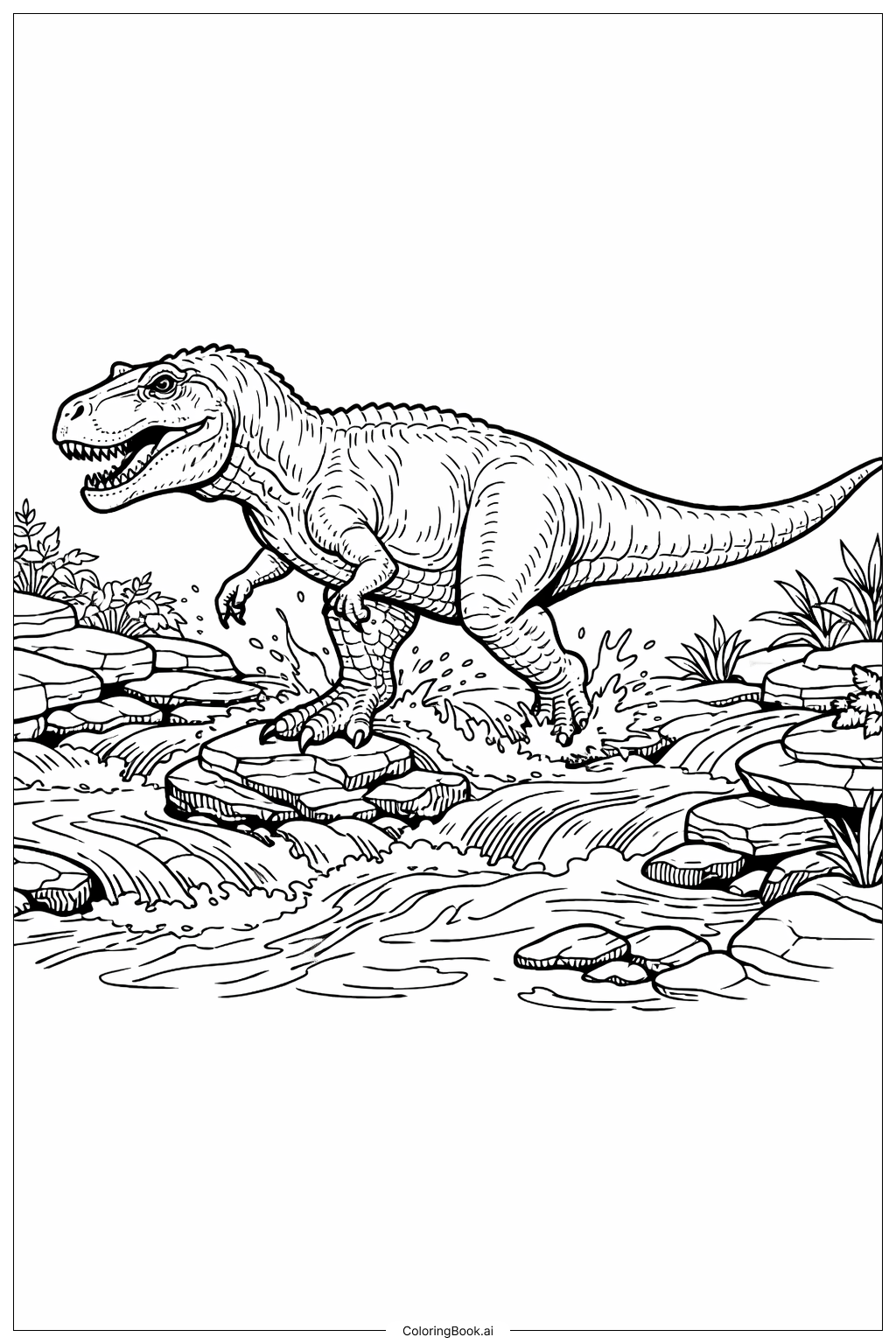
• Dinosaur Skin Texture: Each dinosaur has a unique skin texture with subtle scales, wrinkles, and body folds. Capturing these details requires patience and careful shading. Try using a base color first, then add darker tones along the folds and lighter highlights along raised surfaces to give each animal a three-dimensional look.
• Overlapping Layers of Vegetation: The meadow is filled with ferns, grasses, broad leaves, and vines that overlap and intertwine. Keeping each plant visually distinct while maintaining a natural, layered look is challenging. Use varying shades of green and leave small areas lighter to separate individual leaves from one another.
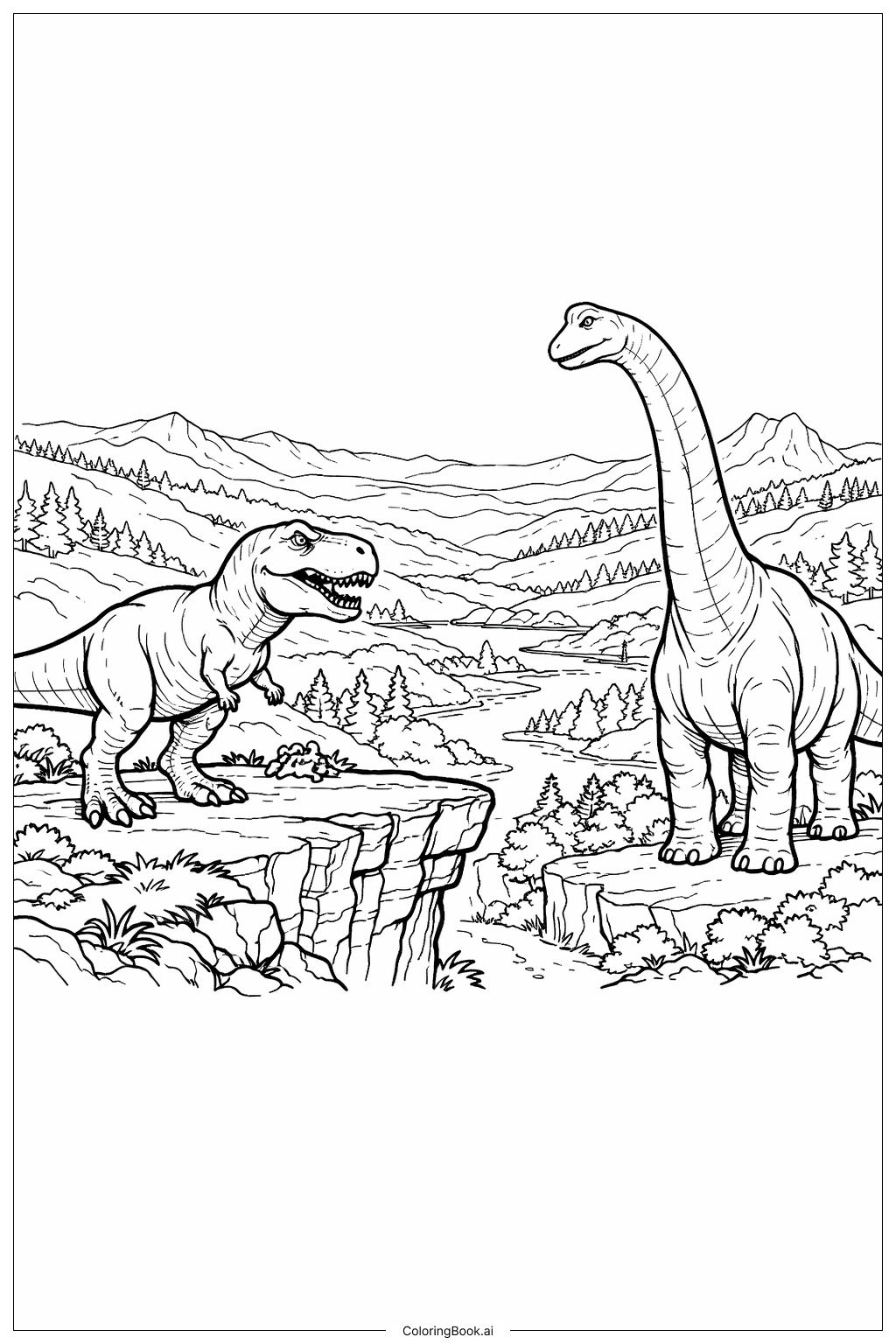
• Multiple Characters in One Scene: With several large dinosaurs sharing the same space, it can be tricky to balance the colors so no single dinosaur dominates the scene. Plan your color palette in advance and make sure each dinosaur has a slightly different tone or accent color to help them stand out individually.
• Background Depth and Distance: The scene includes both foreground plants and a distant background with trees and the park gates. Achieving a sense of depth requires using lighter, less saturated colors in the background and richer, more vibrant colors in the foreground. This technique, called atmospheric perspective, can be challenging for beginners.
• Water Reflection in the Stream: The calm stream running through the meadow may reflect colors from the surrounding plants and sky. Rendering water believably means blending soft blues and greens with wavy, broken strokes rather than flat, solid color, which requires a steady and controlled hand.
Benefits of coloring books: Advantages of drawing Jurassic Park Herbivore Meadow coloring page
Coloring this Jurassic Park Herbivore Meadow scene offers a wonderful mix of fun, learning, and relaxation for kids and adults alike. For younger children, filling in the large dinosaur bodies and simple shapes builds fine motor skills and hand-eye coordination. Choosing colors for each dinosaur encourages creative thinking and helps kids learn about color mixing and contrast.
For older kids and teens, the detailed plants, textures, and layered background provide a satisfying challenge that builds focus and patience. Working through a complex scene teaches them how to plan and organize a composition — useful skills both in art and everyday life.
For adults, this scene offers a calming escape from daily stress. The repetitive motion of coloring is known to reduce anxiety and promote mindfulness. The prehistoric setting also sparks imagination and curiosity about natural history and the world of dinosaurs.
Coloring scenes like this one also encourages kids to ask questions about real dinosaurs — what they ate, how they lived, and what the world looked like millions of years ago. That natural curiosity can lead to a love of science and learning. Best of all, finishing the page gives colorists of every age a real sense of pride and accomplishment.