Coloring tips: How to color Jurassic Park Fossil Museum coloring page well?
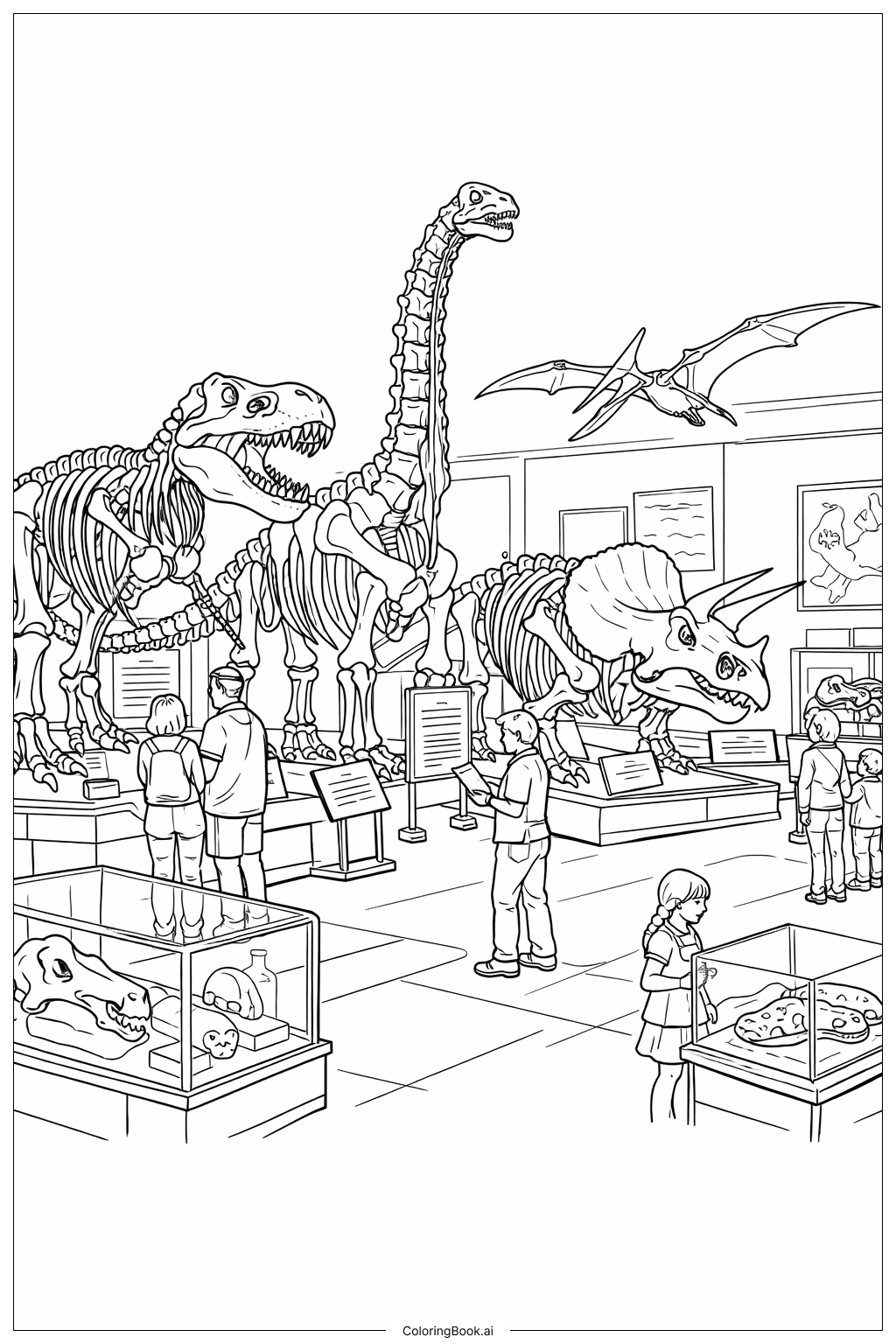
You can use warm browns, tans, and creams to color the dinosaur fossils, showing their ancient, weathered texture. Try greys and muted yellows for the bones to give them a realistic stone look. Use darker shades like deep greens or blues for the background walls to make the fossils stand out. The museum sign can be colored in bright yellows or reds to catch the eye. The glass cases might look nice with light blues or soft greys to suggest reflection. For the museum floor and benches, neutral tones like sandy beige or light wood colors will work well. Adding small touches of green plants or museum lighting with soft yellows can add life to the scene. This range of colors will help bring the Jurassic Park Fossil Museum to life in your coloring.
Coloring challenges: Which parts are difficult to color and need attention for Jurassic Park Fossil Museum coloring page?
• Dinosaur Skeleton Details: The bones have many complex shapes and tiny ridges that require careful coloring to highlight their texture without losing detail.
• Background Contrast: Coloring the fossils clearly while making the museum background darker can be tricky to balance so the displays stand out well.
• Glass Cases and Reflections: Capturing the transparent quality of glass with subtle highlights needs attention to shading and blending colors smoothly.
• Text and Signage: The Jurassic Park Fossil Museum sign uses stylized letters that need neat coloring to stay clear and readable.
• Multiple Small Fossils: The smaller bones and fossils packed into cases demand precise coloring to avoid blurring the fine details and preserving their distinct shapes.
Benefits of coloring books: Advantages of drawing Jurassic Park Fossil Museum coloring page
Coloring this image helps improve focus and fine motor skills by requiring attention to small details in the dinosaur skeletons and museum elements. It encourages creativity through choosing realistic and imaginative colors for the fossils and the museum setting. This activity also fosters an interest in natural history and paleontology, making learning fun. Children and adults can develop patience as they carefully fill in the complex shapes and textures. Finally, completing the picture brings a sense of accomplishment and pride in showcasing the ancient world of Jurassic Park in their own colorful way.