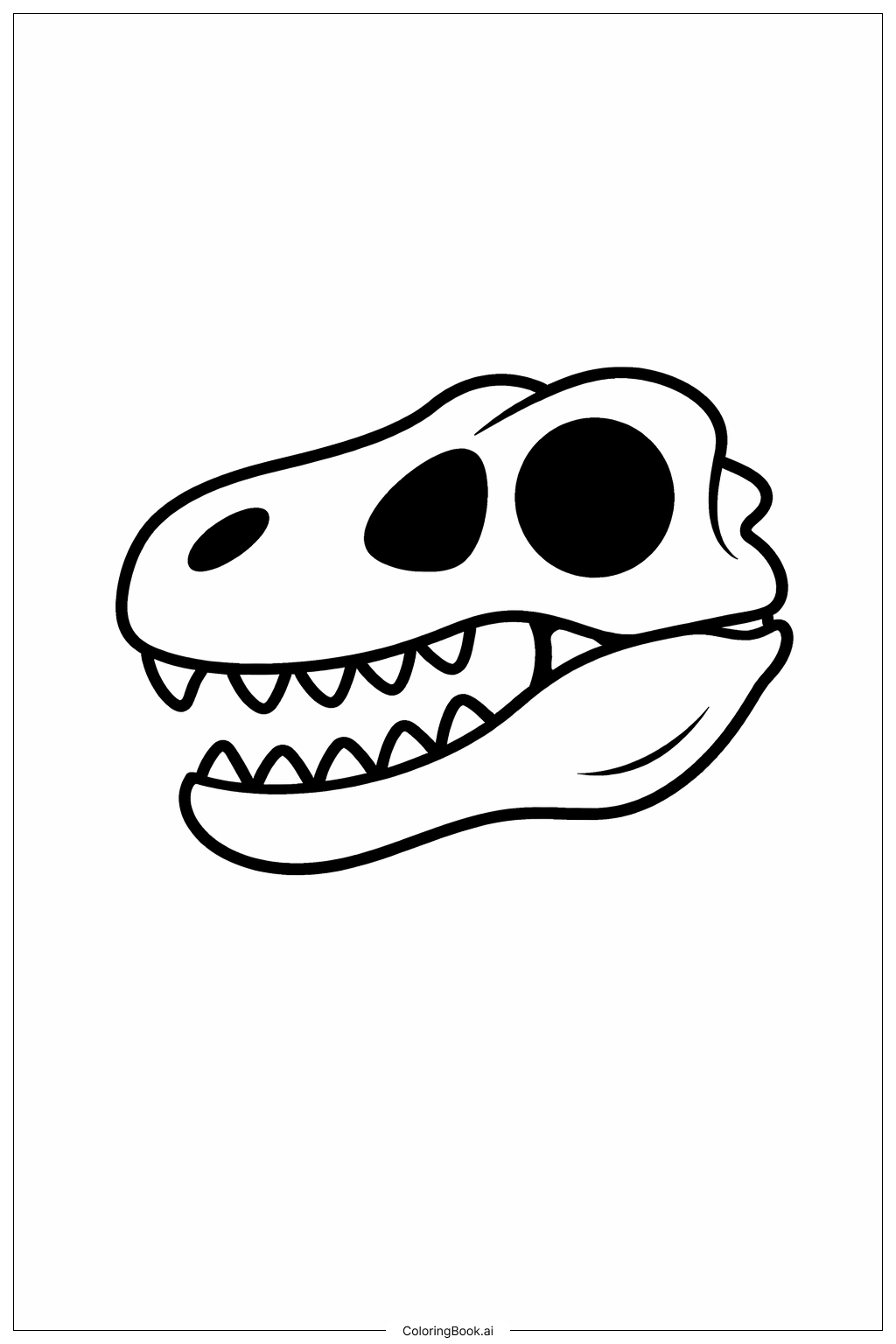
Coloring tips: How to color Jurassic Park Dino Skull coloring page well?
Try using different shades of earthy colors like browns, tans, and grays to show the ancient, fossilized effect of the dinosaur skull. You can add darker colors inside the eye sockets and the spaces between the teeth to create shadow and depth. For a fun touch, use lighter tones or soft yellows on some bones to highlight the parts catching sunlight or dust. To make the skull stand out, consider using a green or jungle-themed background that reminds you of Jurassic Park’s lush environment. Feel free to add colorful details to cracks or texture areas for extra creativity.
Coloring challenges: Which parts are difficult to color and need attention for Jurassic Park Dino Skull coloring page?
• Fine Bone Details: The skull has many small cracks and edges that require careful coloring to keep the details clear and not messy. Staying inside the lines can be challenging, especially around the teeth and nose holes.
• Shading Depth: Making parts of the skull look three-dimensional needs careful use of light and dark colors. Beginners might find it hard to balance shadows around the eyes and jaw.
• Texture Representation: The rough, weathered look of the fossil demands blending colors smoothly. It takes patience to show the worn textures without making the image look flat.
• Teeth Arrangement: The uneven, sharp teeth are close together. Coloring each tooth distinctly can be tricky as it requires precise, small strokes.
• Contrast with Background: Choosing colors that help the skull stand out from the backdrop can be difficult, especially when working with earth tones that may blend too much.
Benefits of coloring books: Advantages of drawing Jurassic Park Dino Skull coloring page
Coloring this Jurassic Park Dino Skull image helps improve fine motor skills through careful attention to small details. It encourages focus and patience as you work on shading and texture. This activity also sparks creativity by letting you imagine ancient fossils in new, colorful ways. Exploring different shades and shadows boosts understanding of light and form, making you a better artist. Additionally, coloring dinosaur images can increase interest in science and history, making learning fun while you enjoy the art. It’s a great way to relax and connect with the fascinating world of Jurassic Park.