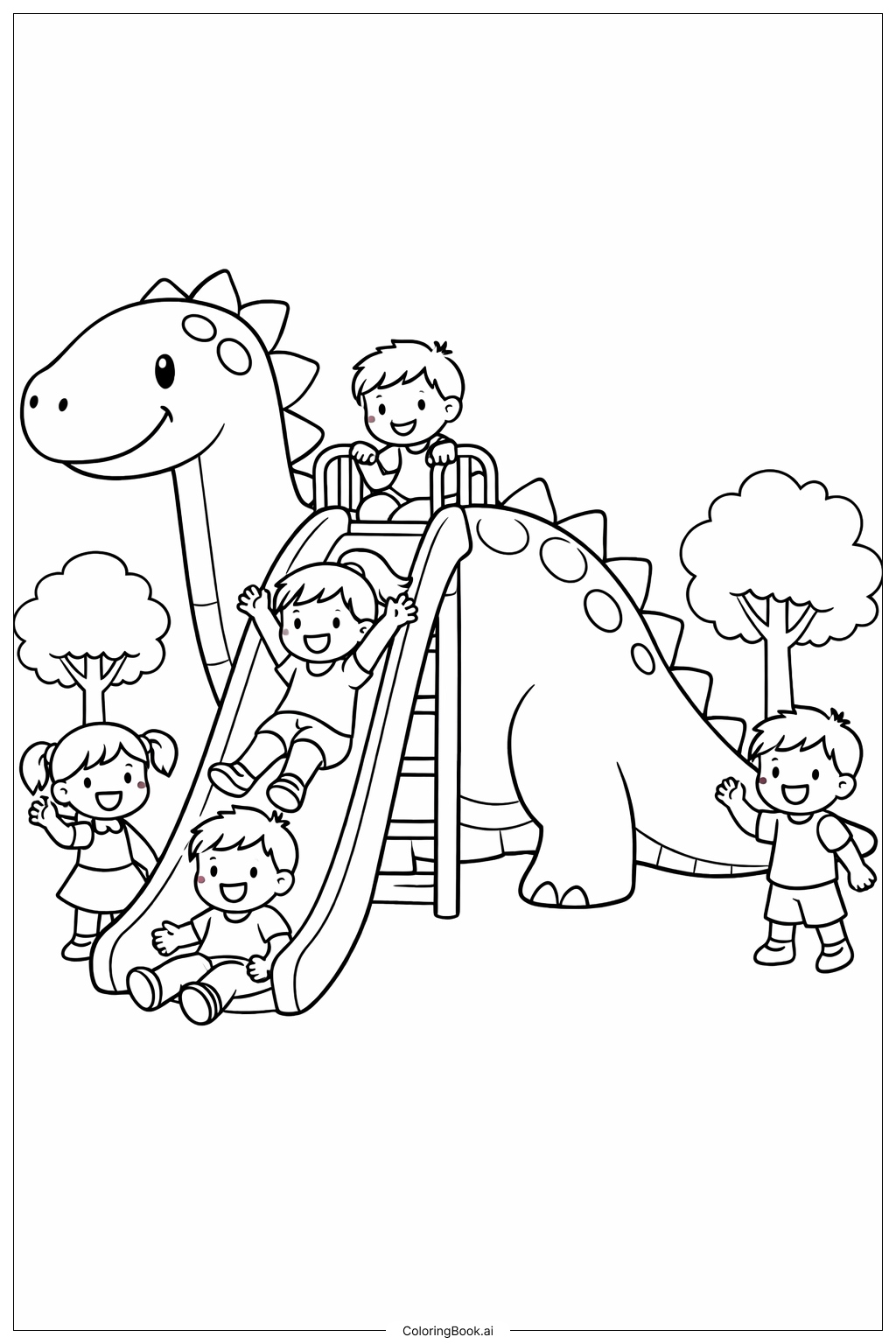
Coloring tips: How to color Jurassic Park Dino Playground coloring page well?
Start with the dinosaurs, since they are the main focus. Use classic greens and earthy browns for the T-Rex and Velociraptor. Give the Triceratops a bold color like orange or purple to make it stand out. The Brachiosaurus looks great in soft olive green or tan. For the playground equipment, try bright primary colors like red, yellow, and blue to give it a fun, cheerful look. Use rich greens for the ferns and trees in the background, and add pops of color with tropical flowers in pink, orange, and yellow. A light blue sky with fluffy white clouds works well as a backdrop. Younger kids can keep things simple with solid colors, while older kids and teens can try blending and shading to add depth to the dino scales and playground textures. There are no rules here, so feel free to get creative with unusual color choices and make this Jurassic Park scene totally your own.
Coloring challenges: Which parts are difficult to color and need attention for Jurassic Park Dino Playground coloring page?
• Complex Dinosaur Textures: Each dinosaur has a scaly or bumpy skin texture made up of many small shapes and patterns. Staying inside the lines while adding detail takes patience and a steady hand. Younger colorists may find it easier to use broad strokes, while older kids can try using colored pencils to layer tones and create a realistic scaly effect.
• Overlapping Characters and Objects: The playground equipment and dinosaur figures overlap throughout the scene. This means you need to decide which colors go where carefully, so the different elements do not blend together visually. Planning your color palette before you start can help keep each section distinct and easy to read.
• Busy Background Details: The tropical trees, ferns, and flowers fill the background with many small shapes. Coloring these areas without smudging the foreground figures requires care. Working from the background forward, and letting each section dry before moving on, helps keep the image clean and organized.
• Expressive Facial Features: The dinosaurs have detailed eyes, mouths, and expressions. These small facial features are tricky to color neatly, especially around the eyes and teeth. A fine-tip marker or sharpened colored pencil works best for these areas to avoid going outside the lines.
• Balancing Colors Across the Scene: With so many characters and elements, it can be hard to balance the overall color scheme. If too many bright colors are placed next to each other, the image can feel overwhelming. Mixing bold colors with softer neutral tones helps create a pleasing, balanced result.
Benefits of coloring books: Advantages of drawing Jurassic Park Dino Playground coloring page
Coloring this Jurassic Park Dino Playground page offers a wide range of benefits for kids of all ages. First, it helps develop fine motor skills. Filling in the detailed dinosaur scales, playground equipment, and tropical plants all require careful, controlled hand movements that strengthen grip and improve pen or pencil control over time.
Second, this scene sparks creativity and imagination. Kids get to choose their own colors and bring their own version of a dinosaur world to life, which builds confidence and encourages creative thinking.
Third, coloring is a great way to practice focus and concentration. Working through a busy, detailed scene like this one teaches children to slow down, pay attention to details, and stick with a task from start to finish.
Fourth, there is a learning element too. Kids naturally become curious about the different dinosaurs in the image, which can lead to questions and conversations about science and prehistoric life.
Finally, completing this page gives kids a real sense of achievement. Finishing a detailed coloring page builds self-esteem and gives young artists something they can be proud to share or display. It is a relaxing, screen-free activity that is both fun and genuinely good for development.