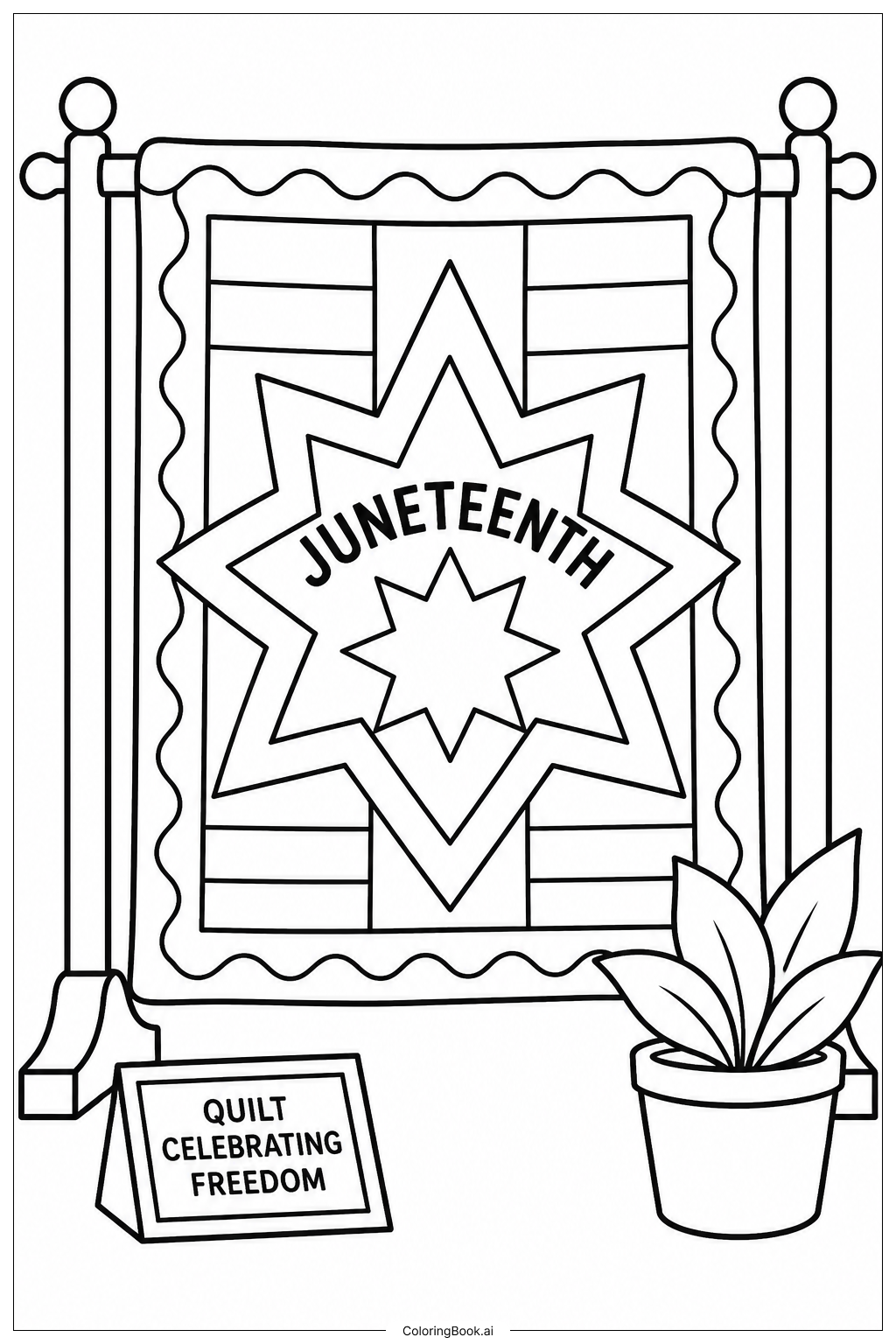
Coloring tips: How to color Juneteenth Quilt Display coloring page well?
Start by picking warm, bold colors that celebrate Juneteenth — reds, greens, blacks, and golds are perfect choices. These colors are deeply connected to African American heritage and freedom.
Color each quilt block a different combination so the overall quilt looks bright and lively. Try alternating dark and light shades to make the geometric shapes pop.
For the stars and diamond patches, use yellow or gold to make them shine. The triangles and borders can be deep red or forest green.
Color the sunflowers bright yellow with brown or orange centers. Give the leaves rich green tones.
For the wooden frame or fence, use warm browns or tans. The background sky can be a soft blue or golden sunset shade to set a festive outdoor mood.
If you want, add small details like dots or stripes inside the quilt patches to make each one feel extra special. Take your time and enjoy filling every section — there is no wrong way to celebrate freedom with color!
Coloring challenges: Which parts are difficult to color and need attention for Juneteenth Quilt Display coloring page?
• Complex Quilt Geometry: The quilt is made up of many small geometric blocks — stars, diamonds, triangles, and squares — all arranged in a precise grid. Staying inside the fine lines of each tiny shape requires a steady hand and careful attention. Young or beginner colorists may find it tricky to switch tools frequently between small sections without accidentally going outside the borders.
• Maintaining Color Balance Across the Quilt: Because the quilt has many individual patches, it can be hard to plan a color scheme that looks balanced and harmonious across the whole piece. Without some planning ahead, certain areas may end up too dark or too similar in tone, making the quilt look flat instead of lively and dynamic.
• Decorative Border and Ribbon Details: The festive banners, ribbons, and decorative trim surrounding the quilt display have intricate repeating patterns. These small decorative elements are closely spaced, making it difficult to color them neatly without smudging neighboring areas, especially when using markers or wide-tipped crayons.
• Flower and Leaf Layering: The sunflowers and leaves around the scene have overlapping petals and layered details. Deciding which parts to shade lighter or darker to create depth takes some practice. Getting the shading right helps the flowers look full and three-dimensional rather than flat.
• Background Space Management: The outdoor background needs to feel open and airy without overwhelming the quilt as the main focus. Choosing the right colors and keeping the background lighter than the quilt itself requires thoughtful color control, which can be a challenge for younger colorists still developing their technique.
Benefits of coloring books: Advantages of drawing Juneteenth Quilt Display coloring page
Coloring this Juneteenth Quilt Display page offers a wonderful mix of creative and educational rewards for children and families alike.
Learning through art: As kids color each quilt patch, they naturally connect with the history and meaning of Juneteenth — America's celebration of freedom and African American heritage. It sparks curiosity and meaningful conversations.
Building fine motor skills: The many small geometric shapes in the quilt require careful, controlled coloring. This steady, precise work strengthens hand muscles and improves pencil control, which directly supports handwriting development.
Exploring color theory: Planning a beautiful quilt means thinking about which colors work well together. Kids practice matching, contrasting, and balancing colors — a fun introduction to basic design thinking.
Encouraging focus and patience: Completing a detailed image like this takes time and attention. Sitting with a complex coloring page helps build concentration and a healthy sense of accomplishment when finished.
Celebrating culture and identity: For children of all backgrounds, this page is a joyful way to honor African American traditions and community pride. It helps build empathy, appreciation for diversity, and an understanding of history through a creative, accessible activity.
Most of all, it is simply fun — a relaxing, screen-free way to create something colorful and meaningful to display or share.