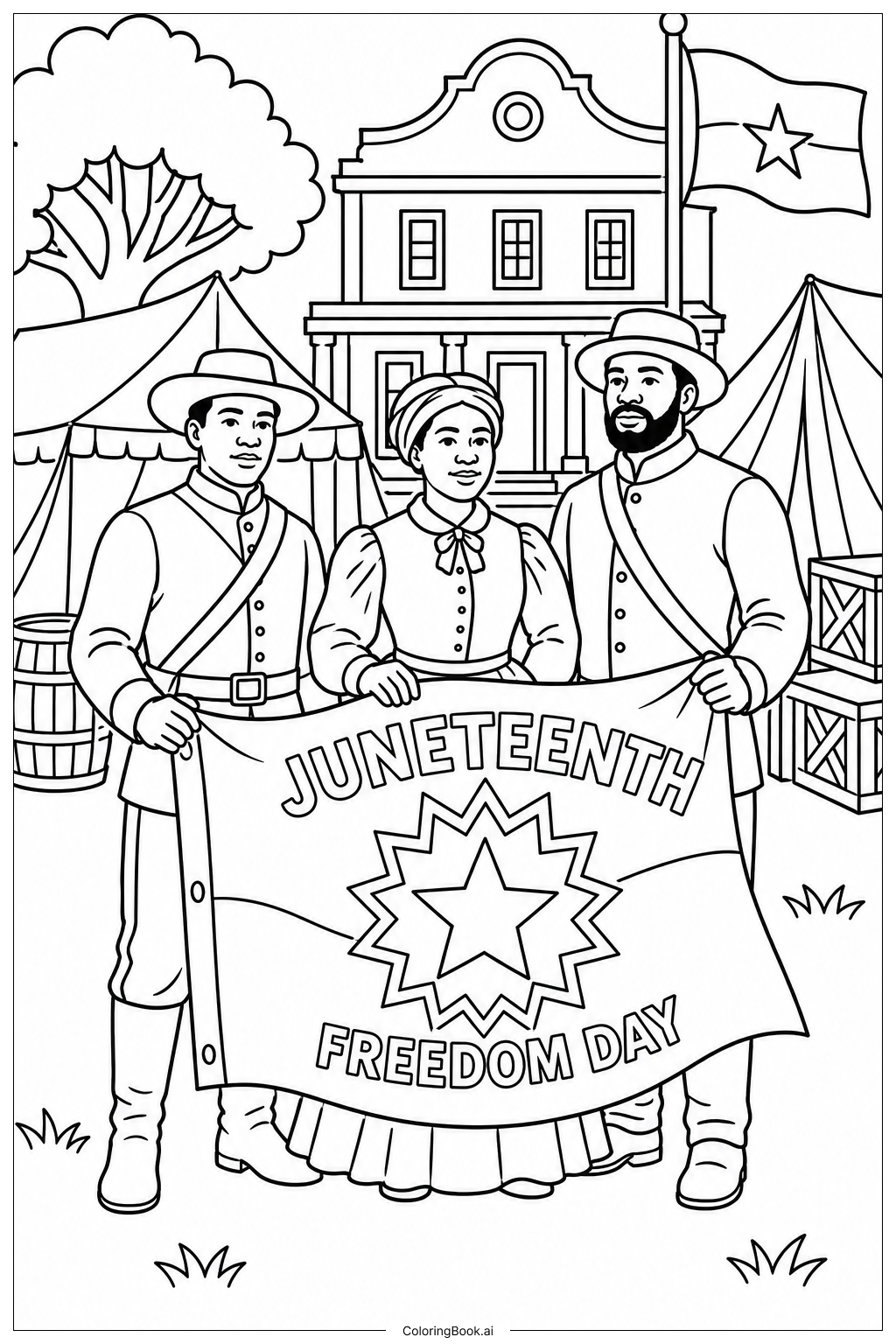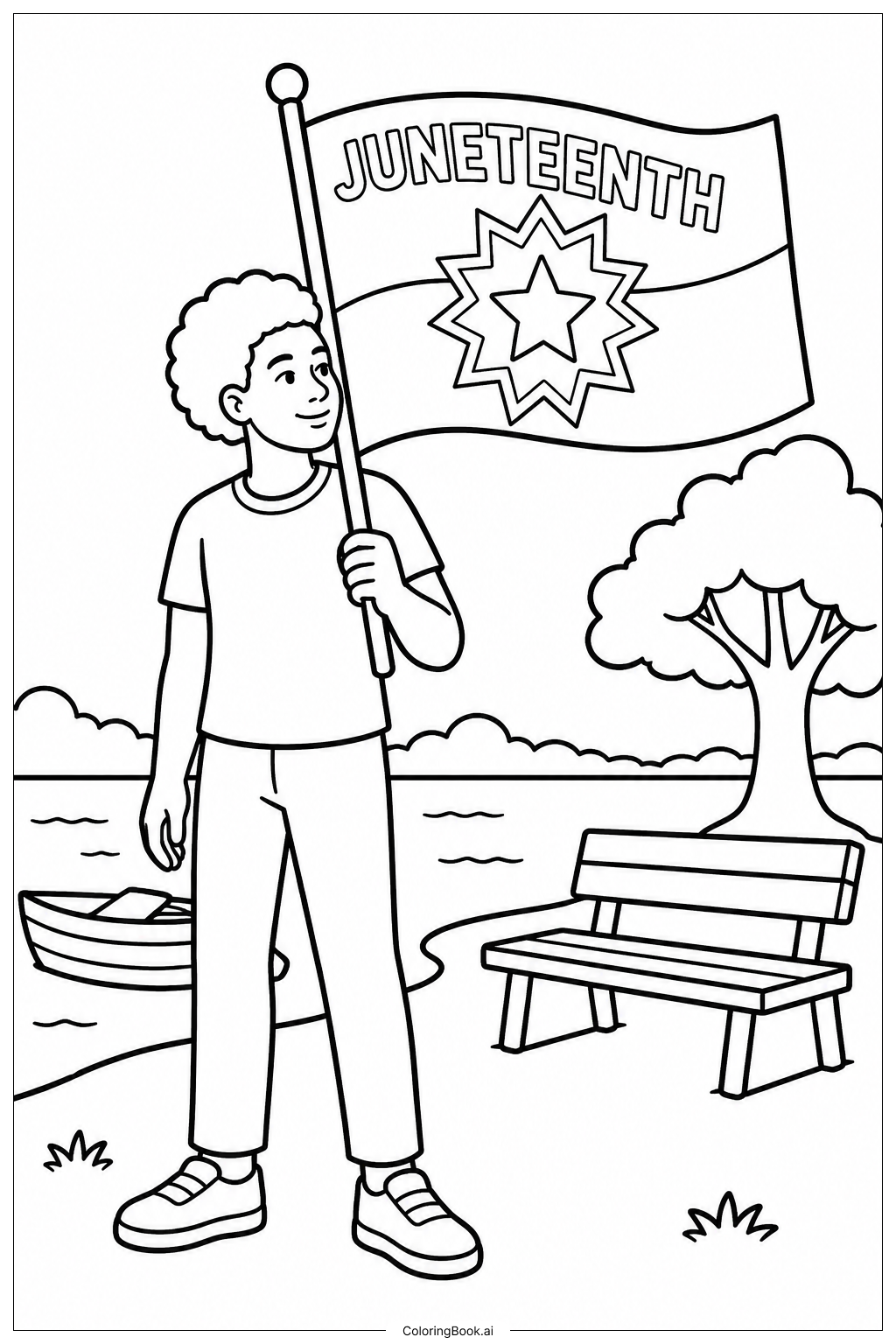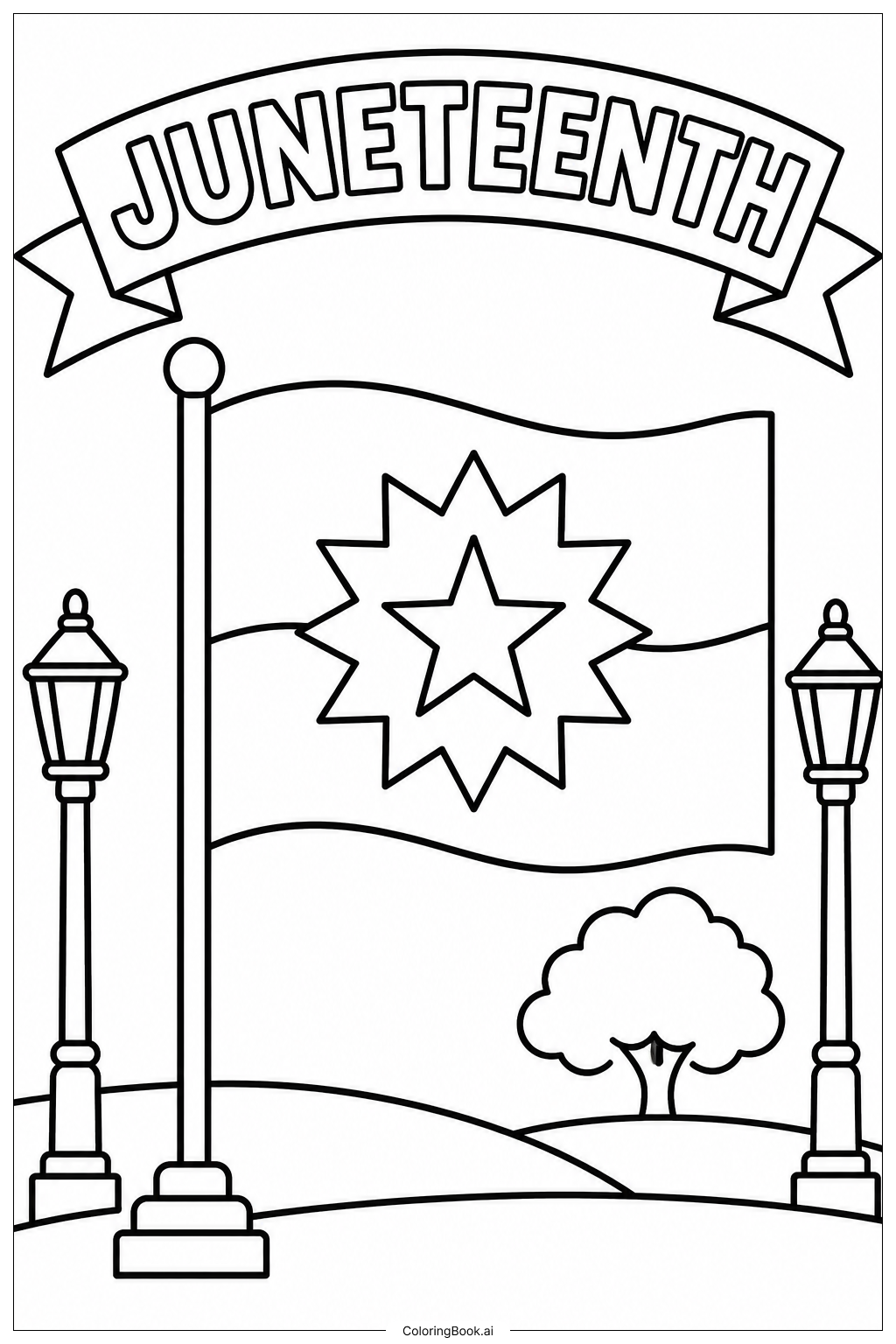
Coloring tips: How to color Juneteenth Flag School Assembly coloring page well?
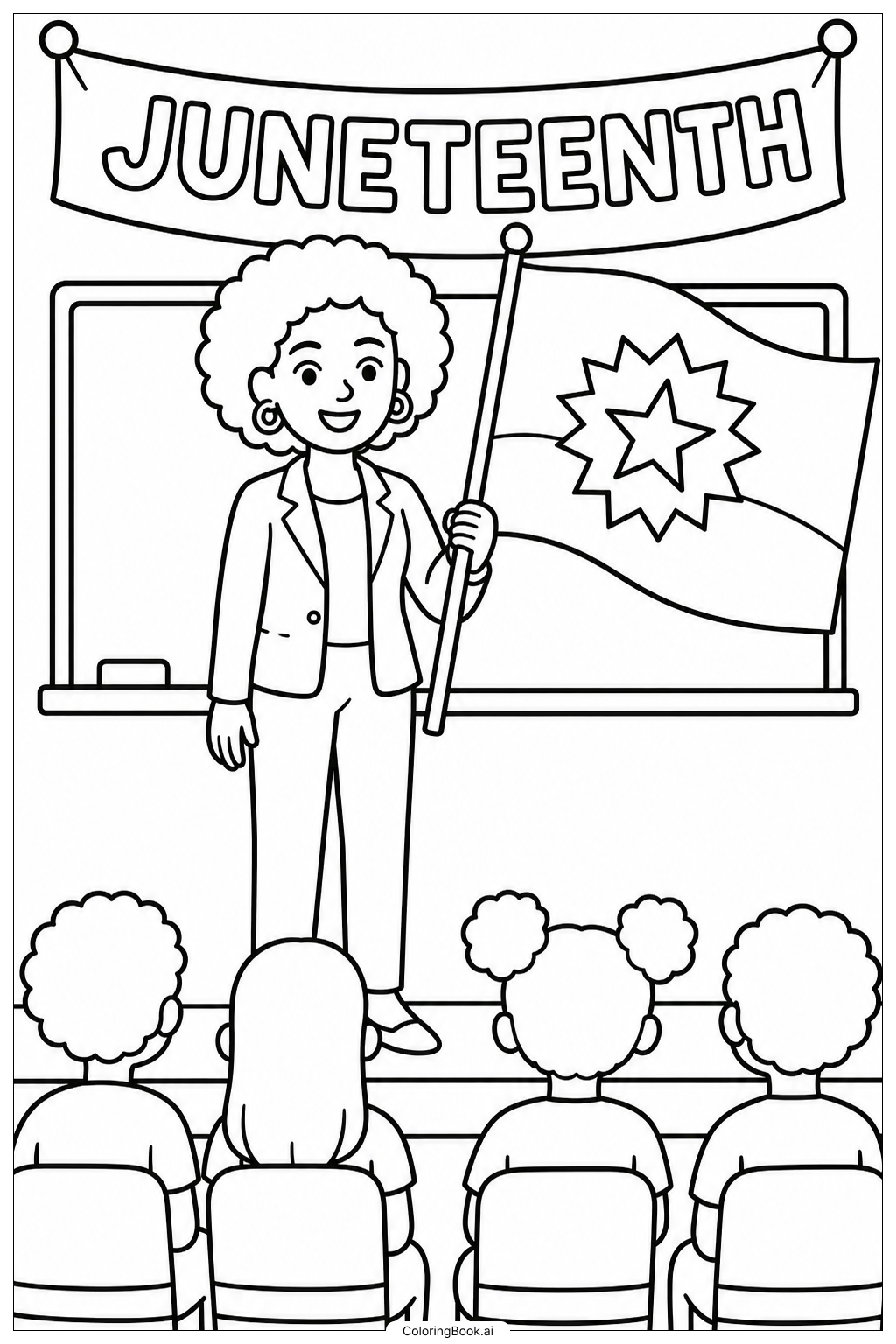
For coloring this image, focus on using bright and bold colors to highlight the celebration mood. The Juneteenth Flag can be colored with its traditional colors: a deep blue background, a golden star in the center, and radiant red and yellow rays spreading outward. The children’s clothing can be colored in various shades to show diversity—use different colors for shirts, pants, and shoes to make the group lively and dynamic. The banner above the assembly can be colored with red, white, and blue or other patriotic colors. For the background, light tones like soft yellows or pastel blues will help the flag and people stand out. Don’t forget to color the skin tones using a range of browns, pinks, and peaches to reflect inclusivity. Keep the colors vibrant and neat for a joyful overall look.
Coloring challenges: Which parts are difficult to color and need attention for Juneteenth Flag School Assembly coloring page?
• Flag Details: The Juneteenth Flag has fine details including the star and multiple rays radiating from it. Staying within the lines for these parts can be tricky for younger children.
• Multiple People: There are many children shown close together, which means carefully coloring each figure without overlapping can be challenging.
• Clothing Variety: The children wear different styles of clothes, requiring attention to small sections like collars, sleeves, and shoes. This requires patience and fine motor control.
• Background Elements: The assembly setting has subtle decorations and a banner that can be hard to distinguish from the surroundings, needing concentration to color neatly.
• Color Balance: Balancing bright colors on the flag and costumes while keeping the background muted for contrast can be a complex decision for young artists.
Benefits of coloring books: Advantages of drawing Juneteenth Flag School Assembly coloring page
Coloring this image helps children learn about Juneteenth and the importance of freedom and unity in a fun way. It encourages focus and attention to detail through the flag’s patterns and the many children in the scene. Choosing diverse colors for skin tones and clothing promotes awareness of inclusion and respect for different cultures. The activity also builds fine motor skills as children carefully color small areas like the star and faces. Additionally, coloring a school assembly scene can inspire feelings of community and pride in heritage, making learning about history more engaging and meaningful.