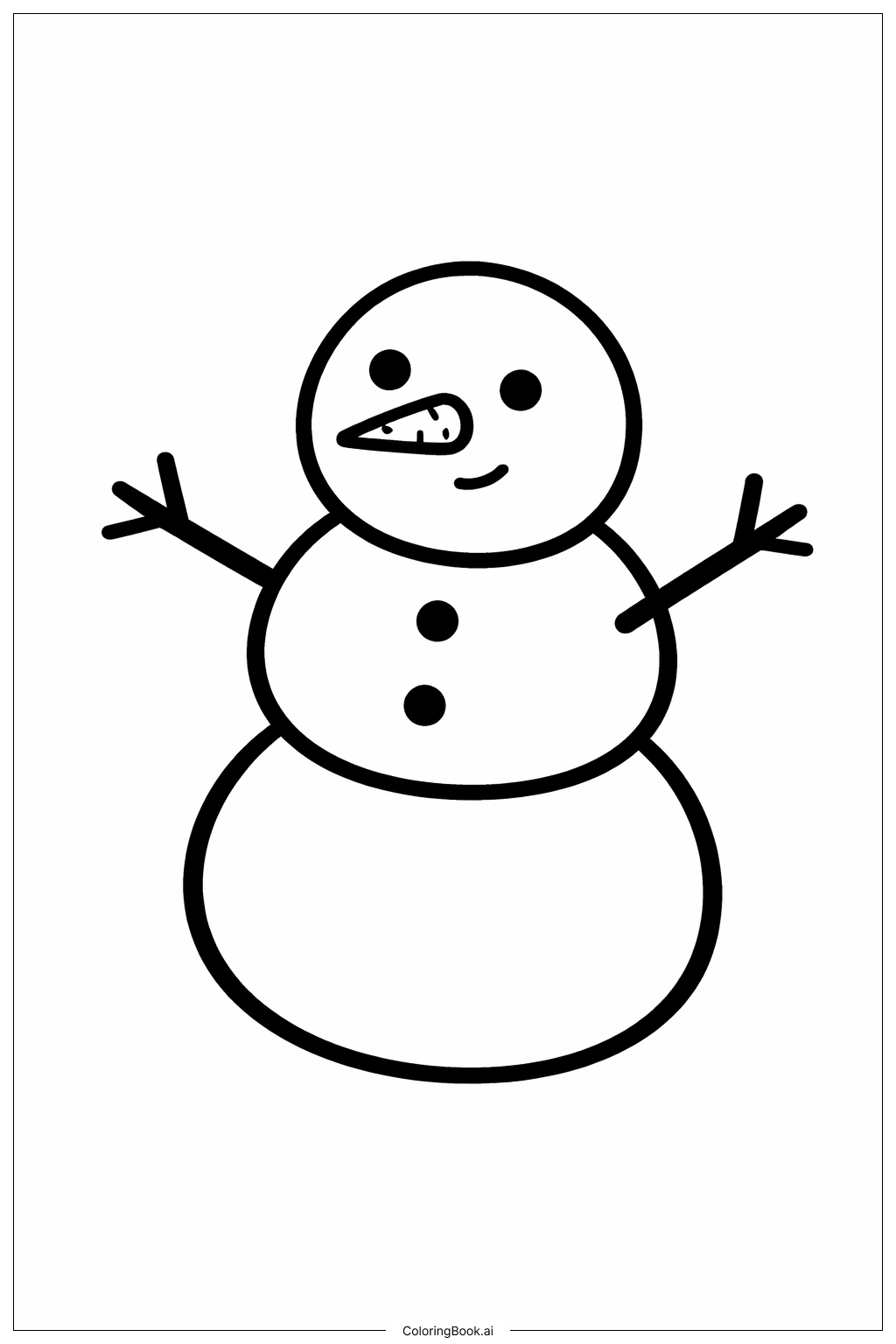
Coloring tips: How to color January Snowman coloring page well?
For this January Snowman, start with cool winter tones. Keep the snowman's body white or light blue with gentle gray shading to show dimension and roundness. Color the top hat black or dark gray, adding a colorful ribbon band in red, green, or blue. The scarf offers a wonderful opportunity for bright, cheerful colors like red, orange, purple, or striped patterns to add warmth to the cold scene. Make the carrot nose a vibrant orange. Use brown for the stick arms and dark gray or black for the coal eyes, smile, and buttons. For the background, try a soft blue or lavender sky to represent a winter day, or darker blue for evening. Leave snowflakes white or add hints of light blue and silver for sparkle. Add shadows beneath the snowman using light blue or gray to ground him in the snowy landscape.
Coloring challenges: Which parts are difficult to color and need attention for January Snowman coloring page?
• Smooth Shading on Rounded Surfaces: The snowman's three spherical body sections require careful shading to create a three-dimensional appearance. Children need to understand light sources and apply lighter pressure on highlighted areas while gradually increasing pressure toward shadowed regions. This circular shading technique can be challenging for younger colorists who may create uneven patches or harsh lines instead of smooth gradients.
• Tiny Snowflake Details: The numerous small snowflakes scattered throughout the background present precision challenges. Each snowflake has delicate points and intricate patterns that require steady hand control and fine motor skills. Staying within these small boundaries without smudging or overlapping into surrounding areas tests patience and coordination, especially for children still developing their grip strength and control.
• Texture Differentiation: This image contains multiple material types requiring different coloring approaches. The soft, fluffy scarf needs different handling than the smooth snowman body or the structured top hat. Creating convincing fabric folds in the scarf, the rigid texture of the hat, and the rough texture of stick arms all demand varied techniques like directional strokes, cross-hatching, or stippling that young artists are still learning to master.
Benefits of coloring books: Advantages of drawing January Snowman coloring page
Coloring this January Snowman offers wonderful developmental benefits for children. The large, simple shapes help younger children practice staying within lines and controlling their hand movements, building essential fine motor skills and hand-eye coordination. The snowman's rounded forms teach shading techniques and understanding of light and shadow, introducing basic artistic concepts in an accessible way. The winter theme connects to seasonal learning, helping children associate January with snow, cold weather, and winter activities. The cheerful, friendly character promotes positive emotions and creativity as children choose their own color combinations for the hat, scarf, and background. The repetitive elements like buttons and snowflakes provide calming, meditative coloring that reduces stress and improves focus. This page encourages patience and attention to detail while celebrating the magic of winter, making it both educational and enjoyable for children of various ages and skill levels.