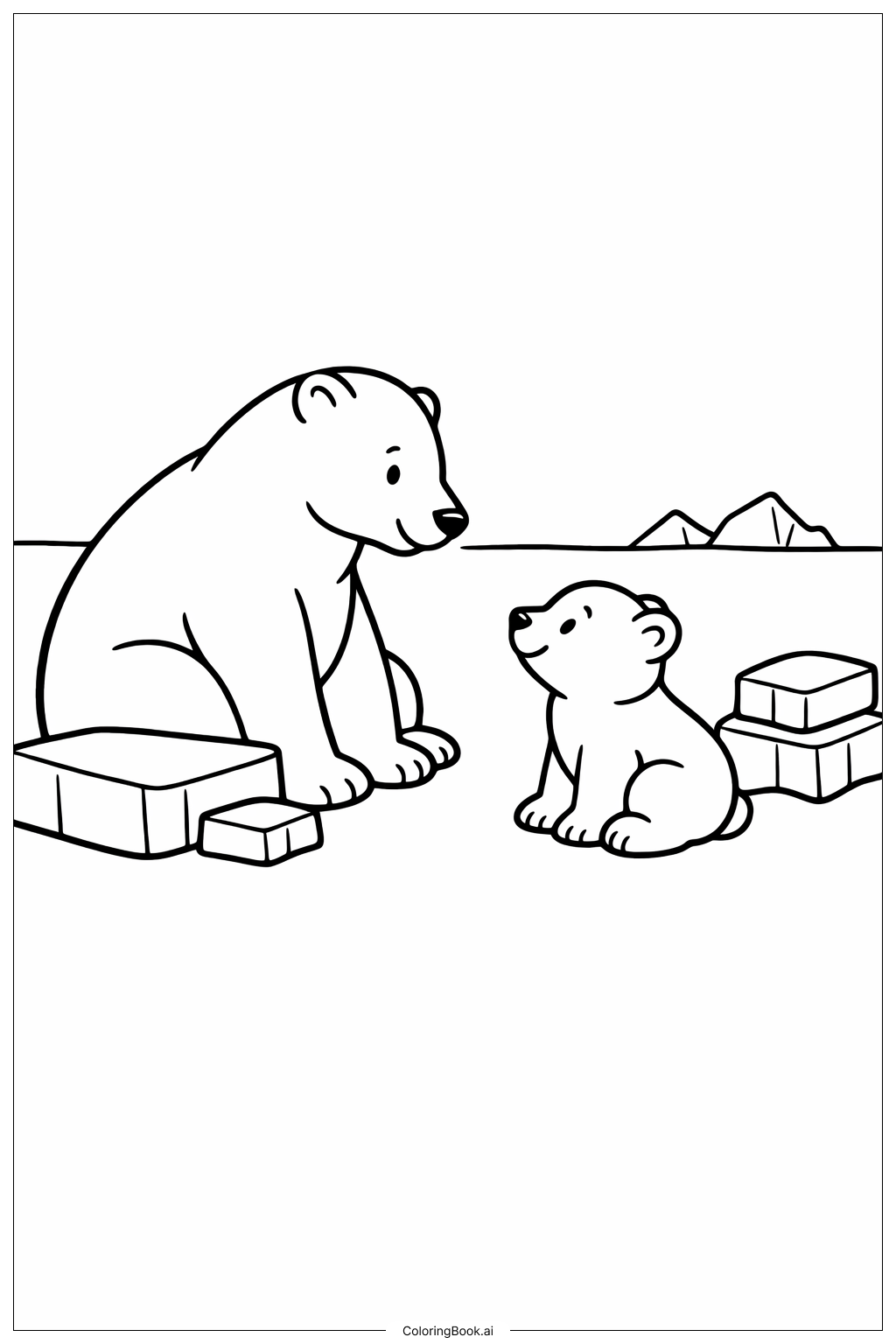
Coloring tips: How to color January Polar Bear Family coloring page well?
Use soft white and light gray shades for the polar bears to show their thick fur. Add light blue and icy tones for the ice blocks and snow to create a cold environment. For the background, choose pale blues and whites to reflect the Arctic sky and distant mountains. You can use shading to add dimension to the bears and ice blocks, making them look more realistic and three-dimensional. Remember to keep the colors soft and cool to match the chilly scene.
Coloring challenges: Which parts are difficult to color and need attention for January Polar Bear Family coloring page?
1. Coloring the polar bears can be tricky because they are mostly white. You need to use subtle shades of gray and blue to show their fur texture and shape without making them look flat. 2. The ice blocks require careful coloring with light shades and shadows to make them appear solid and icy. Blending colors gently is important here. 3. The background is mostly open space, so adding subtle gradients for the sky and distant mountains can be challenging but important. 4. Keeping the small details on the bears’ faces clear while coloring can be difficult as it's easy to color outside the lines by mistake.
Benefits of coloring books: Advantages of drawing January Polar Bear Family coloring page
Coloring this polar bear family helps improve focus and attention to detail, especially when shading the white fur and icy surroundings. It encourages patience as kids work carefully to create soft textures. This activity teaches children about winter animals and their cold habitats, adding an educational element. It also nurtures creativity through choosing cool colors and experimenting with light and shadows, making the icy Arctic scene come alive.