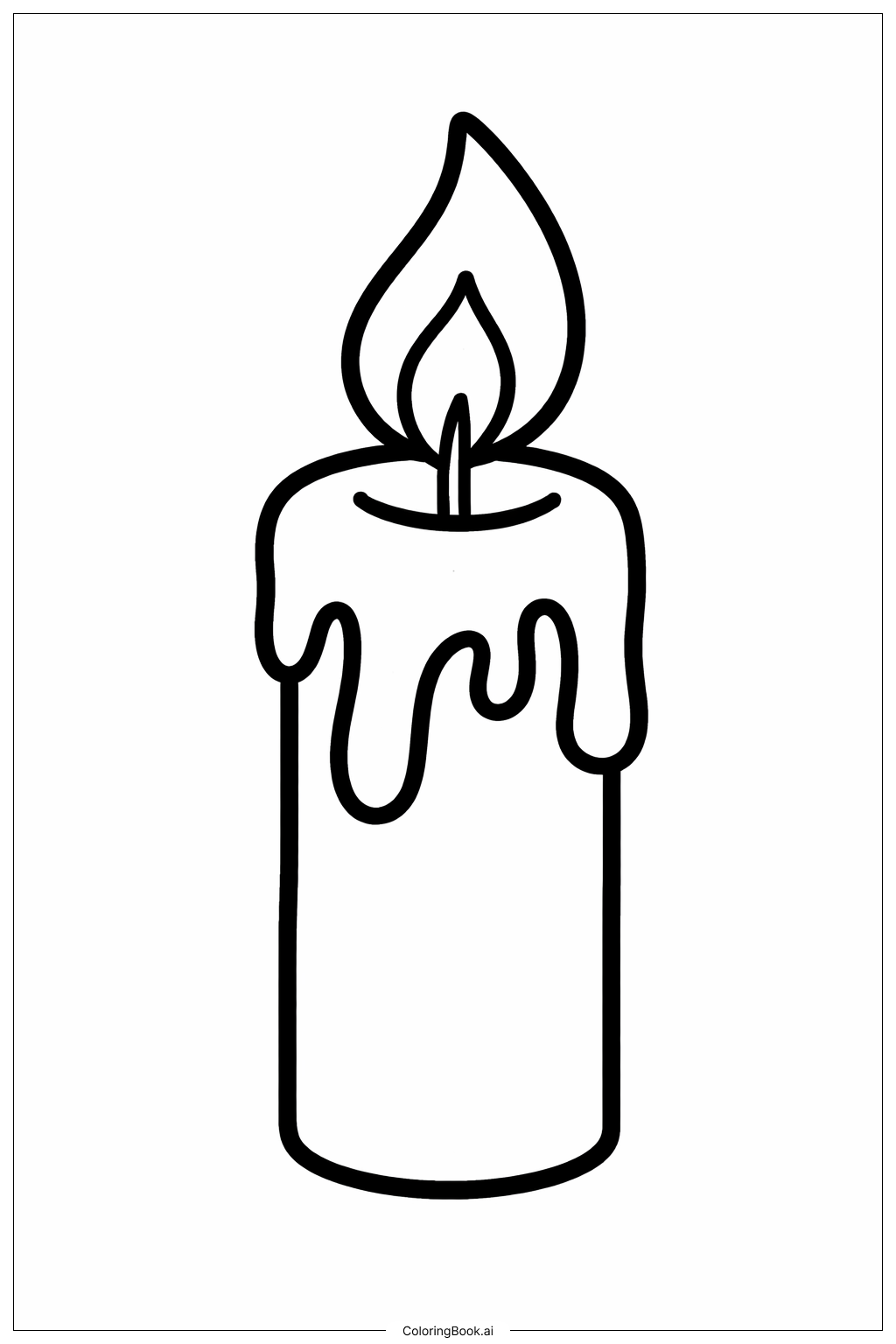
Coloring tips: How to color January Candle Light coloring page well?
Use warm colors like yellow, orange, and red for the flame to make it look bright and lively. For the wax, try soft colors like white, cream, or light blue to show its smooth and melting texture. You can add shadows with light gray or blue to give the candle a 3D look. Feel free to add sparkles or glow effects around the flame using bright colors. Experiment with different shades for the wax drips to make the candle appear more realistic and interesting.
Coloring challenges: Which parts are difficult to color and need attention for January Candle Light coloring page?
1. Coloring the flame can be tricky because it has two shapes inside each other. Using the right colors to show the heat and light effect takes careful blending.
2. The melting wax parts are curved and uneven, making it hard to color smoothly without going outside the lines.
3. Adding highlights and shadows to give the candle a round, 3D look requires gentle shading and color control.
4. Keeping the wick thin and neat while filling color can be difficult, especially for younger children.
5. Making the flame look like it is glowing needs careful use of bright and soft colors without overpowering the candle body.
Benefits of coloring books: Advantages of drawing January Candle Light coloring page
Coloring this candle helps children learn about light and shadows, improving their understanding of how colors can create glow and depth. It practices fine motor skills with the detailed shapes, especially the drips and flame. This image encourages creativity in using warm and cool colors to evoke feelings of warmth and calm. It teaches color blending and layering while offering a relaxed and focused coloring experience. Coloring the candle can also inspire children to think about cozy winter moments and the importance of light in dark times.