Coloring tips: How to color Inside Out Joy And Sadness Riding The Train coloring page well?
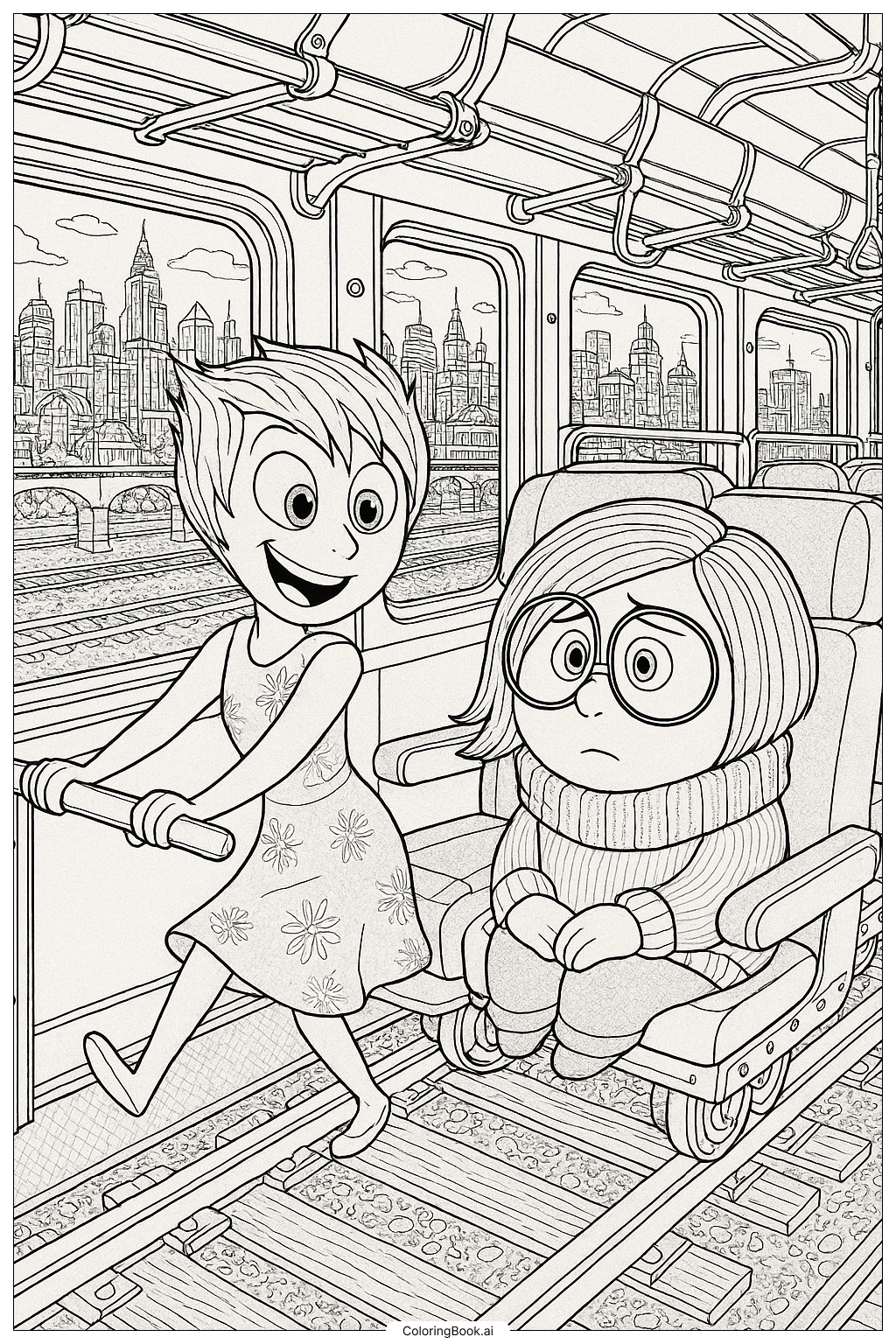
When coloring this page, start by using bright and cheerful yellows for Joy’s hair and skin to reflect her happy personality. Use soft blues and indigos for Sadness to capture her cool, calm demeanor. The train can be colored using deep reds or browns to give it a classic look, while the wheels and metallic parts can have shades of gray or silver. The steam clouds are perfect for light gray or pale white to add a smoky effect. For the background, soft greens and blues work well for grass and sky, making the scene lively and inviting for children to enjoy. Don’t be afraid to use bright colors for smaller details because this will make the image pop.
Coloring challenges: Which parts are difficult to color and need attention for Inside Out Joy And Sadness Riding The Train coloring page?
• Character Details: Joy and Sadness have contrasting color palettes which require careful attention to keep their unique looks distinct without blending them too much. Color transitions on their faces and hair must be smooth to maintain their cartoon style. • Steam Effects: Representing the steam coming from the train realistically can be tricky. Using very light shades and gentle strokes will help create a soft, puffy effect without overpowering other parts of the image. • Train Components: The wheels, smokestack, and train body have multiple overlapping parts that need precise coloring to avoid confusion. Balancing darker shades for shadows and bright areas for highlights is key. • Window Reflection: Sadness is near a window frame that might show reflections or transparency, which poses a challenge to color clearly while keeping the window distinct. • Small Details: The facial expressions and small elements like Sadness’s glasses need steady, careful coloring to capture their personalities accurately.
Benefits of coloring books: Advantages of drawing Inside Out Joy And Sadness Riding The Train coloring page
Coloring this image helps children practice using contrasting colors to express different emotions through characters. It encourages them to observe details closely, enhancing attention and patience. The wide range of elements, from characters to the train and background, offers opportunities to try various coloring techniques such as shading, blending, and layering. This activity also develops fine motor skills by requiring control over coloring small, detailed sections like faces and train parts. Additionally, it fosters creativity as children choose colors that bring life and mood to the scene, making it a fun and enriching experience.