Coloring tips: How to color Tiny Insect Family coloring page well?
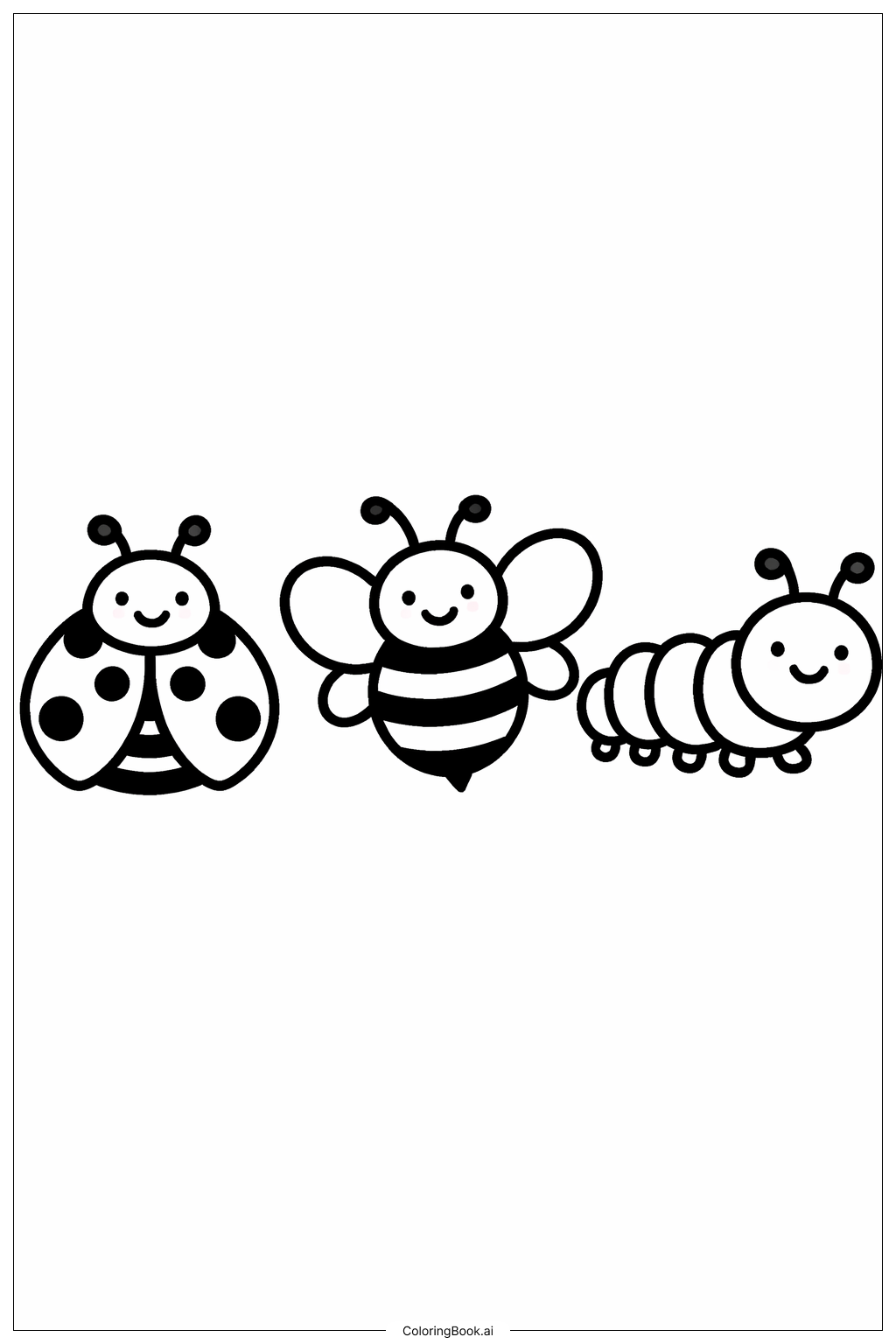
Use bright and lively colors to bring the insects to life. For the ladybug, red with black spots is a classic choice. The bee can be colored with yellow and black stripes, and its wings could be light blue or soft grey. For the caterpillar, try using shades of green or any fun colors like orange or purple to make it stand out. You can also add some soft colors to their faces like pink for cheeks to make them look friendly. Feel free to add a colorful background such as flowers, grass, or the sky to complete the picture.
Coloring challenges: Which parts are difficult to color and need attention for Tiny Insect Family coloring page?
1. The small spots on the ladybug’s wings might be tricky to color inside without going out of the lines. 2. The bee’s wings are a smaller size and need careful coloring to keep them looking neat. 3. The many legs of the caterpillar are small and close together, which requires patience to color each one carefully. 4. Keeping the antennae and facial features clear and neat can be a challenge because they are very small. 5. Coloring evenly inside the lines to make the insects look clean and vibrant can take some time, especially for younger artists.
Benefits of coloring books: Advantages of drawing Tiny Insect Family coloring page
Coloring this image helps improve fine motor skills by practicing small, careful movements. It encourages creativity through choosing different colors and patterns. Kids learn to focus and pay attention to details while coloring the tiny insects. It also introduces them to nature and teaches about insects in a fun and engaging way. Coloring together can promote relaxation and reduce stress, making it a great activity for children of different ages.