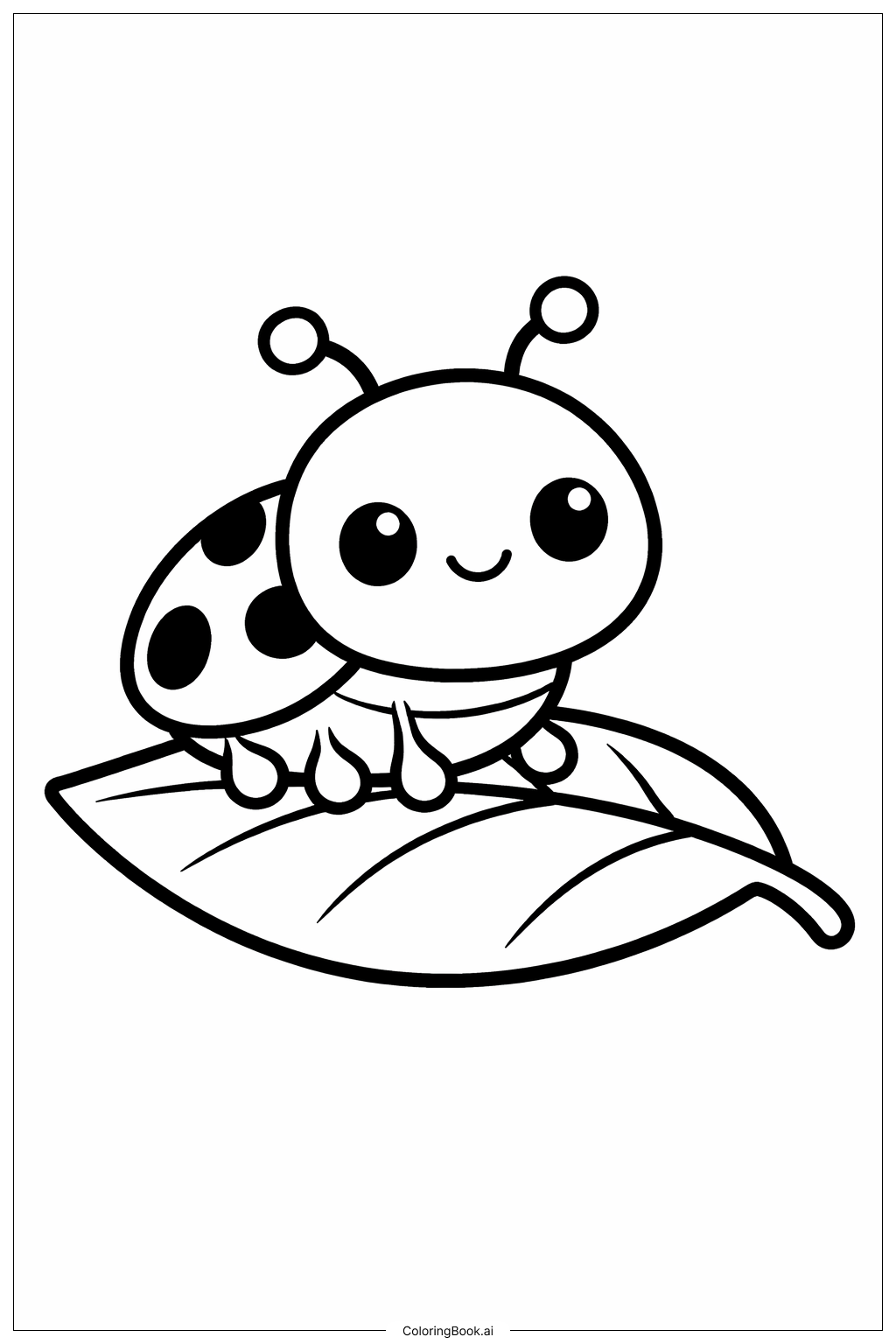
Coloring tips: How to color Insect on a Leaf coloring page well?
For coloring, you can use red or orange for the ladybug's body and black for the spots to make it look realistic. The eyes can be shaded with dark colors but leave a small white spot to show reflection. The leaf can be colored in various shades of green to give depth and variety. You can add lighter green to the leaf veins and darker green around the edges. Feel free to use bright and vibrant colors to make the image lively and fun.
Coloring challenges: Which parts are difficult to color and need attention for Insect on a Leaf coloring page?
1. Coloring the small black spots on the ladybug's body requires careful attention to avoid coloring outside the lines. 2. The ladybug's tiny legs need careful coloring to stay within the thin outlines. 3. Adding shading to the leaf to show its veins and curves can be tricky because it needs blending different green tones smoothly. 4. Ensuring the round eyes keep their shine by leaving the white spots intact needs precision. 5. Coloring the antennae tips neatly is important to keep their round shape clear and nice.
Benefits of coloring books: Advantages of drawing Insect on a Leaf coloring page
Coloring this picture helps improve fine motor skills as children need to color small spaces carefully. It also teaches color recognition, like understanding what colors ladybugs and leaves usually have. Children can practice staying within lines, which builds hand-eye coordination. Additionally, coloring nature scenes encourages curiosity about insects and plants, promoting learning through art. It is relaxing and can boost creativity by letting children choose their own colors.