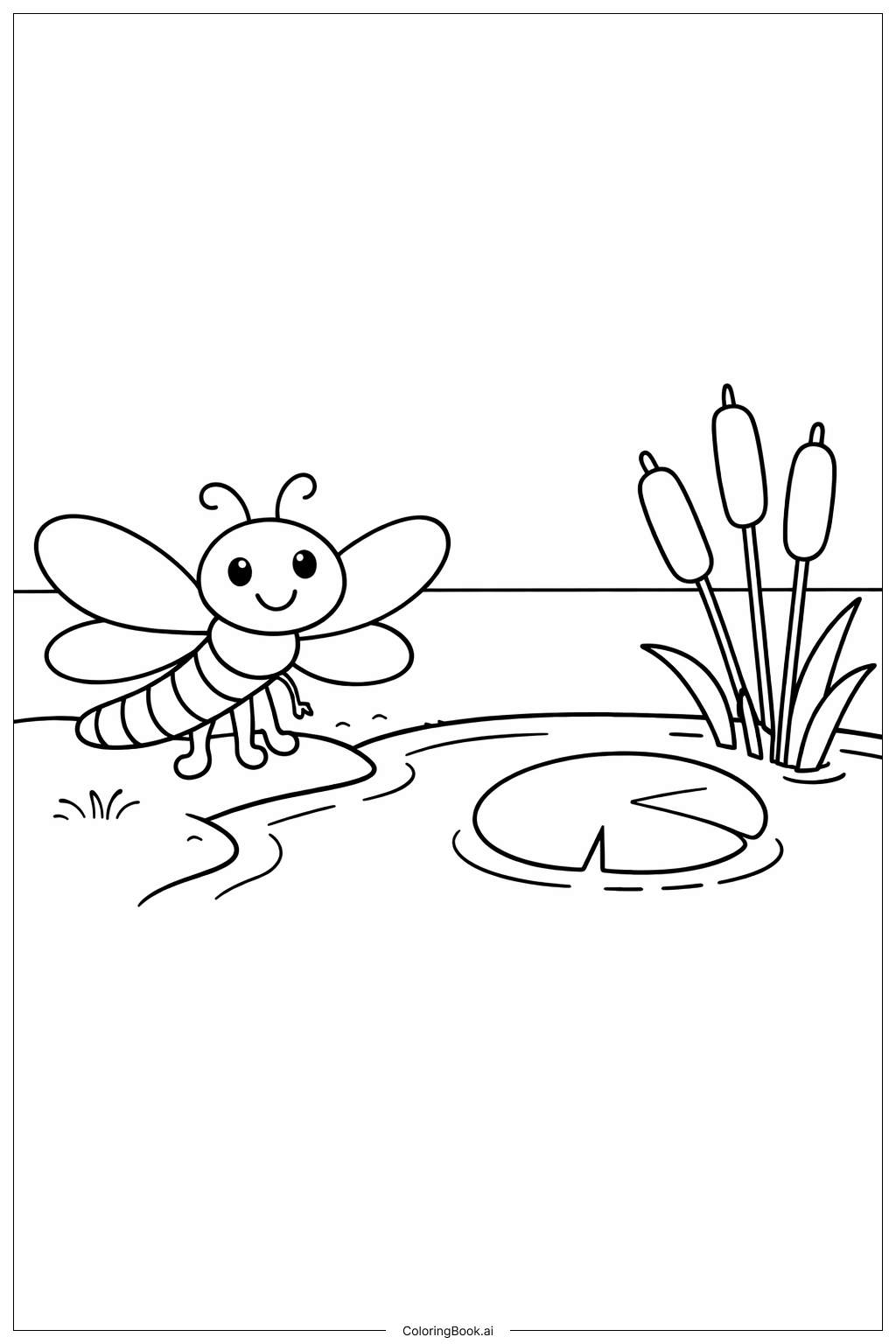
Coloring tips: How to color Insect Exploring Pond coloring page well?
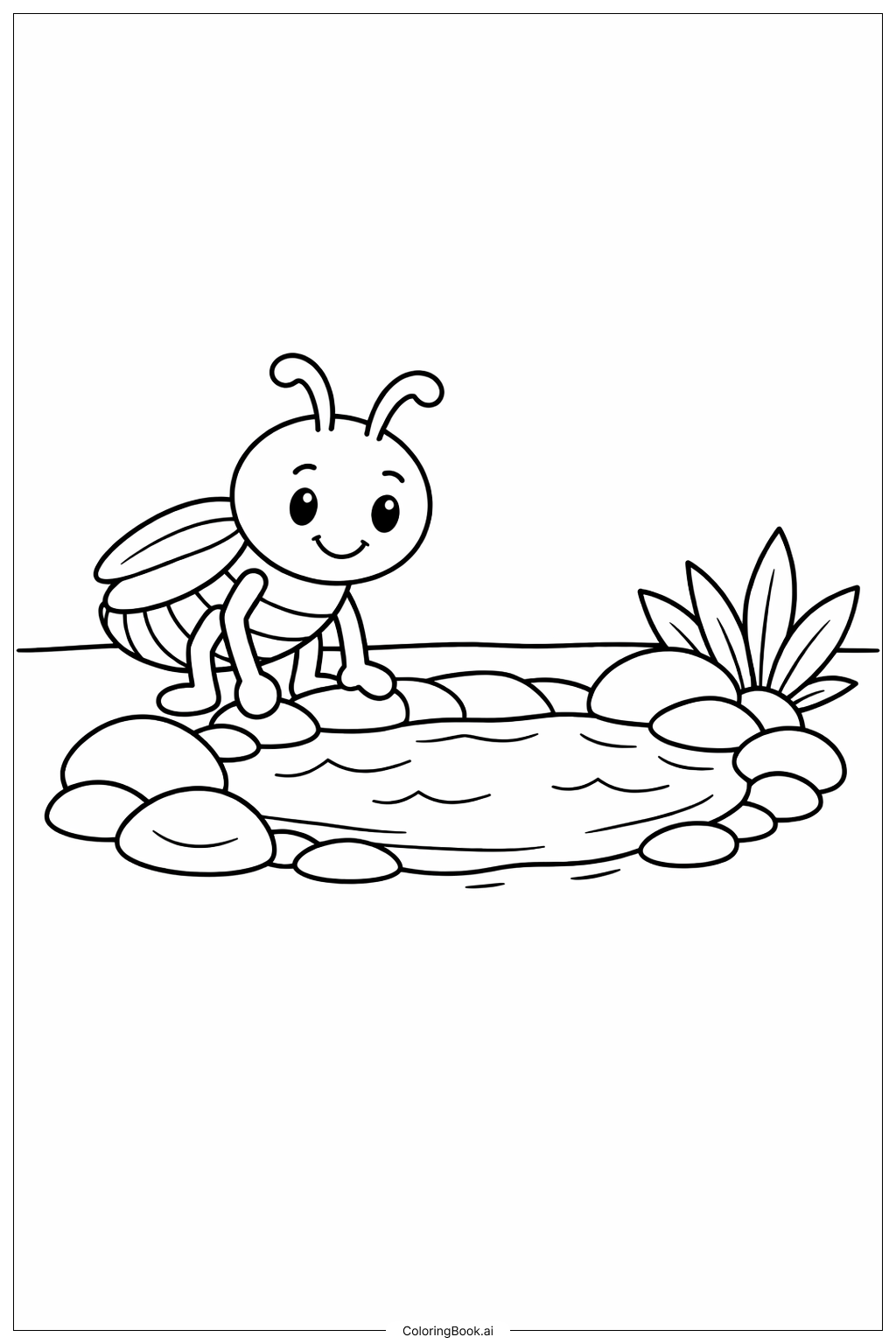
Use bright and cheerful colors for the insect, like yellow, orange, or light green for its body and wings. The eyes can be colored black with a small white spot to show shine. The cattails are usually brown on top and green for the leaves and stalks. Use different shades of green for the grass and plants around the pond to make the scene lively. Color the lily pad in a rich green, and the water can be colored blue with lighter shades near the edges to show the water’s surface. You can add some blue or white highlights to the water to show reflection.
Coloring challenges: Which parts are difficult to color and need attention for Insect Exploring Pond coloring page?
1. The insect's wings have large open spaces that need smooth, even coloring to look good. 2. The thin grass and plant leaves require careful coloring inside small spaces. 3. The cattails have narrow shapes which could be tricky to color neatly. 4. The water area is large and needs blending or shading to look natural and interesting. 5. Coloring the lily pad with its small cut and rounded shape needs attention to detail to make it realistic.
Benefits of coloring books: Advantages of drawing Insect Exploring Pond coloring page
Coloring this picture helps children improve fine motor skills by coloring small areas like antennae and grass blades. It also encourages creativity in choosing bright and natural colors for both the insect and the pond environment. This image teaches kids to observe nature and appreciate small creatures and their habitats. Coloring the smooth and large wings helps develop hand control, while the various shapes of plants and water improve concentration and patience.