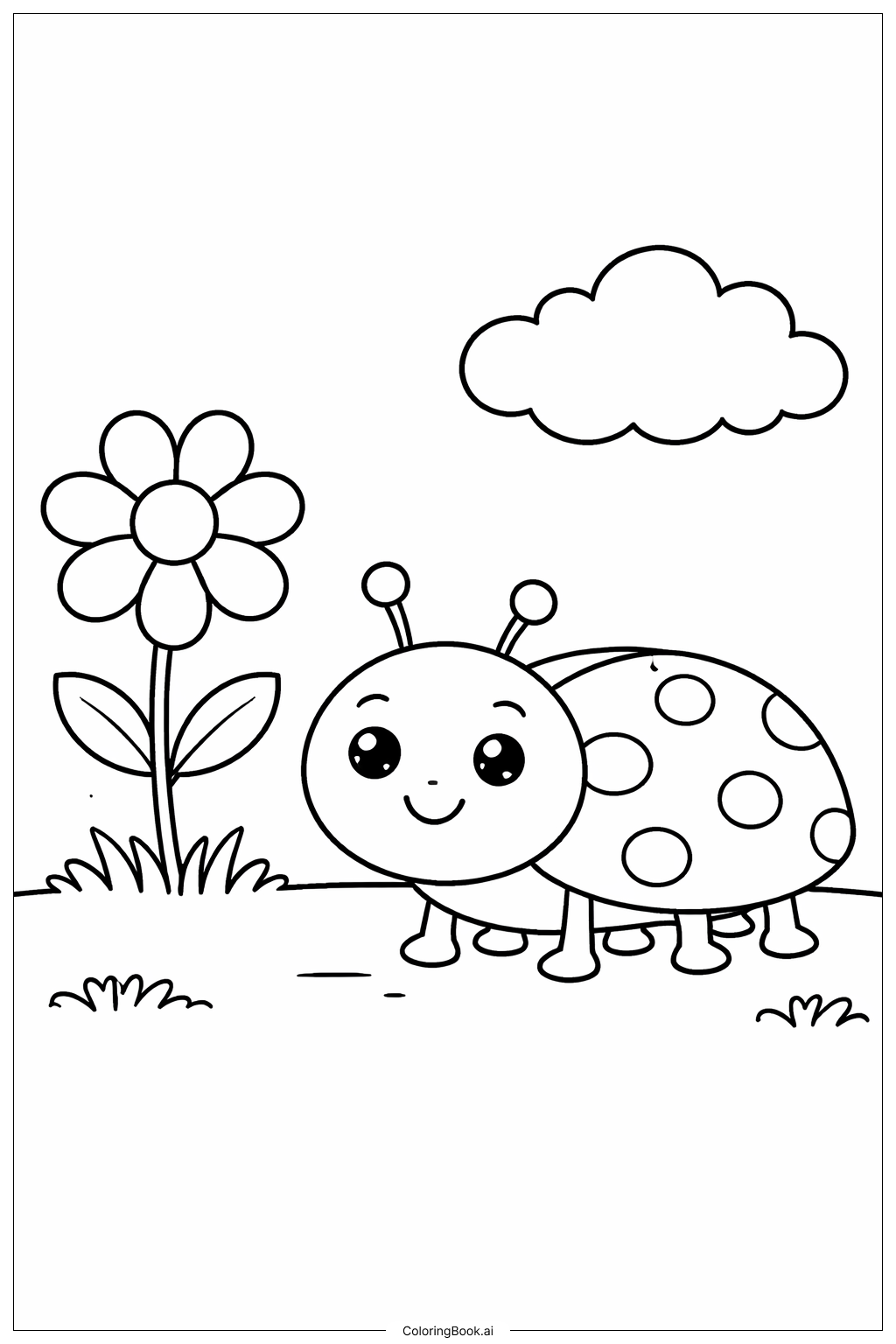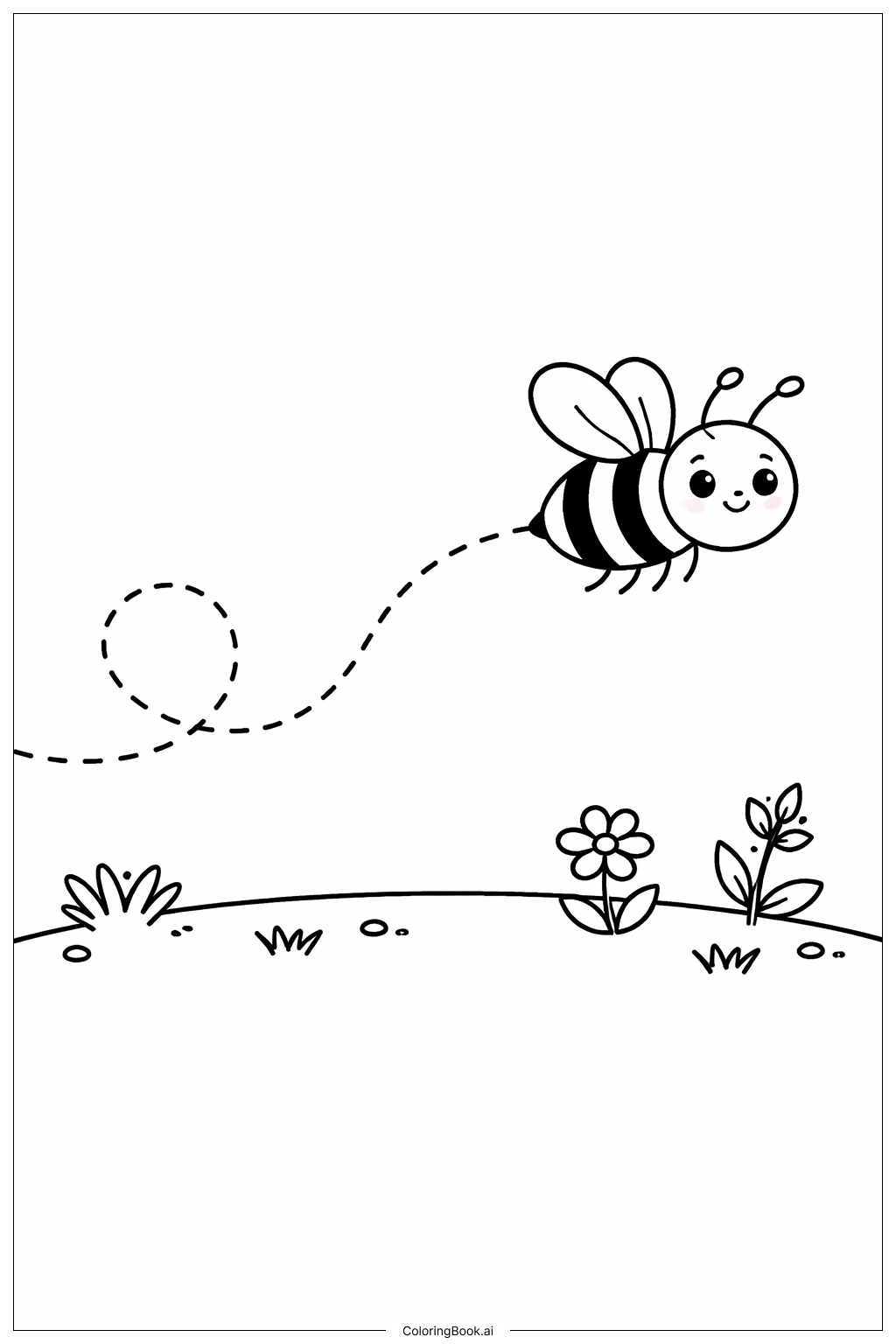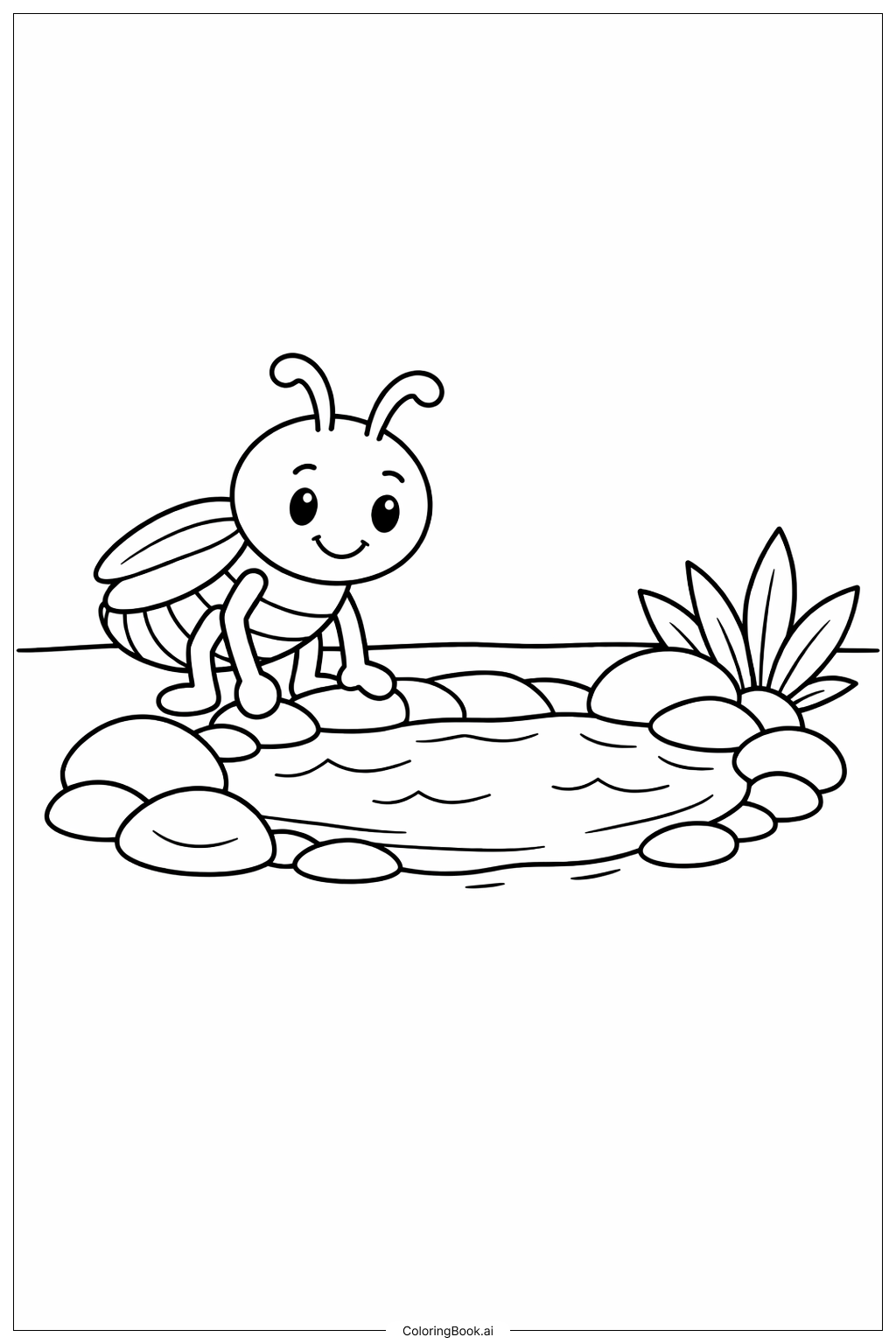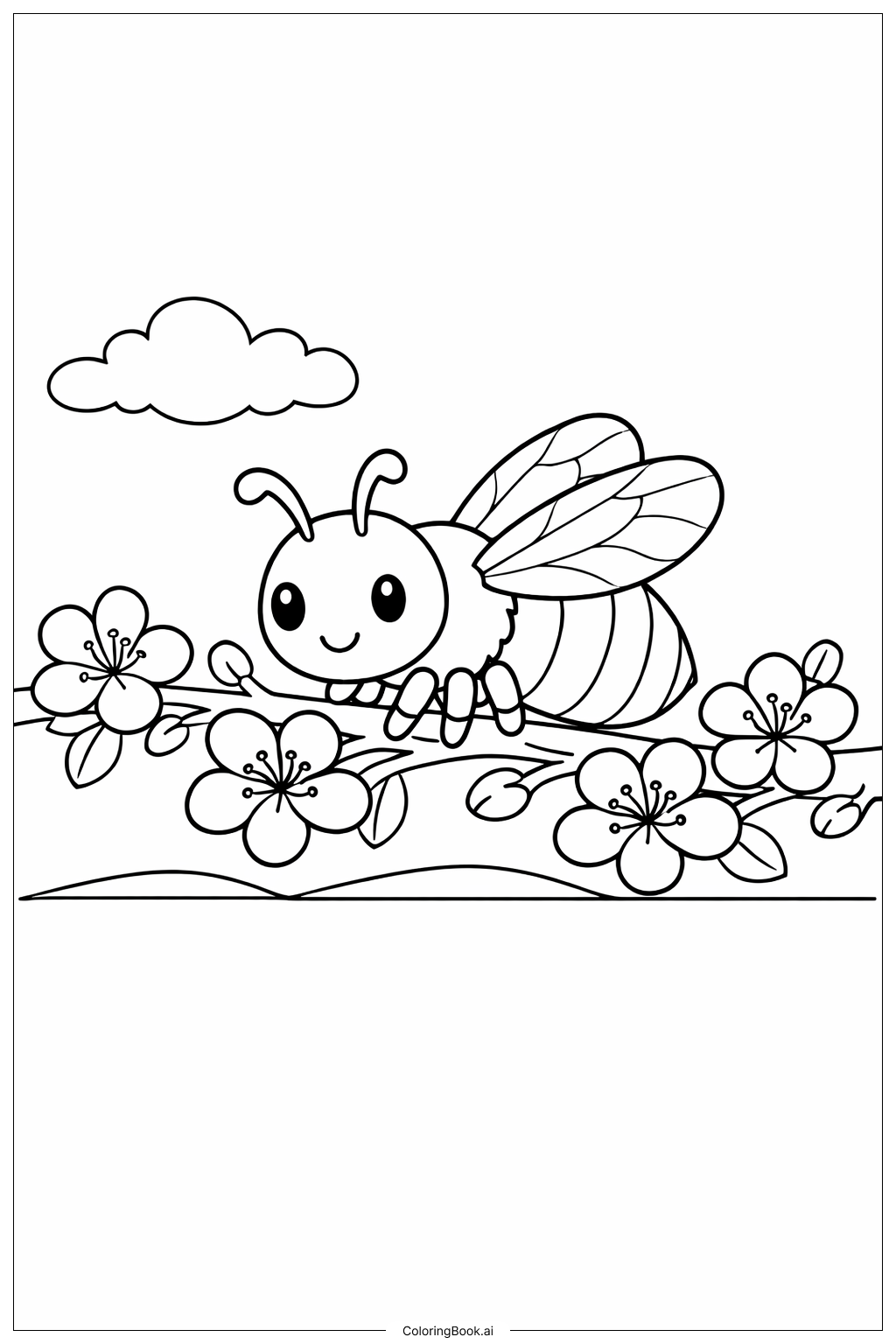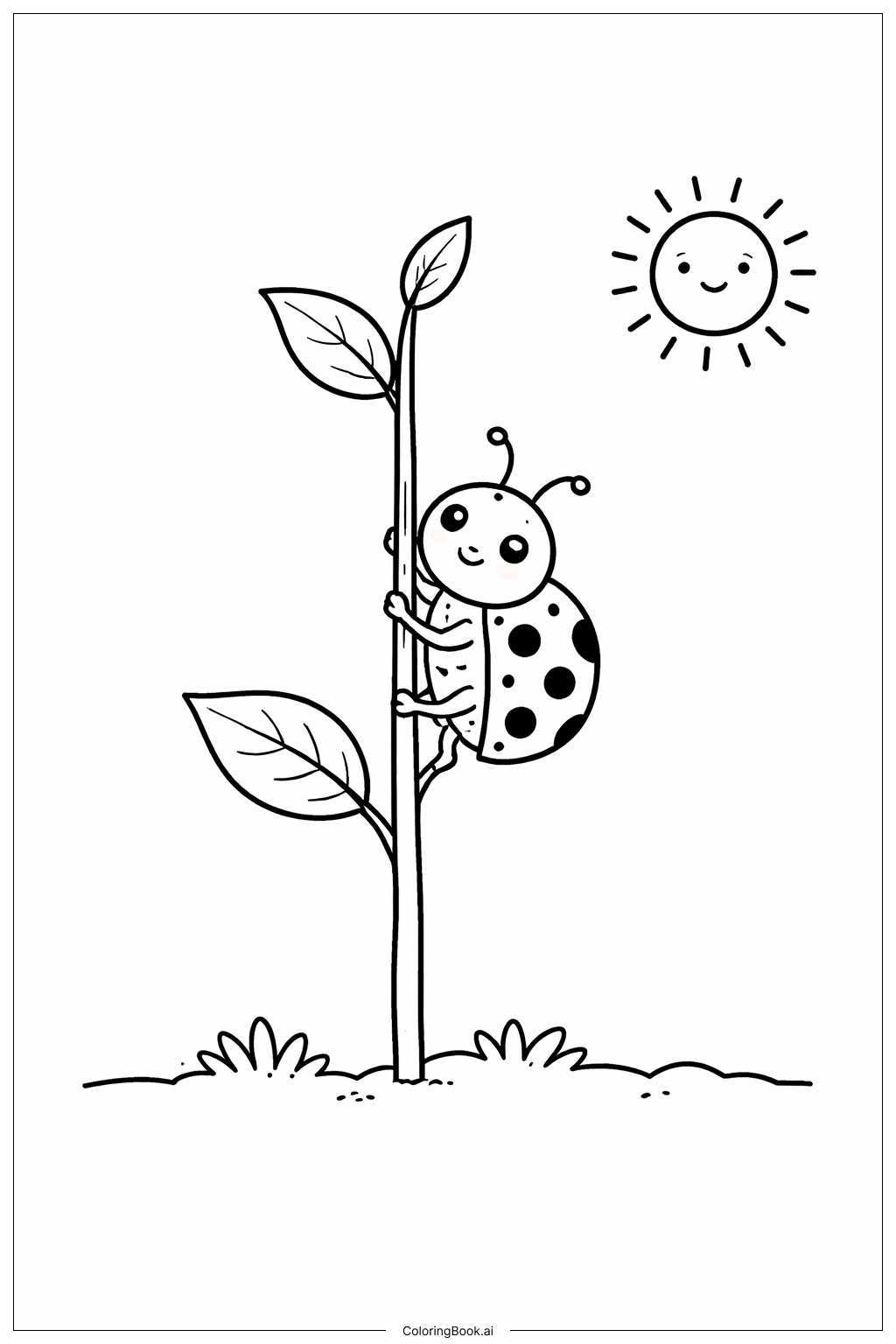
Coloring tips: How to color Insect Climbing Stem coloring page well?
Start with the insect's body. Use bright greens or yellows for the abdomen and thorax to make it look lively. Add a darker shade like olive green or brown for the legs to show texture and contrast. Color the large eyes with a deep black or dark brown, leaving a small white dot to create a shiny look. For the antennae, try a thin stroke of orange or red. Move on to the stem next. A medium green or tan brown works well. Use a slightly darker shade on one side to suggest shadow and roundness. For the leaves, try two or three shades of green, coloring the edges darker and the center lighter. You can add small yellow or orange spots to the leaves for a fun, imaginative touch. Keep your strokes smooth and light at first, then build up color gradually. Have fun mixing shades!
Coloring challenges: Which parts are difficult to color and need attention for Insect Climbing Stem coloring page?
• Insect Body Segments: The insect has clearly divided body parts — the head, thorax, and abdomen — each with its own shape and size. Keeping each section a slightly different shade while making the whole body look unified can be tricky. Young colorists need to be careful not to let colors bleed across the segment lines.
• Leg Placement and Detail: The six legs wrap around the stem at different angles, creating overlapping lines that can be hard to fill in neatly. Each leg is thin, making it a challenge to color without going outside the lines or accidentally coloring the background instead.
• Antennae and Fine Lines: The antennae are very thin and delicate. Coloring them requires a sharp pencil or a fine-tipped marker. If the tool is too thick, the antennae can look smudged or disappear into the background color.
• Stem Roundness and Shadow: A plant stem looks flat if colored with just one shade. Creating a sense of roundness by blending a lighter and darker version of the same color takes patience and practice, especially for younger children who are still learning about shading.
• Leaf Vein Details: The leaves have small veins running through them. If these lines are colored over completely, the leaf loses its natural texture. Colorists should try to color around the veins or use a lighter touch near them to keep the detail visible and true to life.
Benefits of coloring books: Advantages of drawing Insect Climbing Stem coloring page
Coloring this insect climbing a stem offers many wonderful benefits for kids of all ages. First, it builds fine motor skills. Carefully coloring the small legs, antennae, and body segments helps children strengthen hand control and pencil grip. These skills carry over into writing and other daily tasks. Second, it sparks curiosity about nature. Insects are a fascinating part of our world. As children color this page, they naturally start to wonder about real bugs — how they move, where they live, and why they climb plants. This can inspire trips outside to observe nature firsthand. Third, it encourages creativity. There are no strict rules about which colors to use, so children can experiment freely and develop their own artistic style. Fourth, it builds focus and patience. Finishing a detailed image like this one requires sitting with a task and working through it step by step, which is great practice for concentration. Finally, it is simply fun and calming. Coloring is a peaceful activity that helps children unwind, express themselves, and feel proud of something they created on their own.