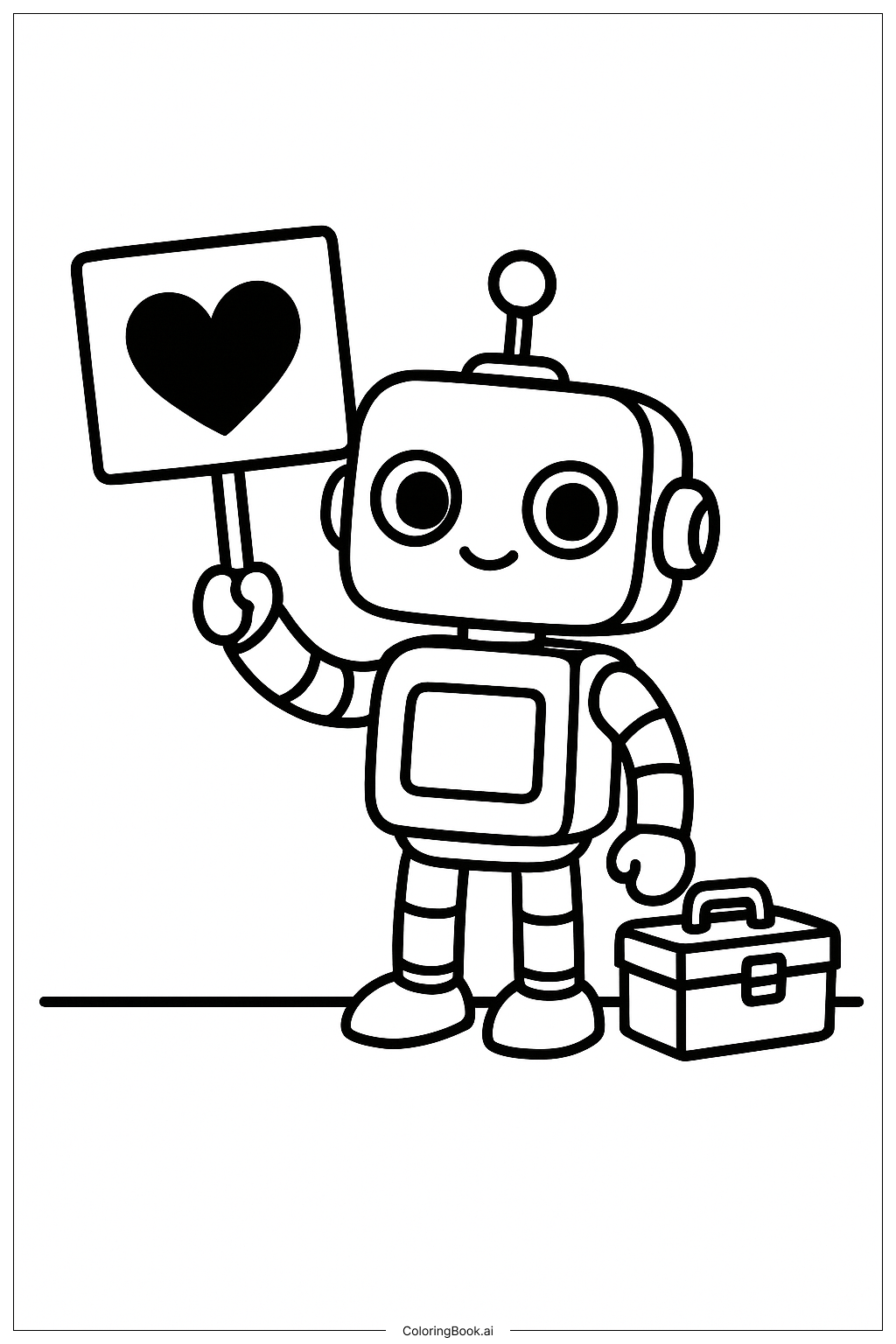
Coloring tips: How to color I Love You Robot Sign coloring page well?
Start with the robot's body and use classic silver or light gray for the metallic parts. You can add a soft blue or lavender tint to give the robot a cool, futuristic feel. Use darker gray or charcoal to shade the panel lines and bolts, adding depth to the mechanical look. For the "I Love You" heart sign, go with bright red or deep pink to make it really pop. You can add a lighter pink or white highlight in the center of the heart to make it look shiny. The robot's eyes can be colored in cheerful yellow or glowing green to look lively. Use orange or gold for small buttons and accent details on the torso. The background can be left white or filled with a soft pastel blue or lavender to complement the overall color scheme. Add yellow stars around the heart for extra sparkle and fun.
Coloring challenges: Which parts are difficult to color and need attention for I Love You Robot Sign coloring page?
• Robot Body Details: The robot has many small mechanical features such as bolts, panel lines, and buttons covering its body. Staying inside these tiny shapes requires a steady hand and a fine-tipped colored pencil or marker. Rushing through these areas can make the details look blurry or messy, so take your time with each small section.
• Heart Sign Shading: The large heart-shaped sign looks best when it has smooth, even coloring. Blending two shades of red or pink — a deeper tone at the edges and a lighter highlight in the center — can be tricky for younger colorists. Uneven pressure while coloring may create streaks or patches that break up the smooth finish.
• Facial Expression Details: The robot's face includes small eyes, a curved smile, and other tiny features packed closely together. Using the right size tool is important here. A thick marker can accidentally bleed into neighboring areas, ruining the clean lines of the face. Thin pencils or fine-tip pens work much better in this zone.
• Contrast Between Elements: Choosing colors that make the robot and the heart sign stand out from each other is a real challenge. If both areas are colored in similar shades, the image can look flat and hard to read. Picking clearly contrasting colors — like cool tones for the robot and warm tones for the heart — helps each part of the image stand out clearly.
• Background Balance: Deciding how to color the background without overpowering the main subject can be difficult. A color that is too dark or too bright will draw attention away from the robot and the heart sign. Light, soft shades work best to keep the focus where it belongs.
Benefits of coloring books: Advantages of drawing I Love You Robot Sign coloring page
Coloring this I Love You Robot Sign page offers a wonderful mix of creative and emotional benefits for kids and beginners alike. The robot's geometric shapes — squares, circles, and rectangles — help younger colorists practice staying within straight and curved lines, building fine motor control in a fun and low-pressure way. Working through the many small mechanical details on the robot's body encourages patience and concentration, skills that carry over into everyday tasks like reading and writing. The heart sign introduces a chance to explore warm color blending, helping children develop an early understanding of shading and color contrast. Emotionally, the sweet "I Love You" message gives the coloring experience a heartfelt meaning. Kids can color this page as a gift for a parent, sibling, or friend, turning a creative activity into a personal expression of affection. This makes the experience feel purposeful and rewarding beyond just filling in shapes. For older kids, the combination of mechanical and emotional elements offers a fun design challenge — balancing cool robot tones with warm, loving colors. Overall, this page nurtures creativity, emotional expression, and hand-eye coordination, making it a truly enriching activity for a wide range of ages.