Coloring tips: How to color Horse Sleeping In Straw Bed coloring page well?
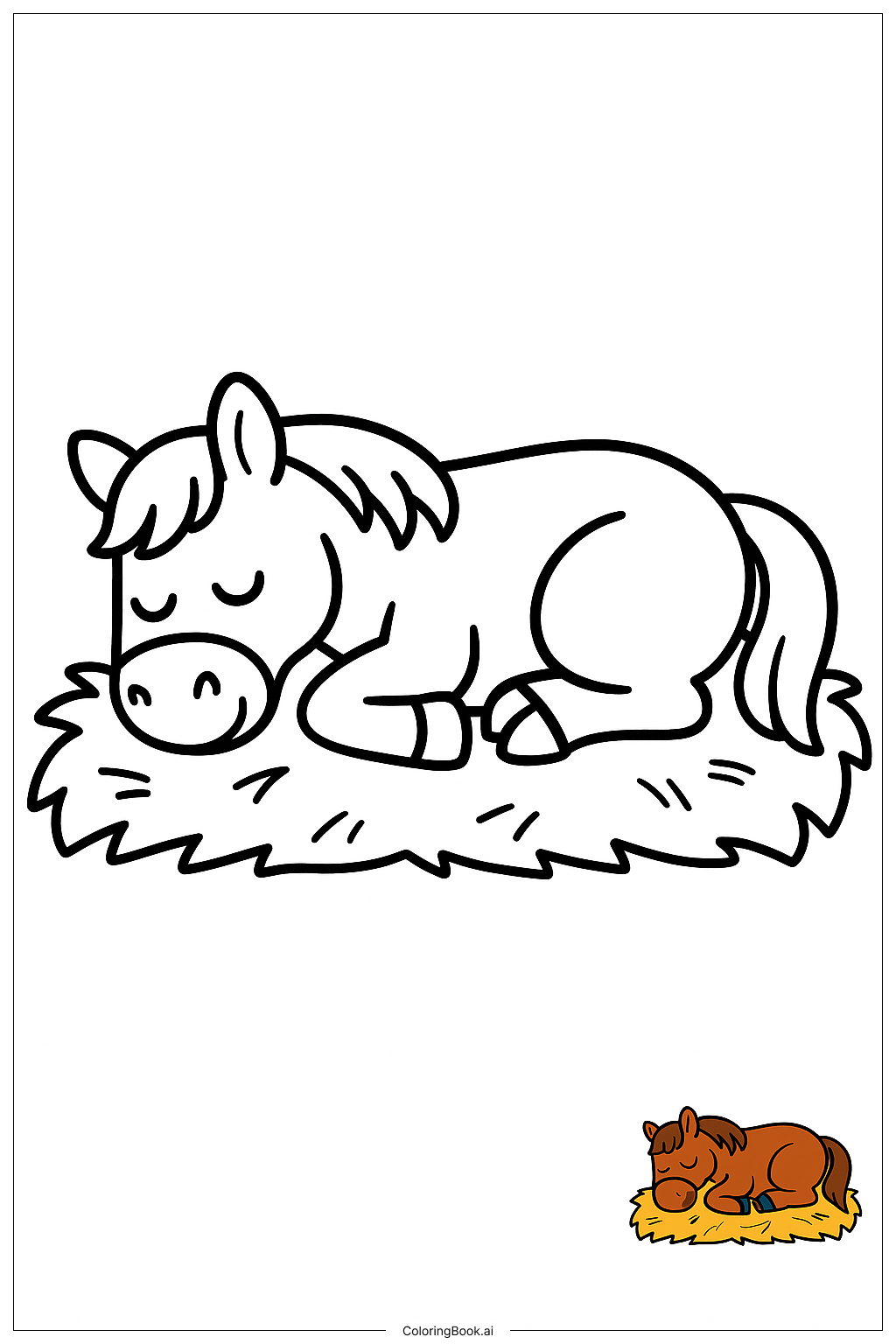
For coloring this image, use warm and earthy colors to show the cozy feel of the straw bed. Light yellows, golds, and tans work well for the straw to give it a soft, natural look. The horse can be colored with browns, chestnut, or black shades. Try using lighter tones on the horse’s mane and tail for contrast. You might want to add soft blushes of pink or light brown around the horse’s nose and cheeks to show warmth. The background can be kept simple with gentle greens or soft grays to keep the focus on the horse. Don’t forget to color the hooves slightly darker to show texture. This image offers a great chance to practice shading by coloring the horse’s body in layers from light to dark to show its curves and muscles.
Coloring challenges: Which parts are difficult to color and need attention for Horse Sleeping In Straw Bed coloring page?
• Fine Hair Details: The horse’s mane and tail have many thin strands that can be tricky to color neatly. It requires patience to stay inside the lines and add variation in color.
• Straw Texture: Coloring the straw smoothly while maintaining its natural uneven texture can be hard. It’s important to create different shades of yellow and brown to give depth.
• Horse Anatomy: The horse’s body curves and muscles need careful shading to avoid a flat look. Blending colors softly to follow the shapes can be challenging for beginners.
• Closed Eyes: Drawing gentle expressions with the horse’s closed eyes shows calmness but requires subtle coloring to look natural and not heavy.
• Staying Inside the Lines: The horse’s legs and body have small spaces between lines, demanding control and steady hand movements to color cleanly without overlapping.
Benefits of coloring books: Advantages of drawing Horse Sleeping In Straw Bed coloring page
Coloring this horse sleeping in a straw bed helps develop fine motor skills and hand-eye coordination as children carefully fill in detailed areas like the mane and straw texture. It encourages creativity in choosing colors and learning to blend shades to create natural effects. This image also teaches patience and focus, as working on the various details requires concentration. Beyond technical skills, coloring this peaceful scene can promote relaxation and mindfulness by connecting children with calm and gentle feelings. It offers an excellent opportunity to learn about animals, their environment, and how important rest and comfort are for all living creatures.