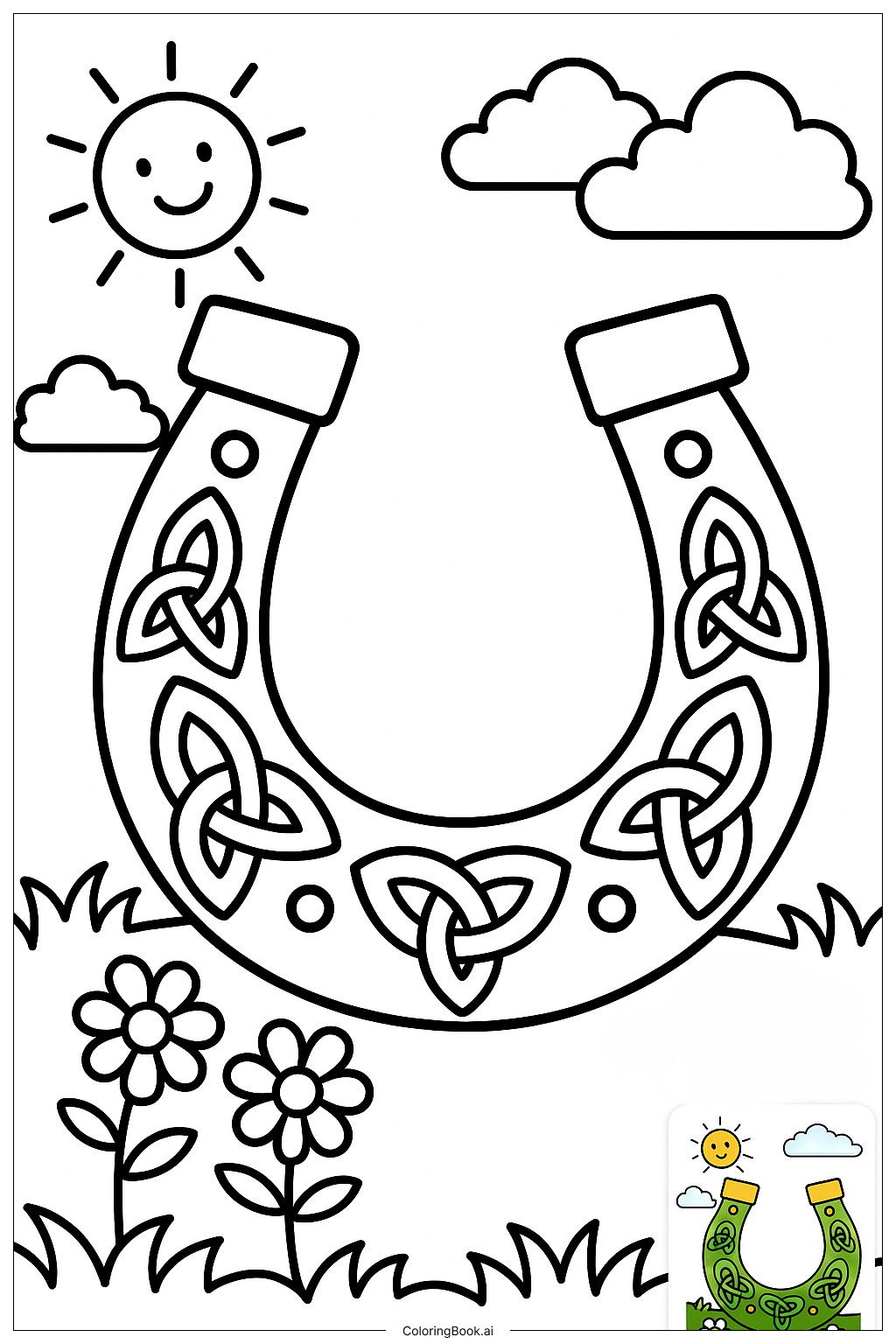
Coloring tips: How to color Horse Shoe With Celtic Knot Designs coloring page well?
Start with the background if there is one, using a soft neutral color like light tan or pale yellow to let the horseshoe stand out. For the horseshoe itself, try a metallic feel by using shades of silver, gray, or golden brown. Color the Celtic knot ribbons in two or three alternating colors to make the weaving pattern easy to follow. Good choices include forest green, deep blue, burgundy, or burnt orange. Use a slightly darker shade where the ribbons pass under each other to create a sense of depth. Younger colorists can keep it simple with just two colors for the knots, while older colorists can add shading and gradients for a more polished result. Colored pencils or fine-tip markers work best for the tiny details inside the knots.
Coloring challenges: Which parts are difficult to color and need attention for Horse Shoe With Celtic Knot Designs coloring page?
• Intricate Knot Intersections: The Celtic knot patterns contain many tight crossing points where ribbons weave over and under each other. Keeping track of which strand goes on top is tricky. If you color the over-strand and under-strand the same color, the weaving effect disappears. Take your time at each crossing and decide which ribbon is on top before you apply color.
• Small Interior Spaces: Many of the enclosed areas within the knotwork are very small. Filling them without accidentally coloring outside the lines requires a sharp pencil tip or a fine-point marker. Using a wide brush or blunt crayon in these tight spaces will likely cause smearing or overflow into neighboring sections.
• Consistent Color Repetition: Celtic designs work best when colors repeat in a predictable pattern along the entire length of the knot ribbon. Losing track of your color sequence midway through the design results in a messy, inconsistent look. It helps to lightly pencil in your planned colors before committing to them.
• Achieving a Metallic Look on the Horseshoe Base: The horseshoe shape beneath the knotwork should look like metal, which is hard to achieve with flat color alone. Blending multiple tones of gray, silver, or gold requires layering and a gentle touch, skills that younger or beginner colorists may find challenging.
• Balancing Visual Contrast: Because the knot patterns and the horseshoe shape share the same page, making both elements look distinct without one overpowering the other takes careful color planning. Choosing colors with enough contrast between the knots and the horseshoe background is essential for the final image to look clear and attractive.
Benefits of coloring books: Advantages of drawing Horse Shoe With Celtic Knot Designs coloring page
Coloring this horseshoe and Celtic knot design offers many great benefits for kids and adults alike. Following the winding paths of the Celtic knots trains your eyes and hands to work together with precision, which builds fine motor skills and steady hand control. Deciding which colors to use and how to repeat them throughout the pattern encourages creative thinking and planning ahead. Tracing and filling in the interlocking ribbons requires focus and patience, making this a wonderful activity for practicing concentration. For younger colorists, learning to stay within complex lines builds confidence and a sense of accomplishment. The horseshoe is also a well-known symbol of good luck, so coloring it can spark fun conversations about traditions, culture, and history. Celtic art connects colorists to an ancient artistic heritage, making this page both educational and creative at the same time. Completing a detailed piece like this gives a strong sense of pride and satisfaction. Overall, this page is a relaxing yet stimulating activity that supports artistic growth and mindful focus for colorists of all ages.