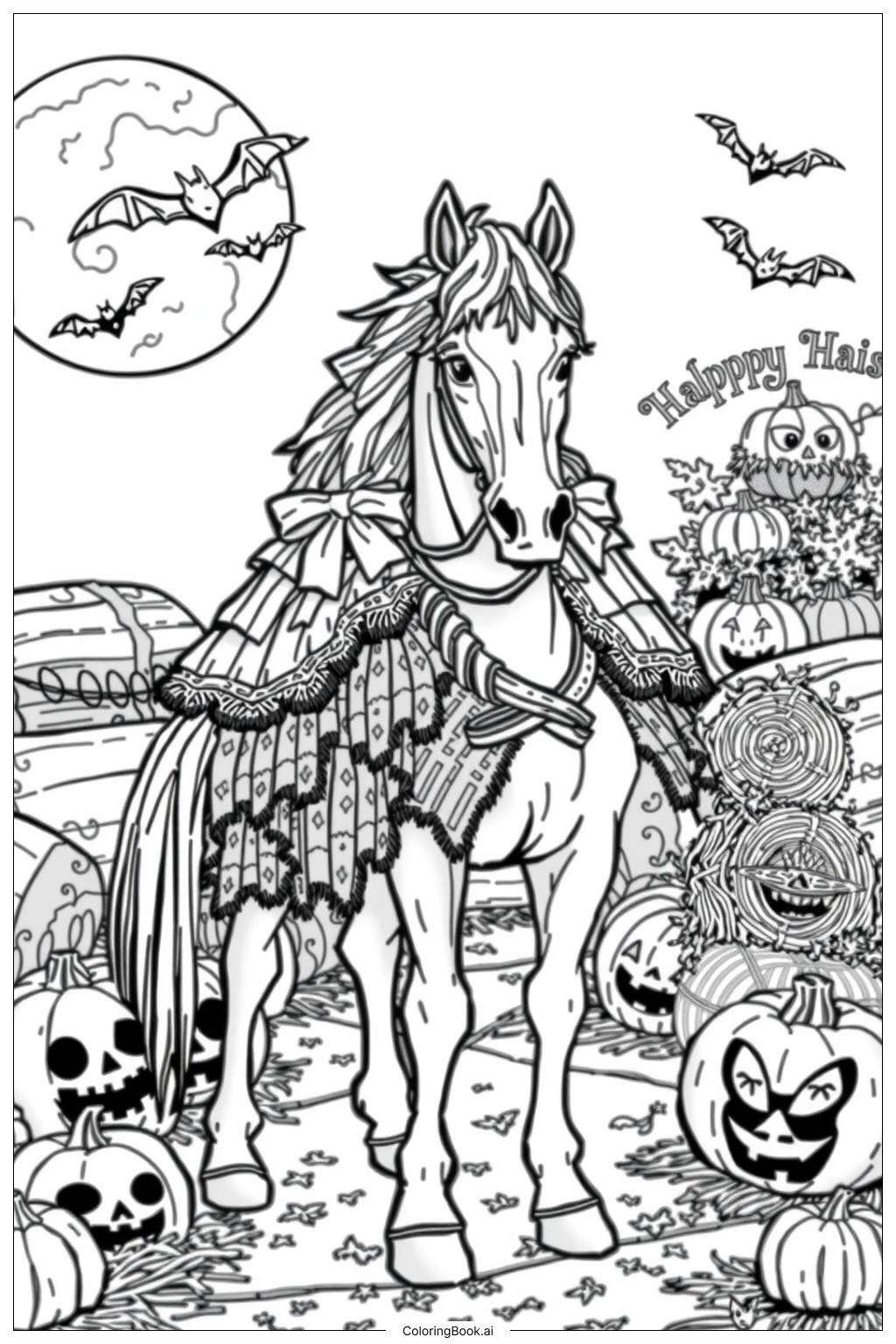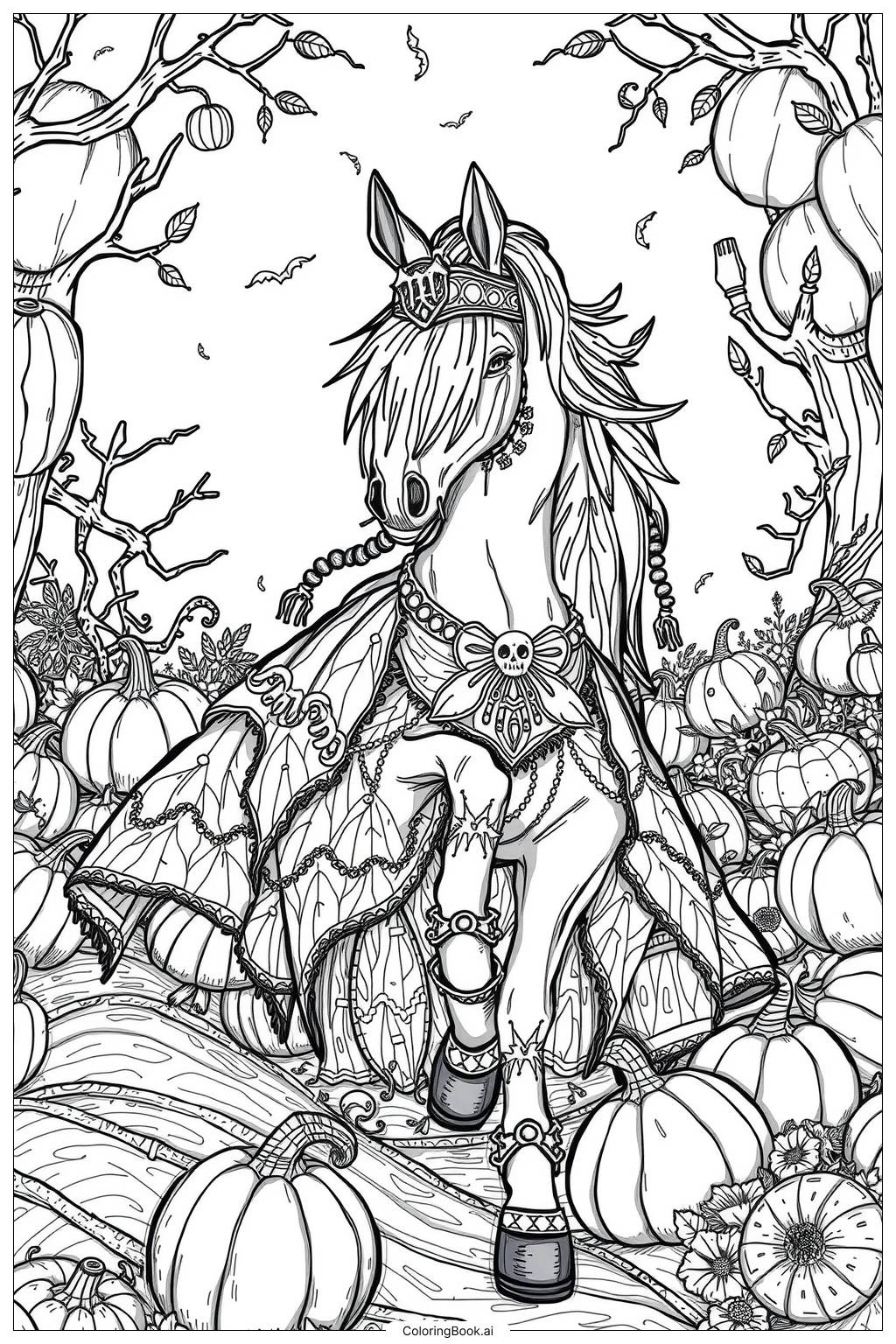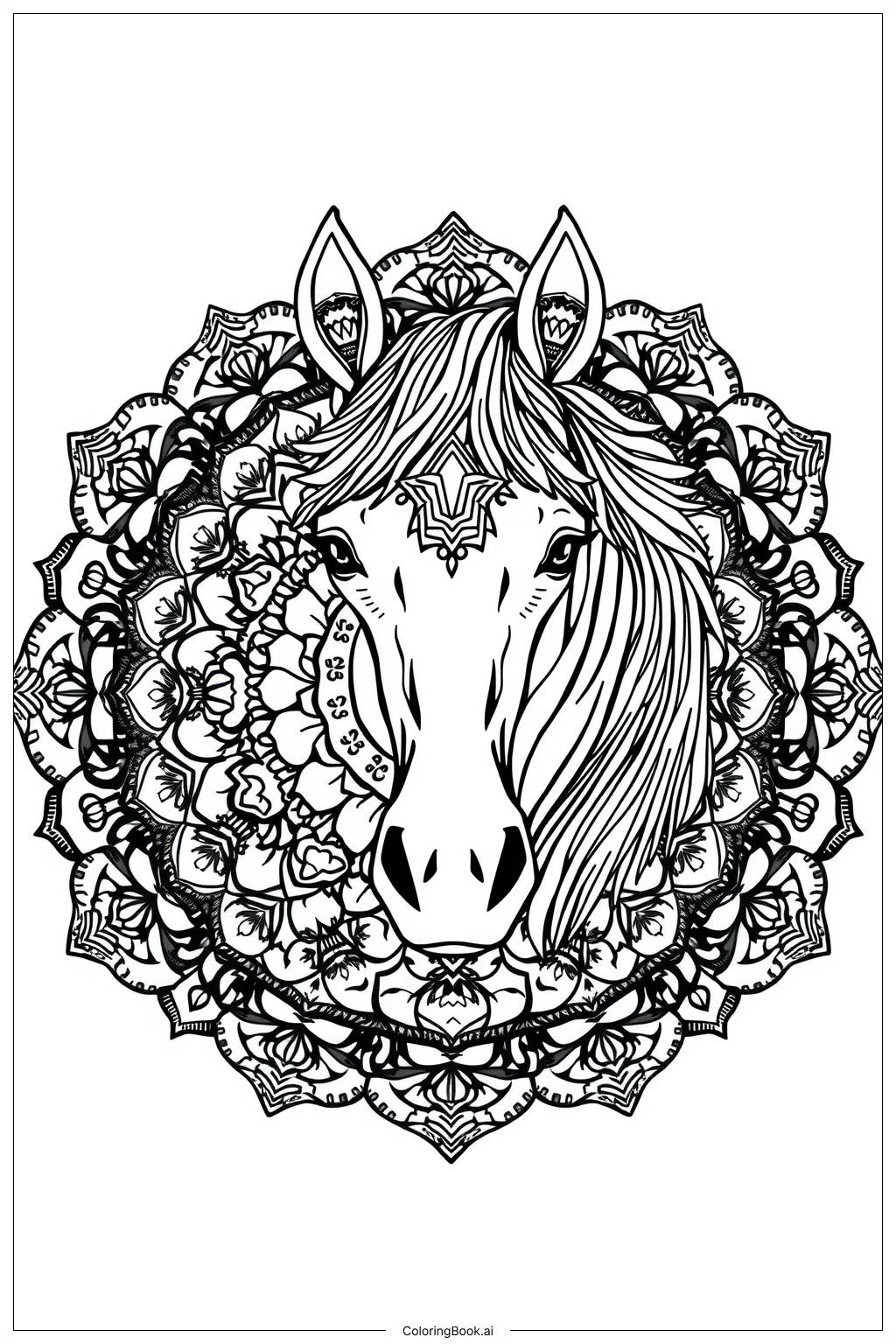
Coloring tips: How to color Horse Head Mandala Design-2 coloring page well?
Start by choosing a color palette before you begin. You can go with natural horse colors like warm browns, chestnuts, and golden tans for the horse head itself. For the mandala sections, try using a gradient approach — pick two or three colors that blend well together and alternate them through the repeating patterns. Cool blues and purples work beautifully against warm horse tones. You can also try a jewel-tone palette with deep greens, royal blues, and rich purples to give the mandala a magical feel. Colored pencils are great for the fine details, while markers or watercolors work well for filling larger sections. Remember to keep symmetrical sections the same color to maintain the balanced look of the mandala. Take your time and enjoy the process — there is no rush!
Coloring challenges: Which parts are difficult to color and need attention for Horse Head Mandala Design-2 coloring page?
• Fine Line Details: The mandala contains extremely thin and closely spaced lines throughout the design. Staying within these tiny spaces requires a sharp pencil tip or a fine-tipped marker. Young colorists may find it tricky to avoid going over the lines, so taking it slow and using the right tools is important.\n\n• Maintaining Color Symmetry: A mandala is built on symmetry, meaning the patterns repeat around a central point. Keeping the same colors in matching sections can be challenging, especially as the design grows more complex toward the outer rings. Planning your color scheme in advance and making notes of which colors go where can be very helpful.\n\n• Transitioning Between Zones: The horse head flows into the mandala background without a strong border separating the two. Deciding where the horse ends and the mandala begins can be confusing, and choosing colors that differentiate these areas without clashing takes careful thought and planning.\n\n• Small Geometric Shapes: Throughout the mandala rings, there are many tiny triangles, diamonds, and dot clusters. Filling these small shapes neatly without smudging neighboring areas is one of the most demanding parts of this coloring page. Using a fine-tip tool and allowing each section to dry before moving on helps prevent mistakes.\n\n• Balancing Contrast and Harmony: With so many elements competing for attention, it can be hard to make the horse head stand out while still letting the mandala shine. Choosing slightly bolder or darker shades for the horse and softer tones for the surrounding patterns helps create a natural visual focal point without disrupting the overall harmony of the design.
Benefits of coloring books: Advantages of drawing Horse Head Mandala Design-2 coloring page
Coloring this Horse Head Mandala Design-2 page offers a wide range of wonderful benefits for colorists of all ages. The intricate mandala patterns help sharpen fine motor skills as you carefully guide your coloring tool through small, detailed spaces. This kind of focused activity also builds hand-eye coordination and concentration over time. For kids, it encourages patience and the ability to follow through on a longer creative task. For teens and adults, the repetitive, rhythmic nature of coloring a mandala is deeply calming and can serve as a form of mindfulness practice, helping to reduce stress and quiet a busy mind. Planning a color palette for both the horse and the mandala sections exercises creative thinking and decision-making skills. Seeing the finished artwork come to life also gives a strong sense of accomplishment and boosts self-confidence. The horse theme adds an element of imagination and storytelling, inspiring colorists to think about nature, strength, and beauty as they work. Whether you color it alone or with friends and family, this page is a rewarding and enriching experience from start to finish.