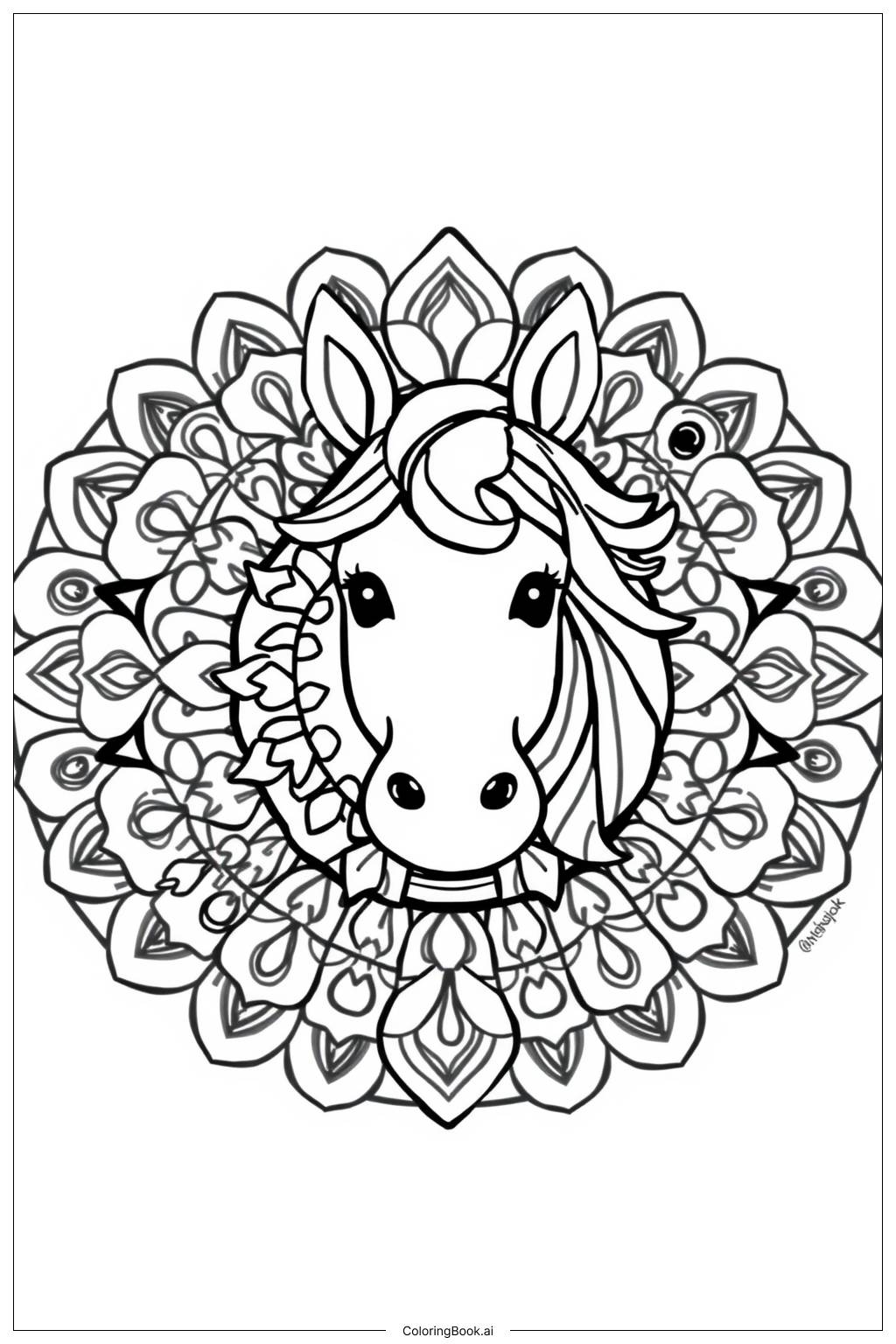
Coloring tips: How to color Horse Head Mandala Design coloring page well?
Start by choosing a color palette before you begin. You can go with warm earth tones like brown, tan, and gold for the horse to keep it looking natural. For the mandala patterns around it, try jewel tones like deep purple, teal, and emerald green to make them pop. Another fun idea is to use a sunset palette — oranges, pinks, and reds — for a bold and dramatic look. Work from the center outward, starting with the horse's face and mane, then moving into the inner mandala rings, and finishing with the outer border details. Use darker shades for the outer areas to create depth. Colored pencils work great for the tiny details, while markers or gel pens can add vibrant color to the larger sections. Feel free to repeat colors in a pattern across the mandala rings to create a sense of rhythm and balance throughout the design.
Coloring challenges: Which parts are difficult to color and need attention for Horse Head Mandala Design coloring page?
• Fine Line Details in the Mandala: The mandala surrounding the horse head contains extremely fine lines, tiny petals, and small geometric shapes. These areas require a sharp pencil or a fine-tipped pen to color accurately without bleeding into neighboring sections. Rushing through these parts can easily ruin the overall look of the design.
• Maintaining Color Symmetry: Because the mandala is perfectly symmetrical, colorists need to mirror their color choices on both sides of the design. Keeping track of which colors go where can be challenging, especially as the pattern grows more complex toward the outer rings. Planning ahead with a simple color map can help avoid mistakes.
• Blending Colors on the Horse's Face: The horse's face sits at the center of the image and draws the most attention. Creating a smooth, realistic look with shading on the horse's muzzle, eyes, and forehead requires careful blending. Without proper shading techniques, the horse can look flat and dull compared to the richly decorated mandala around it.
• Transitioning Between the Horse and the Mandala: The area where the horse's mane meets the mandala patterns is a tricky transition zone. The colors used for the mane should flow naturally into the decorative elements without clashing. Choosing complementary colors for both areas ahead of time makes this transition much smoother.
• Avoiding Color Overload in Outer Sections: The outer border of the mandala is filled with large and small shapes that can easily look overwhelming if too many colors are used. Sticking to a limited palette and gradually darkening shades toward the edges helps the design feel cohesive rather than chaotic.
Benefits of coloring books: Advantages of drawing Horse Head Mandala Design coloring page
Coloring this Horse Head Mandala Design offers a wide range of benefits for people of all ages. The detailed mandala patterns help build focus and concentration, training your eyes and hands to work together with care and precision. For kids, following the lines and filling in shapes strengthens fine motor skills and improves hand control, which supports writing and drawing abilities in school.
Working through the layers of the mandala is also deeply calming. Many people find that coloring repetitive patterns reduces stress and anxiety, making it a wonderful way to unwind after a busy day. It puts your mind into a gentle, meditative state that feels refreshing and peaceful.
For those who love horses, this design adds an extra layer of joy. It sparks imagination and creativity as you decide how to bring the horse to life with your own color choices. Experimenting with different palettes builds color awareness and artistic confidence over time.
Completing a detailed image like this also gives a strong sense of achievement. Finishing the page, from the horse's expressive face to the outermost mandala rings, feels genuinely rewarding. You end up with a beautiful piece of art that you created yourself, which is something worth being proud of.