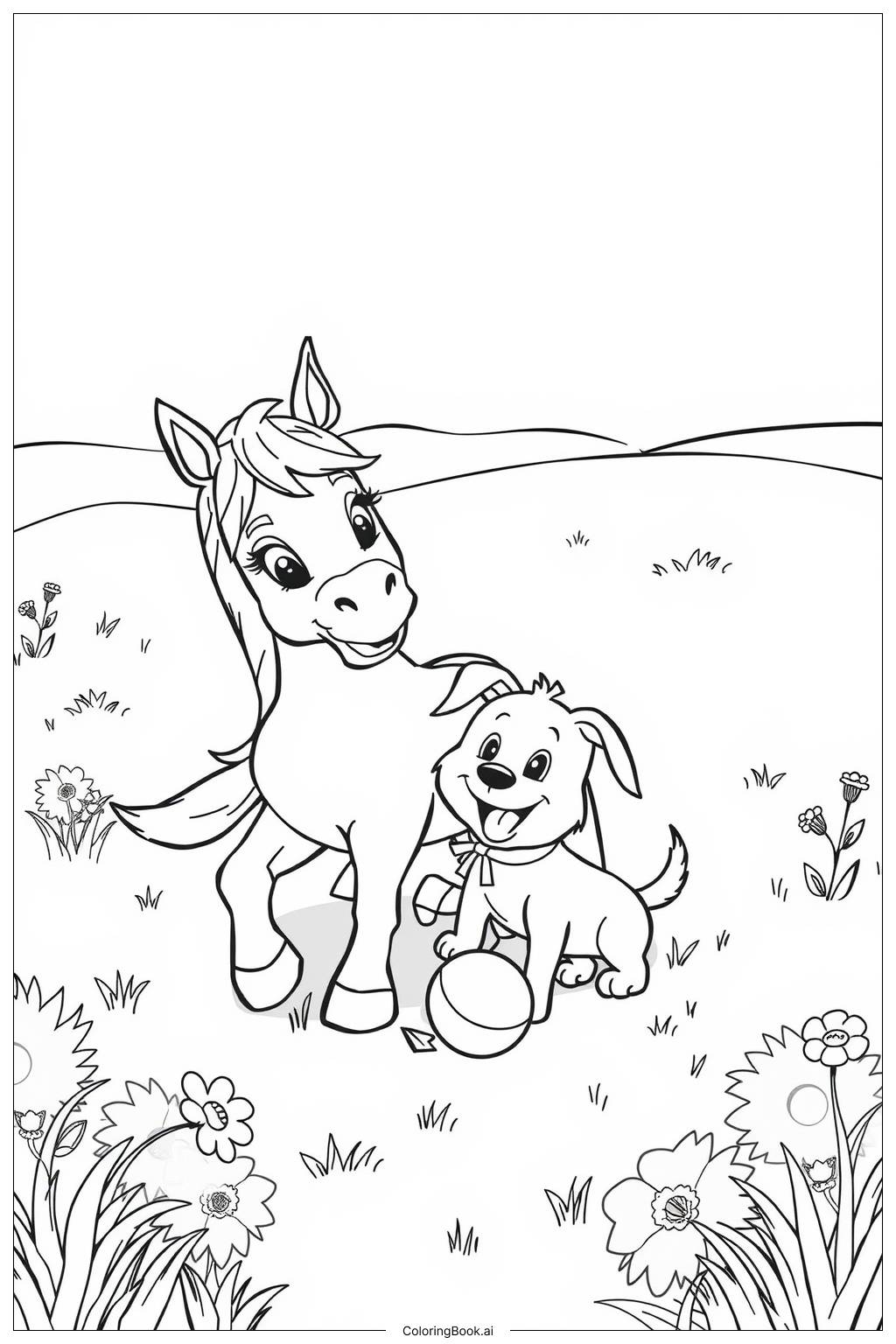
Coloring tips: How to color Horse and Dog Playing Together coloring page well?
Start with the horse. Use warm shades like chestnut brown, golden tan, or light gray for its body. Add darker tones along the belly, legs, and under the neck to show depth. The mane and tail can be a slightly darker or contrasting shade, like dark brown or black. For the dog, pick a playful color like golden yellow, spotted white and brown, or reddish-orange depending on the breed you imagine. Use light green for the grass and soft blue for the sky. Add a few yellow or white flowers in the meadow to brighten the scene. Keep the background soft so the two animals stay the center of attention. Use warm, happy colors throughout to match the friendly mood of the image.
Coloring challenges: Which parts are difficult to color and need attention for Horse and Dog Playing Together coloring page?
• Horse Body Shading: The horse has a large surface area that needs smooth, gradual shading to look realistic. Blending lighter and darker tones on the chest, back, and legs can be tricky, especially for younger colorists. Taking time to layer colors slowly will help create a natural three-dimensional look.
• Flowing Mane and Tail: The mane and tail have long, flowing lines that overlap and intertwine. Coloring each strand individually while keeping the overall flow looking natural requires patience and a steady hand. Using two or three tones of the same color can help the hair look layered and realistic.
• Small Dog Details: The dog is much smaller than the horse, which means the coloring space for its fur, face, and paws is limited. Fitting in detail like spots, facial features, or texture without going outside the lines demands careful control of your coloring tool, particularly in the face and paw areas.
• Interaction Zone Between Animals: The area where the horse and dog meet, such as the horse's lowered head and the dog's raised paws, is visually complex. Two different colors and textures come together closely here. Keeping each animal's colors clean and separate without muddying the boundary takes a careful, deliberate approach.
• Background Depth: The meadow background, with its grass, hills, and open sky, needs to feel distant and soft compared to the animals in the foreground. Using lighter, cooler shades for the background and richer, warmer tones for the animals will help create a convincing sense of depth and distance.
Benefits of coloring books: Advantages of drawing Horse and Dog Playing Together coloring page
Coloring this image of a horse and dog playing together offers many wonderful benefits for children and young artists. First, it builds fine motor skills as kids practice staying inside the lines and handling coloring tools with care. The variety of shapes, textures, and sizes in the image helps develop hand-eye coordination over time. Second, choosing colors for the two animals encourages creative thinking and self-expression. There is no single right answer, which gives colorists the freedom to make the image their own. Third, the friendly theme of the image, two different animals enjoying each other's company, can spark conversations about kindness, friendship, and empathy toward animals. This makes it a great activity for social-emotional learning. Fourth, completing a detailed coloring page builds focus and patience, skills that are valuable both in and out of the classroom. Finally, the calming, repetitive motion of coloring helps reduce stress and anxiety, making this a relaxing and rewarding activity for children of all ages.