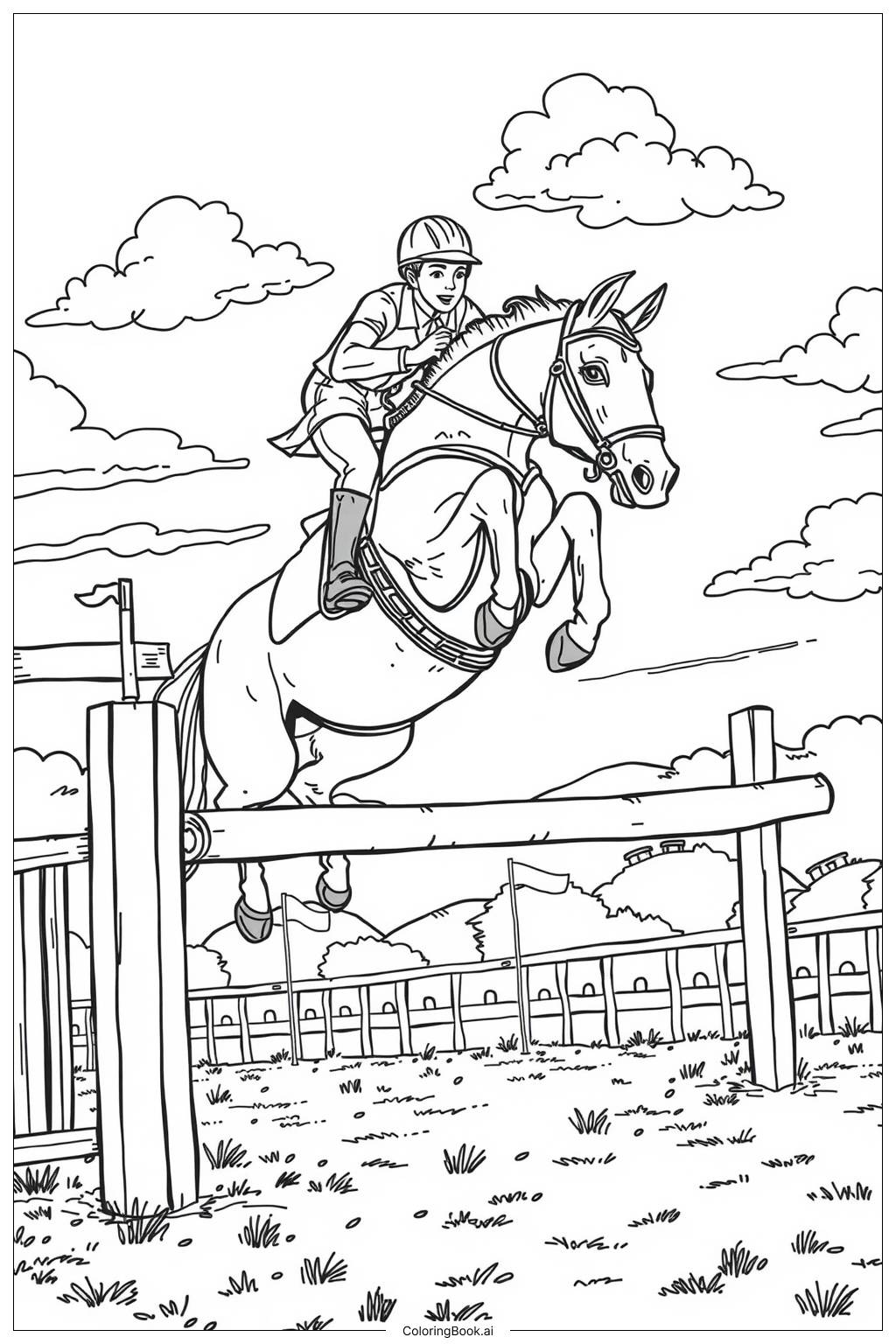
Coloring tips: How to color Family Riding Horses on a Trail coloring page well?
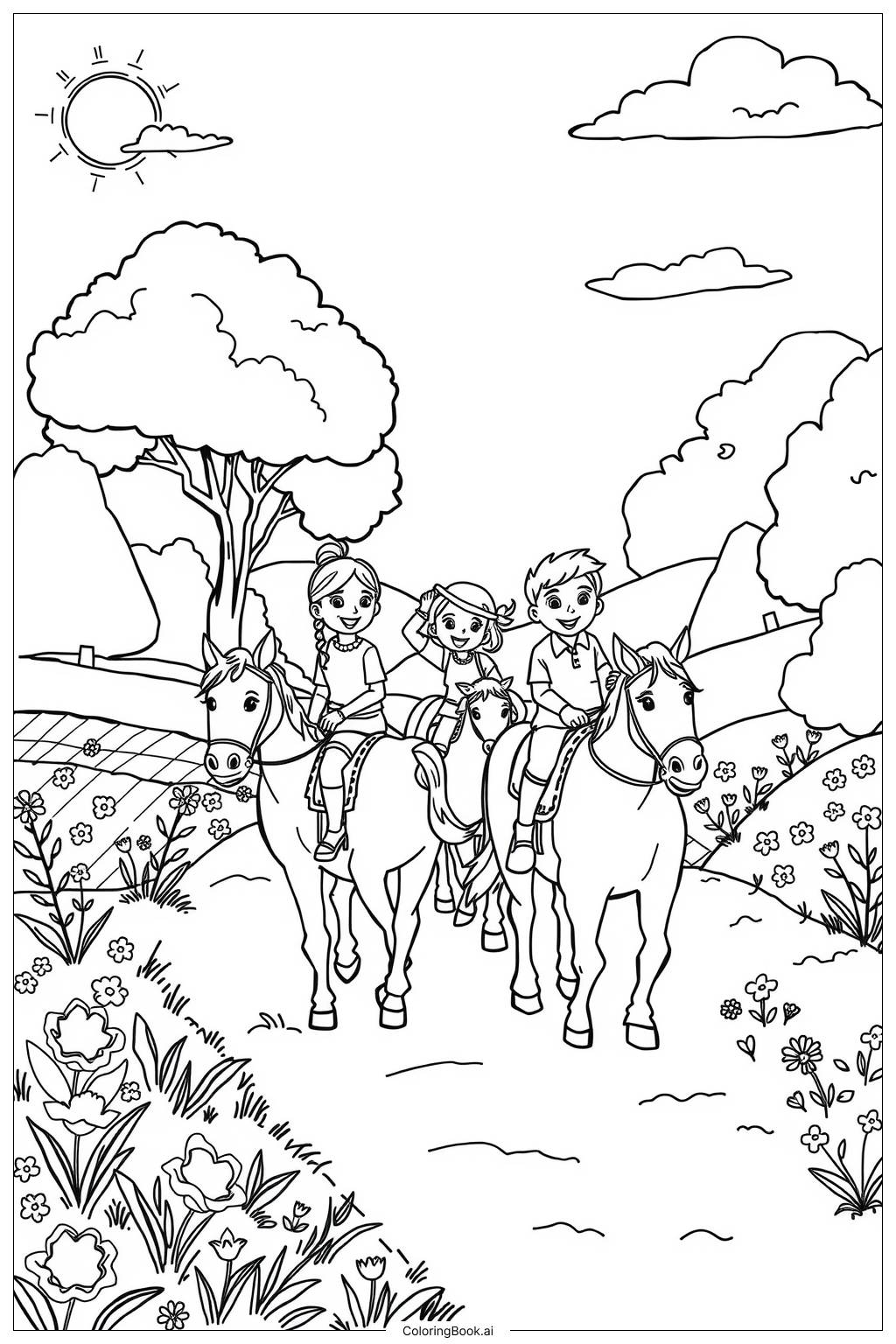
Start with the horses and give each one a different coat color to make them stand out. You could use brown, chestnut, or black for the horse bodies, and light tan or cream for the mane and tail. Color the riders' helmets in bright shades like red, blue, or yellow to add energy to the scene. Use earthy greens for the trees and grass along the trail. Add pops of color with wildflowers in purple, pink, and orange scattered along the path. The sky can be a soft blue with light white clouds. Try using darker shades on the inner parts of trees and lighter shades near the edges to create depth. A warm golden or light brown works well for the dirt trail. Keep the overall feel cheerful and lively by mixing bold and soft colors throughout the scene.
Coloring challenges: Which parts are difficult to color and need attention for Family Riding Horses on a Trail coloring page?
• Horse Anatomy and Muscle Definition: Horses have complex body shapes with visible muscles, joints, and curves. Coloring them realistically requires using multiple shades of the same color to show depth and dimension. Blending light and shadow across the body, neck, and legs can be tricky, especially for younger children who are just learning about shading techniques.
• Flowing Manes and Tails: The horses' manes and tails have many individual strands that flow in different directions. Keeping each strand looking natural while avoiding a flat, single-color result takes patience and a steady hand. Using two or three related shades helps give the hair a realistic, flowing look.
• Layered Background Details: The trail scene includes trees, grass, wildflowers, and a sky all layered behind the riders. Coloring overlapping elements without making the scene look muddy requires careful attention. Lighter colors should be applied to background elements and darker shades to the foreground to create a sense of distance.
• Rider Clothing and Gear: The riders wear helmets, shirts, pants, and boots with small details like straps and folds. These small areas require a fine-tipped tool and steady coloring to stay within the lines. Choosing colors that contrast well between riders helps each person stand out clearly in the group.
• Capturing a Cohesive Family Scene: Since three riders appear together, it is important that their colors work together as a group without looking too similar or too random. Planning a simple color palette in advance, such as matching or complementary tones, helps the whole family scene look balanced and harmonious.
Benefits of coloring books: Advantages of drawing Family Riding Horses on a Trail coloring page
Coloring this family trail riding scene offers a wonderful mix of fun, learning, and creativity. Children get to explore a variety of colors for nature elements like trees, grass, and wildflowers, which helps them build an understanding of the natural world around them. Choosing colors for each horse encourages creative decision-making and builds confidence in personal expression.
The detailed elements in this image, such as the horses' bodies, riders' gear, and layered background, help develop fine motor skills and hand-eye coordination as children carefully color within the lines. Focusing on a detailed scene also encourages patience and concentration, which are valuable skills both in and outside of the classroom.
This image carries a positive family theme that can spark meaningful conversations between parents and children about spending time outdoors, caring for animals, and enjoying activities together. It creates a relaxed, screen-free moment for families to bond over a shared creative activity.
For older children and adults, the shading and blending opportunities in this image offer a satisfying artistic challenge that can build real coloring and drawing skills over time. Overall, this page is both enjoyable and enriching for a wide range of ages.