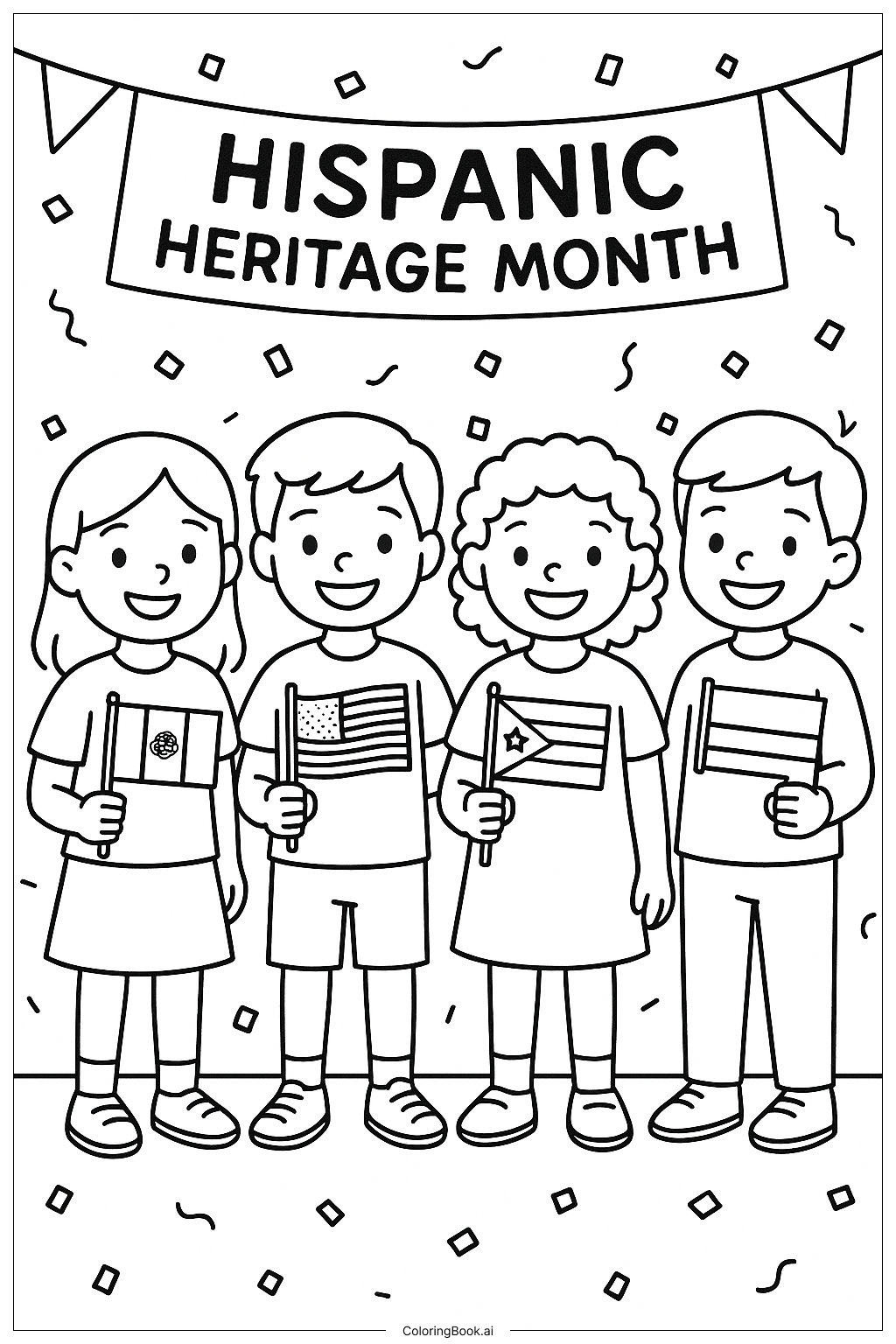
Coloring tips: How to color Children Holding Flags For Hispanic Heritage Month coloring page well?
To bring this image to life, use bright and vivid colors for the flags to represent the rich cultures of Hispanic countries accurately. Pick reds, greens, yellows, and blues for the flags to make them stand out. For the children’s clothing, choose warm and cheerful tones like orange, pink, and turquoise to reflect happiness and celebration. You can add lighter colors for skin tones and hair to show diversity. The background can be colored softly with pastel shades, so the flags and children remain the focus. Don’t forget to use different shades for details on clothing and hairstyles to add depth and make the picture more interesting. Have fun mixing colors and making the scene joyful!
Coloring challenges: Which parts are difficult to color and need attention for Children Holding Flags For Hispanic Heritage Month coloring page?
• Flag Details: The flags have intricate patterns and multiple colors that require careful attention to color within the lines and use the correct colors for each flag to represent them properly.
• Small Areas: Some parts like the children’s fingers holding flags or facial features are quite small and need precise coloring to keep the image neat.
• Diversity in Skin Tones: Coloring different skin tones respectfully involves choosing a range of browns, tans, and other shades, which can be challenging for younger children.
• Overlapping Shapes: The children and flags overlap in places, so it’s important to color carefully to avoid mixing colors between different parts.
• Maintaining Contrast: Balancing bright colors for flags and clothing while keeping the background soft can be tricky but is important for visual clarity.
Benefits of coloring books: Advantages of drawing Children Holding Flags For Hispanic Heritage Month coloring page
Coloring this image helps children learn about Hispanic Heritage Month in a fun way. It encourages them to focus on details and improve fine motor skills as they carefully color flags and small features. The diversity of the children promotes acceptance and appreciation of different cultures and skin tones. By choosing realistic colors for the flags, kids also develop knowledge of different countries’ symbols. Overall, working on this image strengthens concentration, creativity, and cultural understanding while making a joyful celebration visible through colors.