Coloring tips: How to color Hedgehog On Log coloring page well?
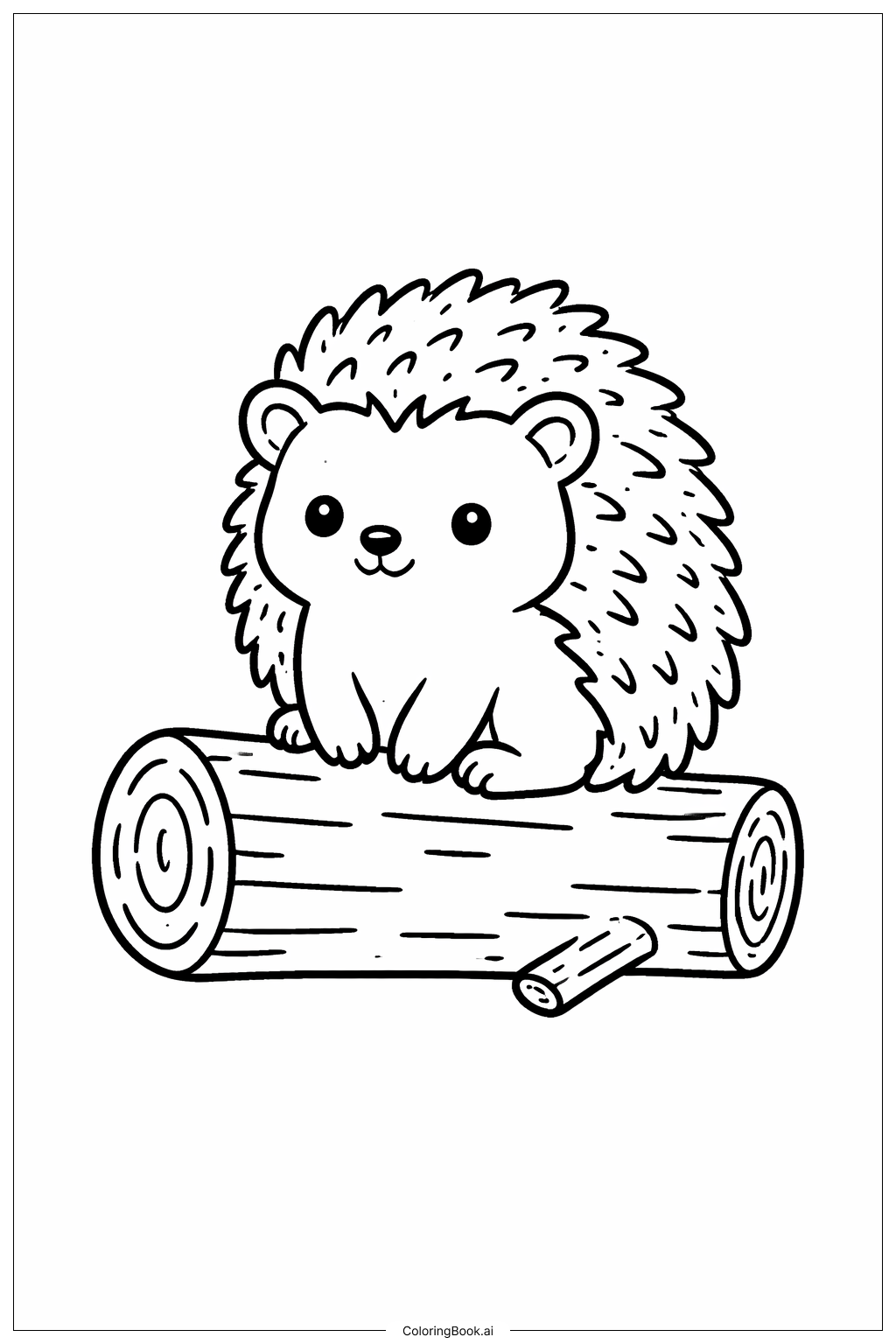
Start with the hedgehog's face and belly. Use a light cream or pale tan for the soft underbelly and face. For the spines on its back, try a mix of brown and dark gray, adding lighter tips to give them a natural look. Use warm chestnut or golden brown for the log, and add darker brown shading along the edges and inside the wood grain lines to create depth. If there are mushrooms, color the caps in red or orange with white dots, and use green for any leaves. Keep the background simple with soft greens or light blue to make the hedgehog stand out. Don't worry about staying perfectly inside the lines — layering colors gently will make the image look warm and lively.
Coloring challenges: Which parts are difficult to color and need attention for Hedgehog On Log coloring page?
• Hedgehog Spine Texture: The many small, pointed spines covering the hedgehog's back are one of the trickiest parts to color. Each spine is narrow and close to the next one, making it hard to color them individually without blending into neighboring areas. Using a fine-tipped colored pencil or marker works best here. Try alternating shades of brown and dark gray to give the spines a layered, realistic look.
• Smooth-to-Rough Transitions: The hedgehog's body has two very different surface types — the soft, smooth belly and the sharp, spiny back. Blending from a light cream on the belly to darker tones on the spines requires careful shading. Rushing this transition can make the figure look flat or unnatural.
• Log Wood Grain Details: The log features fine grain lines, ridges, and possibly knot markings across its surface. Filling in these narrow details with the right brown tones while keeping the overall log shape readable takes patience. Using at least two or three shades of brown will help create a convincing wood texture.
• Small Accent Details: Tiny features like mushroom caps, small leaves, or pebbles near the log are small in size but important for making the scene feel complete. These require a steady hand and a sharp coloring tool to fill neatly without going outside the lines.
• Avoiding Muddy Colors: With so many earthy tones in one image — browns, tans, grays — it is easy for the colors to blend together and lose contrast. Planning ahead by choosing a slightly different shade for each element (log, spines, belly, ground) helps each part stand out clearly.
Benefits of coloring books: Advantages of drawing Hedgehog On Log coloring page
Coloring this hedgehog image is a wonderful activity for kids and beginners alike. The variety of textures — from the spiny back to the smooth log surface — gives young colorists a chance to practice using different strokes and pressure levels with their tools. This helps build fine motor skills and hand-eye coordination in a fun, low-pressure way.
The nature scene also encourages creativity. Kids get to make their own color choices and imagine where this little hedgehog lives, sparking storytelling and imaginative thinking. Deciding what colors to use for the log, the spines, and any small details helps develop early artistic judgment.
For older children or adults, the detailed textures offer a satisfying challenge. Focusing on shading the wood grain or layering the spines can be deeply relaxing and meditative, helping to reduce stress and improve concentration.
Overall, this coloring page combines a lovable subject with a rich, textured scene that makes the coloring experience both educational and enjoyable. It is a great way to spend quiet time while building creative confidence.