Coloring tips: How to color Pixelated Heart Retro Design coloring page well?
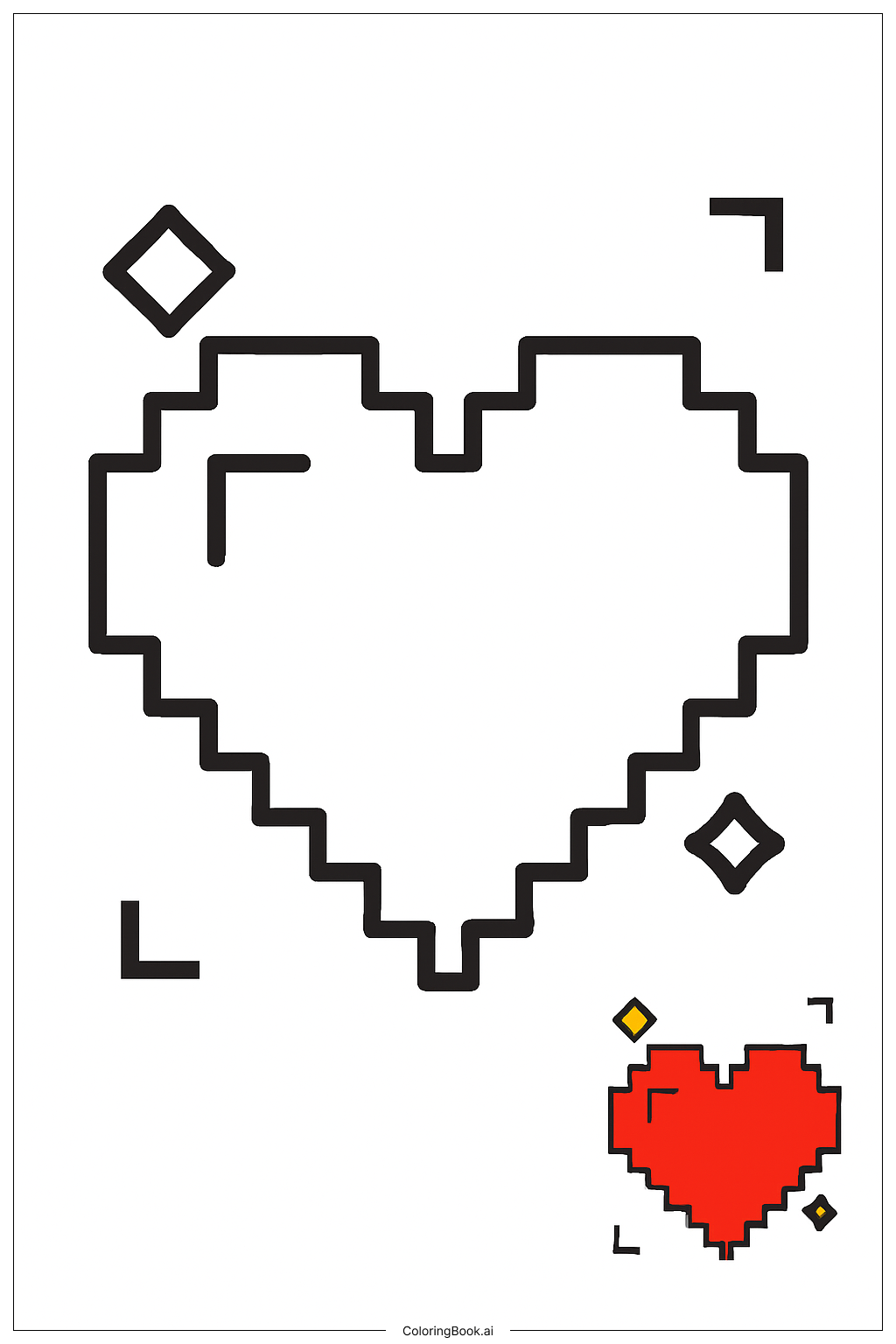
This pixelated heart looks amazing with bold, flat colors that honor its retro video game style. Here are some fun ideas to get started. Use bright red or crimson for the main body of the heart to make it pop with energy and warmth. For the highlight pixels in the upper left corner, try white or pale yellow to give the heart a shiny, glowing look. You can add a dark outline effect by coloring the border pixels in deep maroon or dark red. For a fun twist, try a cool color palette instead — use purple and blue tones for a galaxy-themed heart. Pink and magenta shades work great for a softer, sweeter look perfect for Valentine's Day. Gold and orange pixels can give the heart a fiery, powerful feel. Use markers for the flattest, most even color, or colored pencils for a softer texture. Try to keep each pixel block one solid color with no blending to preserve the retro pixel art style. Have fun and be bold with your choices!
Coloring challenges: Which parts are difficult to color and need attention for Pixelated Heart Retro Design coloring page?
• Small Pixel Squares: The heart is made up of many tiny square pixel blocks. Coloring neatly inside each small square without going over the edges is tricky, especially for younger children. A fine-tipped marker or a sharpened colored pencil works best to stay within the lines.
• Consistent Color Blocking: In pixel art, each color zone must look uniform and solid. Keeping the same shade consistent across multiple small blocks without streaks or uneven patches requires steady pressure and careful technique. Rushing through this step can make the finished design look messy.
• Color Boundary Management: The edges where one color meets another must be clean and sharp to preserve the pixelated look. Blending or smudging at the borders between pixel blocks breaks the retro style effect that makes this design special.
• Planning the Color Palette: Unlike free-form drawings, pixel art looks best when colors are chosen deliberately before starting. Deciding which pixels will be red, pink, white, or accent colors ahead of time helps the heart read clearly as a unified image. Changing colors midway can throw off the overall balance.
• Retaining the Retro Aesthetic: The charm of this design depends on bold, flat colors with no gradients or shading. Resisting the urge to blend or shade — a common instinct for experienced colorists — is an unexpected challenge that requires a different mindset than typical coloring pages.
Benefits of coloring books: Advantages of drawing Pixelated Heart Retro Design coloring page
Coloring this Pixelated Heart Retro Design offers wonderful benefits for kids and teens alike. First, working within the small pixel squares builds fine motor skills and steady hand control. Each tiny block requires careful, precise coloring, which improves focus and patience over time. This image also sparks creativity, as colorists must choose which pixels get which colors to build a bold, eye-catching design. The retro pixel art style connects young colorists to classic video game culture, making it both fun and educational. Choosing color palettes encourages planning and decision-making skills. Completing the full heart design gives a strong sense of accomplishment and pride. The geometric, structured nature of pixel art is also calming and meditative, helping kids relax after a busy day. Sharing the finished artwork with friends or family builds confidence and communication. Overall, this page blends artistic expression with logic-based thinking in a way that is enjoyable for a wide age range.