Coloring tips: How to color Harry Potter Resting in Herbology Garden coloring page well?
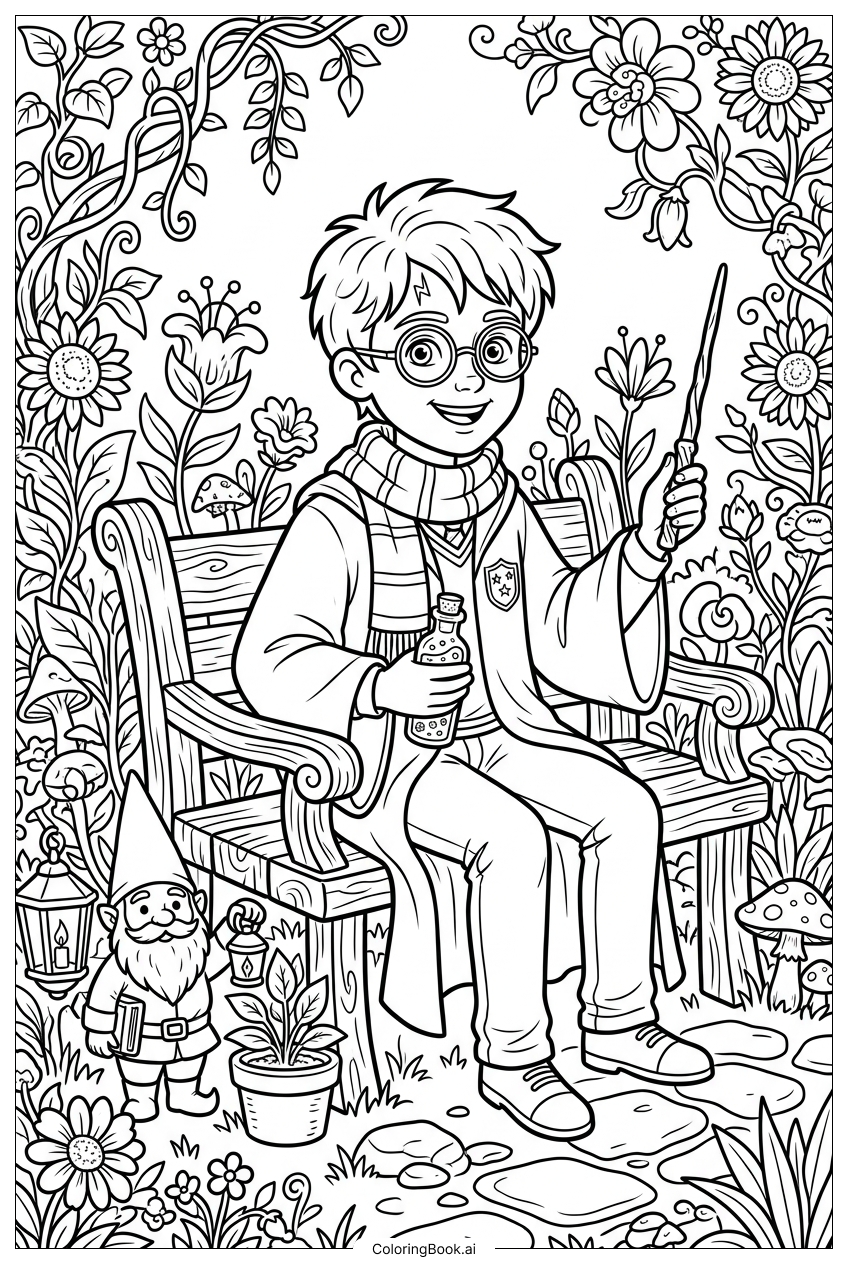
Start with Harry's robes using deep black or dark navy. Add a warm burgundy and gold for his Gryffindor scarf or tie. Use light peach or tan for his skin, and dark brown for his messy hair. His round glasses can be colored with a soft silver or gray.
For the plants, use many shades of green — from bright lime to deep forest green — to show depth and variety. Add pops of color with purple, blue, pink, or yellow for any flowers or magical blooms. Use earthy brown tones for pots, soil, and wooden tools.
The greenhouse background can be done in soft, warm yellows and greens to create a sunny, cozy atmosphere. Let your creativity shine by giving the magical plants unusual and vibrant colors that feel otherworldly and fun. There are no wrong choices in a magical garden!
Coloring challenges: Which parts are difficult to color and need attention for Harry Potter Resting in Herbology Garden coloring page?
• Layering Plant Colors: The herbology garden is filled with overlapping leaves, vines, and flowers of many shapes and sizes. Coloring each plant differently while keeping the layers distinct takes careful attention. Using lighter shades for background plants and deeper shades for foreground plants helps create a sense of depth and makes the scene look more realistic.
• Harry's Fine Details: Harry Potter has several small but iconic features — his round glasses, lightning bolt scar, Hogwarts robes, and house colors. Coloring these accurately without smudging or going outside the lines can be tricky, especially for younger colorists. Taking your time with thin lines and small areas will make a big difference.
• Blending Greens Without Monotony: Since the scene is set in a plant-filled garden, green is the dominant color. The challenge is using multiple shades of green — lime, olive, emerald, and forest green — so the image does not look flat or repetitive. Mixing in yellow-greens and blue-greens helps keep the garden feeling alive and varied.
• Magical Plant Accents: Some plants in a magical herbology garden might have unusual features like glowing tips, strange pods, or colorful berries. Deciding how to color these fantastical elements creatively while keeping them visually balanced with the rest of the image requires planning and imagination.
• Background Depth and Space: The greenhouse or garden background includes structural elements like paths, pots, and distant plants. Keeping these lighter or more muted than the foreground helps create space and prevents the scene from feeling too crowded or visually overwhelming.
Benefits of coloring books: Advantages of drawing Harry Potter Resting in Herbology Garden coloring page
Coloring this image of Harry Potter resting in a herbology garden offers a wonderful mix of relaxation and creative learning for children and fans of all ages.
For younger children, filling in the many plants and leaves helps develop fine motor skills and hand-eye coordination. Choosing colors for magical plants sparks imaginative thinking and encourages kids to make creative decisions.
For older children and teens, the complexity of the overlapping plants and the detail in Harry's outfit provides a satisfying coloring challenge. It helps build patience, focus, and attention to detail.
For Harry Potter fans, this scene connects coloring with storytelling. Kids can imagine they are helping tend Professor Sprout's greenhouse or going on a Hogwarts adventure, making the activity feel meaningful and fun.
The nature-filled setting also introduces children to the concept of plants, gardens, and the natural world in a playful way. It can spark curiosity about real herbs and botany.
Overall, this coloring page combines the joy of a beloved fictional world with the proven calming and educational benefits of coloring. It is a perfect creative activity for Free, Printable Coloring Pages enjoyed by Boys, Girls, and Adults alike.