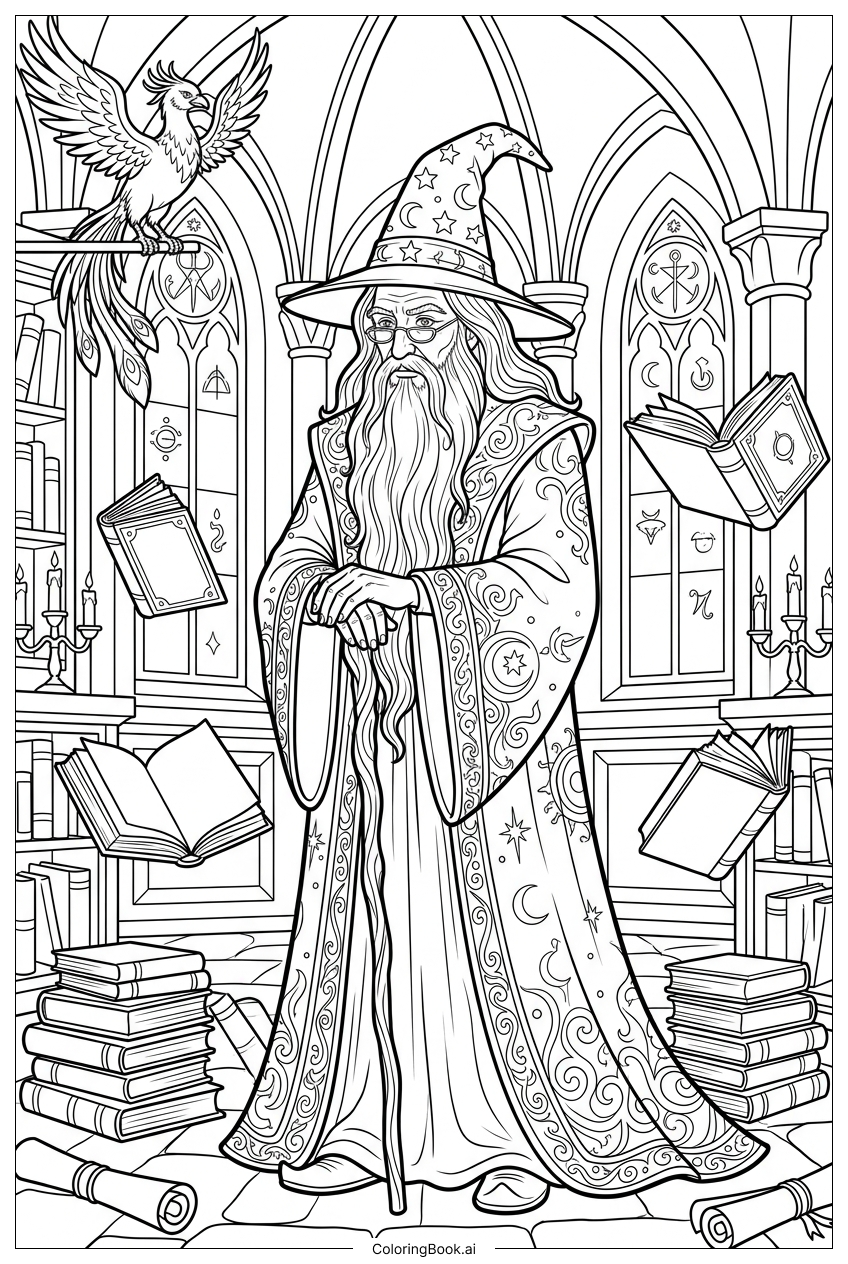
Coloring tips: How to color Harry Potter Learning Wisdom from Robed Headmaster coloring page well?
Start with the characters' skin tones using soft peach or warm tan shades. Harry's Hogwarts robes look great in classic black, while his signature red and gold Gryffindor scarf adds a bold pop of color. Give the headmaster's robes a rich, deep purple or midnight blue with silver or gold patterns to show his wisdom and power. Use warm golden yellows and soft browns for the bookshelves and ancient tomes in the background. Magical artifacts can be colored in shimmering golds, deep greens, and glowing blues to give them an enchanting feel. Harry's eyes are a vivid green — a fun detail kids will enjoy adding. Use light gray or silver for any stone walls or castle details. Feel free to add soft glowing effects around magical objects using pale yellow or white. Keep the overall palette rich and warm to capture the cozy, mysterious feel of a wizard's study.
Coloring challenges: Which parts are difficult to color and need attention for Harry Potter Learning Wisdom from Robed Headmaster coloring page?
• Intricate Robe Patterns: Both Harry and the headmaster wear layered robes with fine folds and decorative details. Staying within the small areas of each fold requires a sharp colored pencil or a fine-tip marker. Rushing through these sections may result in colors bleeding into neighboring areas, so take your time with each crease and border.
• Facial Expressions and Fine Features: The characters' faces include small details like Harry's round glasses, expressive eyes, and the headmaster's aged features such as wrinkles and a long beard. These tiny areas are tricky to color neatly, especially for younger children. Using very fine-tipped tools and working slowly will help preserve the emotion and personality of each face.
• Background Complexity: The shelves filled with bottles, books, and magical artifacts create a dense and detailed background. Each object has its own shape and suggested color, making it easy to accidentally color two adjacent items the same shade. Planning a varied color palette for the background before you begin will help each item stand out clearly.
• Balancing Light and Shadow: To make the scene feel three-dimensional, adding light and shadow effects on the robes and objects is important but challenging. Blending two shades of the same color — a lighter tone for highlights and a darker tone for shadow areas — can be difficult for beginners. Practice blending on a separate piece of paper first.
• Magical Glow Effects: Objects like wands, glowing orbs, or enchanted books may benefit from a soft glowing effect. Achieving this with colored pencils or crayons takes layering and patience, especially around light sources where colors must fade gradually outward.
Benefits of coloring books: Advantages of drawing Harry Potter Learning Wisdom from Robed Headmaster coloring page
Coloring this Harry Potter scene offers many wonderful benefits for children and fans of all ages. First, it builds focus and concentration. Following the fine lines of robes, faces, and background details requires careful attention, helping kids practice sitting still and staying on task. Second, it sparks creativity. Choosing colors for magical robes, glowing artifacts, and enchanted books encourages children to think imaginatively and make their own artistic choices. Third, it develops fine motor skills. Carefully coloring small areas like glasses, book spines, and robe patterns strengthens hand-eye coordination and pencil control, which supports handwriting and other school skills. Fourth, it deepens a love of storytelling. Spending time with beloved characters like Harry Potter and his wise headmaster helps children connect more deeply with the story, fueling a passion for reading and imaginative play. Fifth, it provides calm and relaxation. The quiet, focused activity of coloring is a healthy way for children to unwind after a busy day. Finally, completing this page gives kids a real sense of accomplishment and pride. Displaying their finished artwork builds confidence and encourages them to keep creating.