Coloring tips: How to color Harry Potter Potions Class coloring page well?
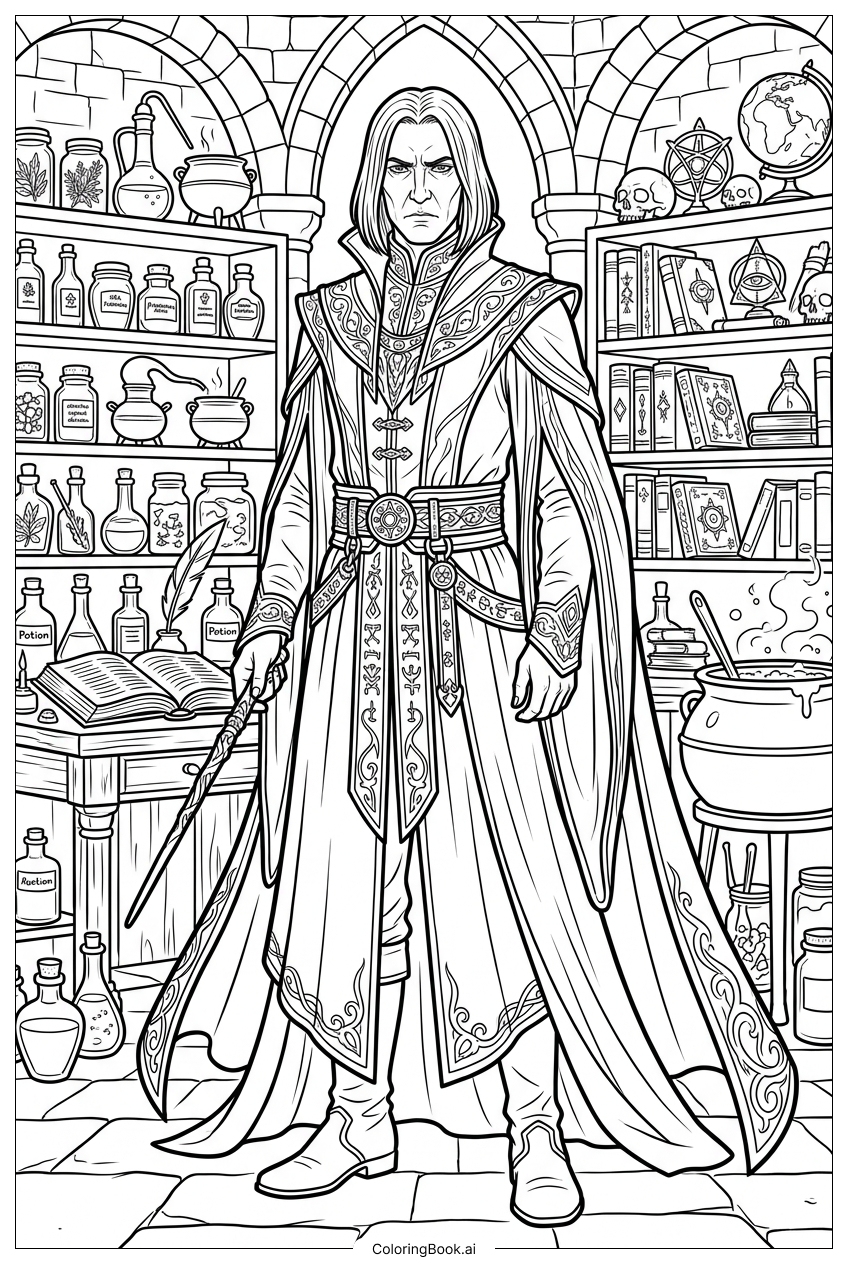
Start with Harry Potter's iconic features — use warm peach or light tan for his skin, black for his messy hair, and a warm gray or deep charcoal for his school robes. Add red and gold accents for his Gryffindor tie. Color his round glasses with a light silver or brown outline. For the cauldron, try dark gray or black with a glowing green or deep purple for the bubbling potion inside. Use earthy tones — browns, tans, and muted greens — for the potion bottles and ingredient jars on the shelves. The dungeon walls and stone arches look great in cool grays and blue-grays. Give the potions master dark flowing robes in black or deep navy. Add small pops of color to the potion labels and magical ingredients to make the scene feel lively and magical. Dim, moody lighting effects can be suggested using darker shading around the edges of the scene.
Coloring challenges: Which parts are difficult to color and need attention for Harry Potter Potions Class coloring page?
• Facial Expressions and Fine Details: Both Harry and the potions master have detailed facial features that require careful, precise coloring. Harry's round glasses, worried eyes, and messy hair need a steady hand and fine-tipped tools to capture correctly without smudging or overlapping lines.
• Cauldron and Glowing Potion Effect: Creating a believable glowing potion inside the dark cauldron is challenging. You need to blend bright greens or purples from the center outward, gradually darkening toward the cauldron's edges to suggest a magical inner glow. This type of gradient blending can be tricky, especially for younger colorists.
• Crowded Shelf and Background Details: The shelves filled with potion bottles, jars, and mysterious ingredients include many small shapes packed closely together. Coloring each bottle a different color without bleeding into neighboring items requires patience and thin coloring tools.
• Stone Dungeon Textures: The arched stone walls and floor of the dungeon classroom have textured surfaces that benefit from layered shading. Achieving a realistic stone look means using multiple shades of gray and carefully building up shadows in the crevices, which takes time and a light touch.
• Robe and Fabric Folds: Both characters wear long, flowing robes with visible fabric folds and creases. Shading these folds to suggest depth and dimension — using lighter tones on raised areas and darker tones in the creases — is an intermediate-level skill that adds greatly to the finished look of the page.
Benefits of coloring books: Advantages of drawing Harry Potter Potions Class coloring page
Coloring this Harry Potter Potions Class page offers a wonderful mix of fun and learning for kids and fans of all ages. Working through the many details of this scene helps build fine motor skills and hand-eye coordination, especially when coloring small areas like potion bottles and glasses frames. Children practice patience and focus as they move carefully through the complex background and detailed character features. Choosing colors for the glowing cauldron and mysterious ingredients sparks creative thinking and imagination, encouraging kids to invent their own magical world inside the picture. The scene also introduces concepts of light and shadow through the dungeon atmosphere, helping young artists begin to understand basic shading techniques in a fun, low-pressure setting. For older fans of the Harry Potter series, this page offers a relaxing, meditative activity that can reduce stress and provide a satisfying creative outlet. Completing a detailed scene like this builds confidence and a sense of accomplishment. Whether coloring alone or with friends and family, this page creates an opportunity for storytelling, discussion, and shared creative enjoyment rooted in a beloved magical world.