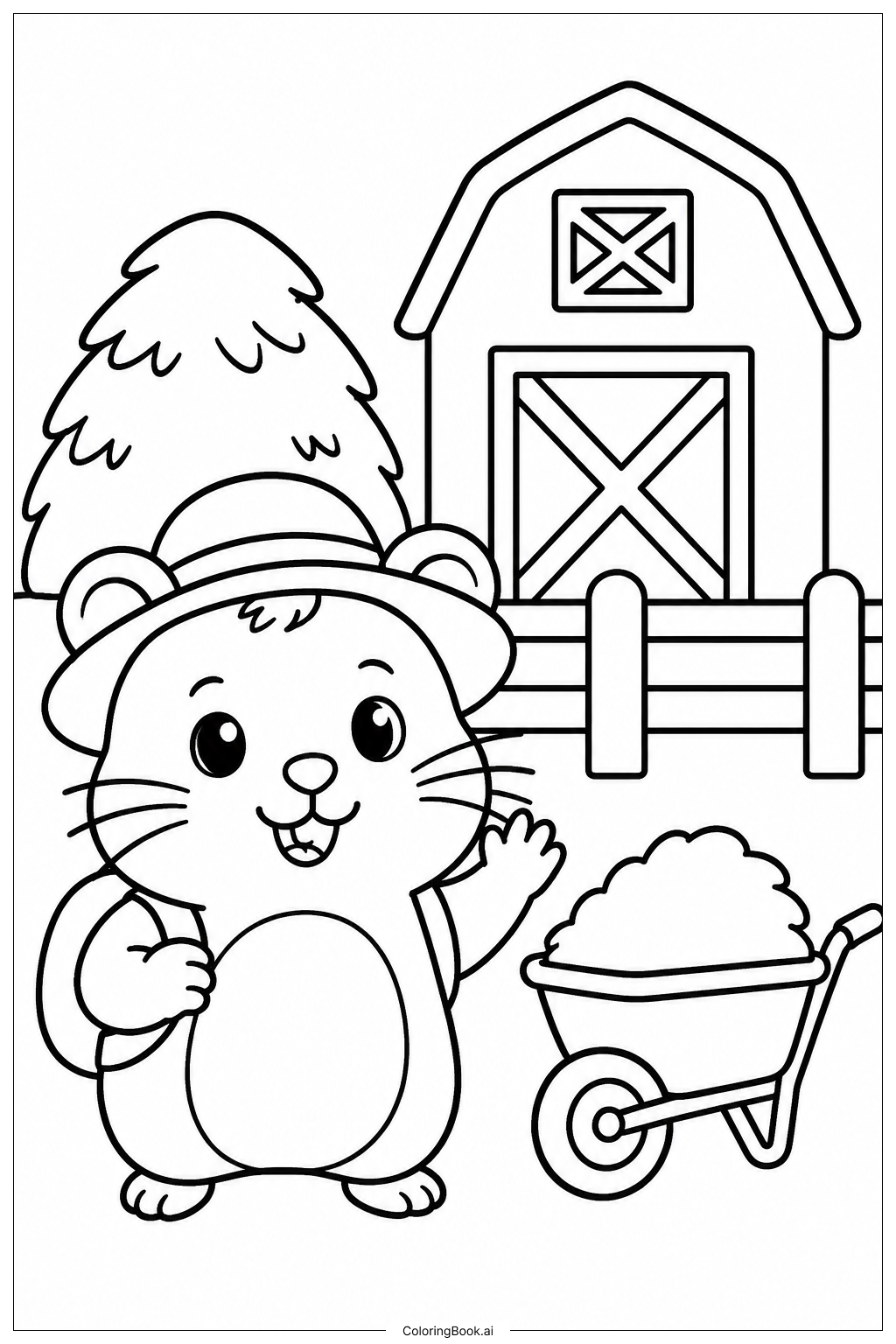
Coloring tips: How to color Hamster Visiting Farm coloring page well?
For this image, use soft browns, creams, and whites for the Hamster to show its fluffy fur. Bright reds and yellows can color the barn and tractor for a cheerful farm vibe. Try different shades of green for the grass and trees to add depth and make the environment lively. Use warm yellows and oranges for the chickens and gentle pinks for the pig. Varying blue tones for the sky can make your coloring look more dynamic. Don’t be afraid to mix light and dark colors to show shadows and sunlight around the farm.
Coloring challenges: Which parts are difficult to color and need attention for Hamster Visiting Farm coloring page?
• Small Animal Details: The Hamster’s tiny face and paws have fine lines that need careful coloring to avoid going outside the lines. This requires patience and a steady hand. • Multiple Animals and Objects: With many farm animals and items like a tractor and fence, it can be tricky to choose colors that stand out but also harmonize well together. Avoid clashing colors to keep the picture balanced. • Texture Variation: Different surfaces like the Hamster’s fur, wooden fence, metal tractor, and leafy trees require various coloring techniques to show texture and contrast. This challenge helps children practice shading and blending. • Overlapping Elements: The Hamster is placed near overlapping shapes such as animals and farm buildings, which makes it harder to decide where one ends and another begins when coloring. Staying inside the lines is important here. • Large and Small Spaces: The page mixes large open areas like the sky and barn walls with small tight spots like the animals’ eyes and ears, demanding flexibility in coloring strokes and tools.
Benefits of coloring books: Advantages of drawing Hamster Visiting Farm coloring page
Coloring this image helps improve fine motor skills as children carefully fill in small details like the Hamster’s features and animal shapes. It encourages creativity by letting them experiment with natural colors and imaginative combinations for the farm setting. The image also teaches observation skills, as kids notice textures and shading differences between fur, wood, and metal. Additionally, coloring a busy scene like this farm boosts focus and patience, since balancing multiple elements requires concentration. Finally, the friendly animal theme makes the activity fun and relaxing, fostering a love for nature and animals.