Coloring tips: How to color Hamster Riding Tricycle coloring page well?
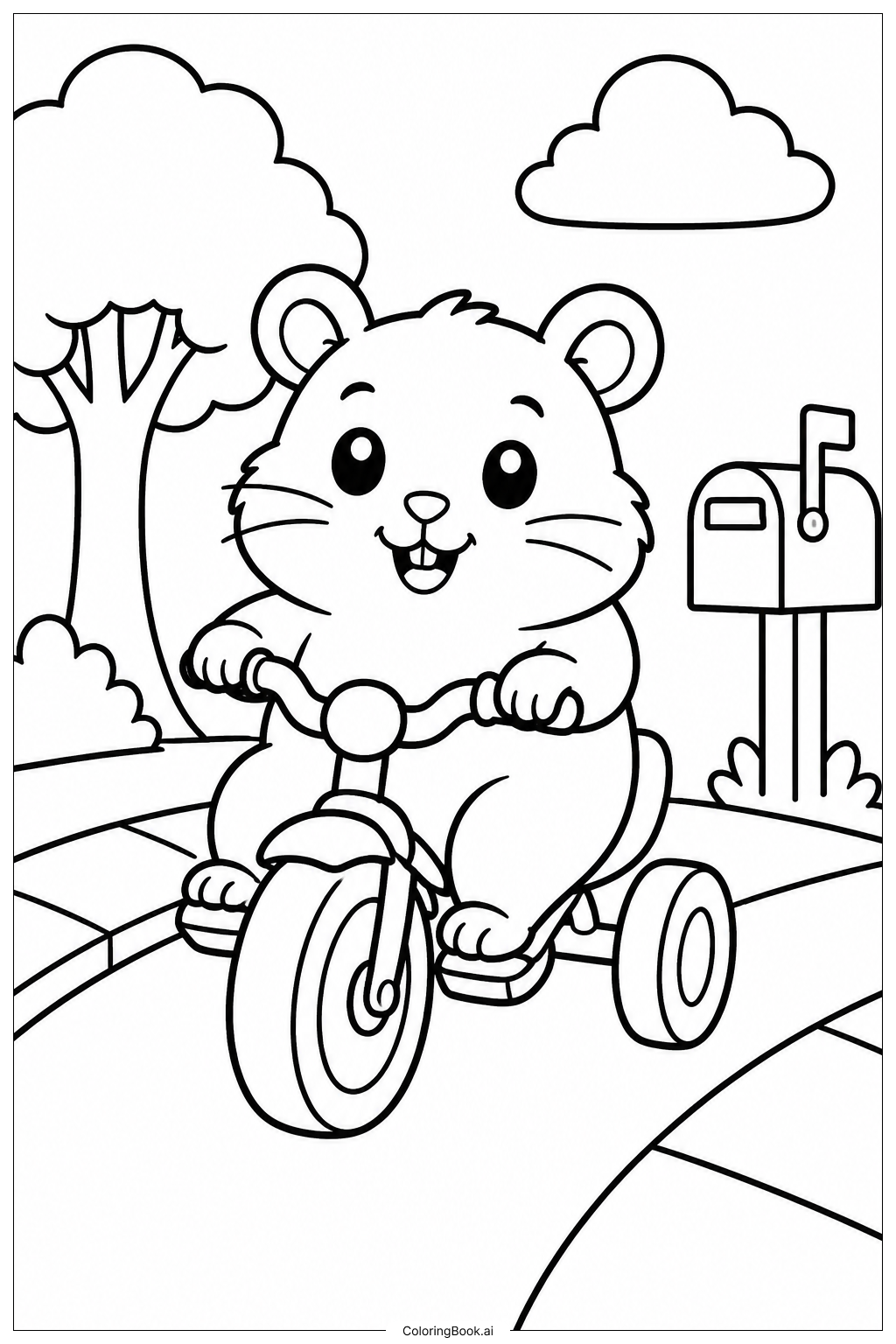
For coloring this image, use warm tones for the Hamster such as soft browns, tans, and cream colors to bring out its fluffy fur. You can add little touches of pink on the ears, nose, and cheeks to make it look cuter. The tricycle can be bright and vibrant — think red, blue, or yellow — to give it a cheerful and fun look. Try coloring the wheels in gray or black to represent rubber tires. For the background, simple greens or pastel blues will keep the focus on the Hamster riding the tricycle, while making the whole picture lively. Use shading on the Hamster’s fur and the tricycle’s metal parts to show light and shadow, enhancing the 3D effect. Remember, let your creativity guide you with colors that make this playful scene come alive!
Coloring challenges: Which parts are difficult to color and need attention for Hamster Riding Tricycle coloring page?
• Small Details: The Hamster’s fur has many fine lines and delicate whiskers, which require careful coloring to avoid smudging. Coloring inside these tiny areas can be challenging for younger children.
• Wheel Spokes and Pedals: The spokes of the tricycle’s wheels and the pedals have thin lines and small shapes that may need precise hand control and patience to fill in neatly.
• Curved Surfaces: The round shapes of the Hamster’s face, ears, and the rounded parts of the tricycle need smooth and consistent coloring to show volume.
• Color Layering: To create shading and texture on the Hamster’s fur and metal parts of the tricycle, layering colors without over-darkening can be tricky.
• Balancing Brightness: Choosing colors that are both vibrant and harmonious requires understanding how different colors work together, which can be a good challenge for budding artists.
Benefits of coloring books: Advantages of drawing Hamster Riding Tricycle coloring page
Coloring this Hamster Riding Tricycle image helps improve hand-eye coordination and fine motor skills, especially when filling in small details. It encourages creativity by allowing children to experiment with different color combinations and shading techniques. Working on a playful and charming scene like this can make coloring sessions more engaging and fun, boosting concentration and patience. For children aged 4 to 16, it also helps develop focus and artistic confidence as they learn to manage colors and stay within the lines. Overall, this image offers not only entertainment but also valuable practice in key developmental skills through art.