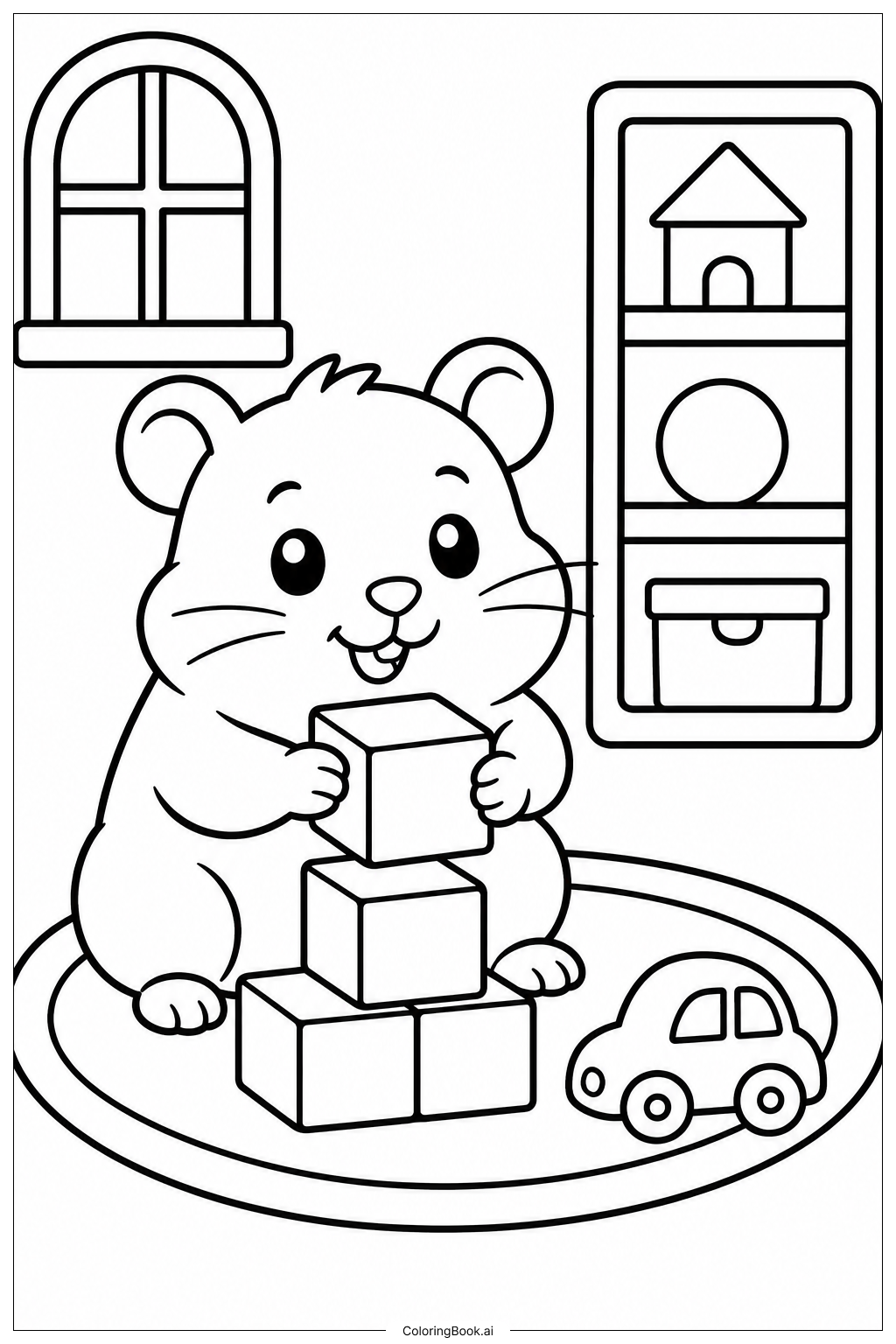
Coloring tips: How to color Hamster Playing With Blocks coloring page well?
For coloring this image, try using soft, natural colors for the Hamster such as light brown, cream, or golden yellow to create a warm and fluffy appearance. You can add shades of pink for the ears and cheeks to highlight the cute features. The building blocks can be brightly colored to make the scene lively and fun. Use primary colors like red, blue, and yellow or mix in green, orange, and purple. Adding different shades to the blocks will help make them stand out individually. Try coloring the background with gentle pastel tones so the Hamster and blocks are the main focus. Use lighter colors for the Hamster’s fur to contrast with the vivid blocks around it.
Coloring challenges: Which parts are difficult to color and need attention for Hamster Playing With Blocks coloring page?
• Small Details: The Hamster’s whiskers, tiny paws, and facial features require careful, precise coloring to keep them neat and clear without smudging. • Texture Variation: Capturing the soft, fluffy texture of the Hamster’s fur with smooth shading can be challenging, especially around the ears and cheeks where subtle color shifts are needed. • Block Shapes: The building blocks have edges and different shapes that need consistent coloring to convey depth and volume. Applying shadows and highlights will require attention to light direction. • Overlapping Objects: Some blocks overlap or are stacked, so it is important to color the edges accurately to maintain their separate forms. • Consistent Color Balance: Balancing bright block colors with the Hamster’s natural tones without overpowering the scene can be tricky, needing thoughtful color choices.
Benefits of coloring books: Advantages of drawing Hamster Playing With Blocks coloring page
Coloring this image encourages focus and fine motor skills as children practice staying within the small lines of the Hamster’s features and blocks. It also sparks creativity by allowing them to choose colors for the Hamster and blocks, enhancing their color recognition and decision-making. This activity can improve hand-eye coordination through detailed work on the tiny paws and whiskers. Additionally, coloring the playful scene promotes relaxation and patience, while inspiring curiosity about animals and building toys. Overall, it supports artistic expression while providing a fun and calming experience.