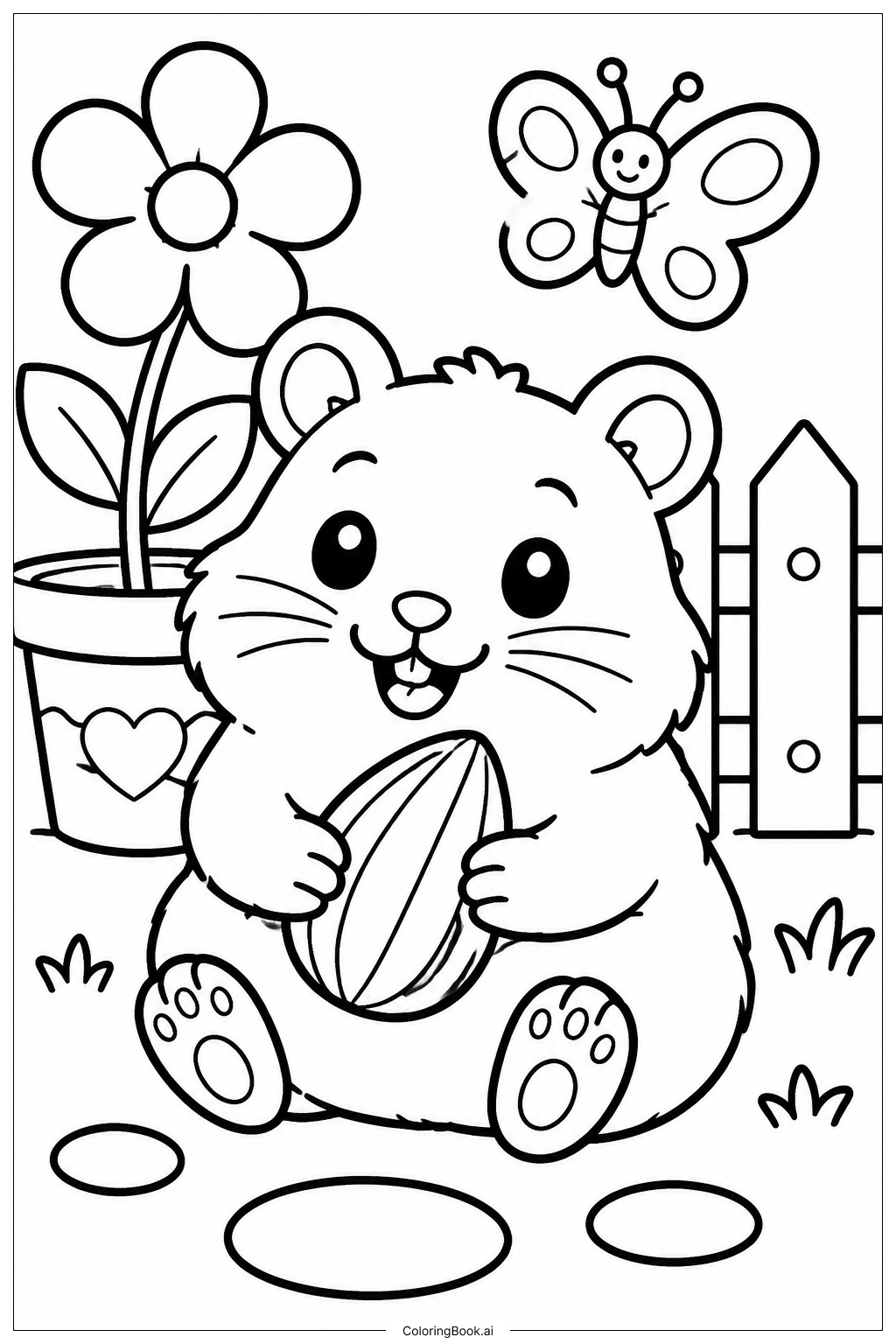
Coloring tips: How to color Hamster In Garden coloring page well?
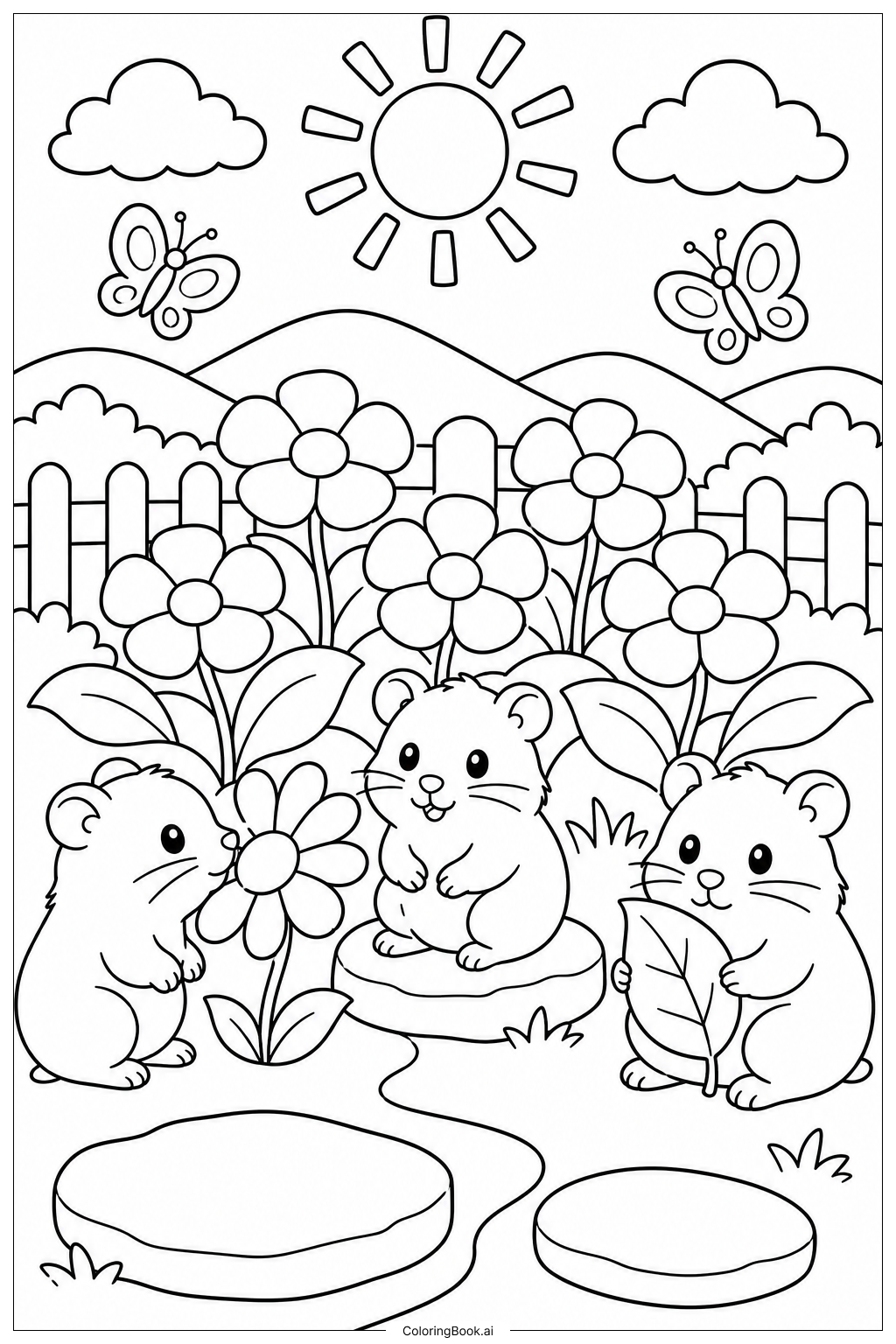
When coloring this Hamster In Garden picture, try using warm colors for the Hamster’s fur, such as light browns, tans, and creams. For the garden plants and flowers, use bright greens for the leaves and a variety of colors like red, pink, yellow, or purple for the blossoms. The grass can be different shades of green to show depth. Remember to color the mushroom with a contrasting shade like red or orange for the cap and white for the stem. Adding some shading around the Hamster and plants will make the picture look more lively and three-dimensional. Have fun mixing colors and finding your favorite combinations!
Coloring challenges: Which parts are difficult to color and need attention for Hamster In Garden coloring page?
• Small Details: The Hamster’s tiny facial features and whiskers require careful coloring to stay neat and clear. Coloring inside these fine lines can be challenging for younger children. • Plant Textures: The leaves and flower petals have delicate lines and shapes that need patience to color evenly. Overlapping leaves may cause confusion about which areas to color first. • Blending Colors: To make the garden look natural, blending different greens and flower colors smoothly can be difficult without practice. • Shading: Adding shading on the Hamster’s fur and garden elements helps the picture pop but requires control of pressure and layering. • Limiting Color Bleed: Since many small objects are close together, color may accidentally bleed or mix if too much pressure or marker is used.
Benefits of coloring books: Advantages of drawing Hamster In Garden coloring page
Coloring this Hamster In Garden image helps improve fine motor skills and hand-eye coordination through the careful work of filling small shapes. It encourages creativity by letting children choose colors and blending techniques to create natural garden scenes. Coloring the tiny details also boosts focus and patience over time. Additionally, this nature-themed picture can inspire interest in animals and the outdoors. The variety of shapes and textures provides a fun challenge that makes the activity more engaging and rewarding for kids aged 4 to 16.