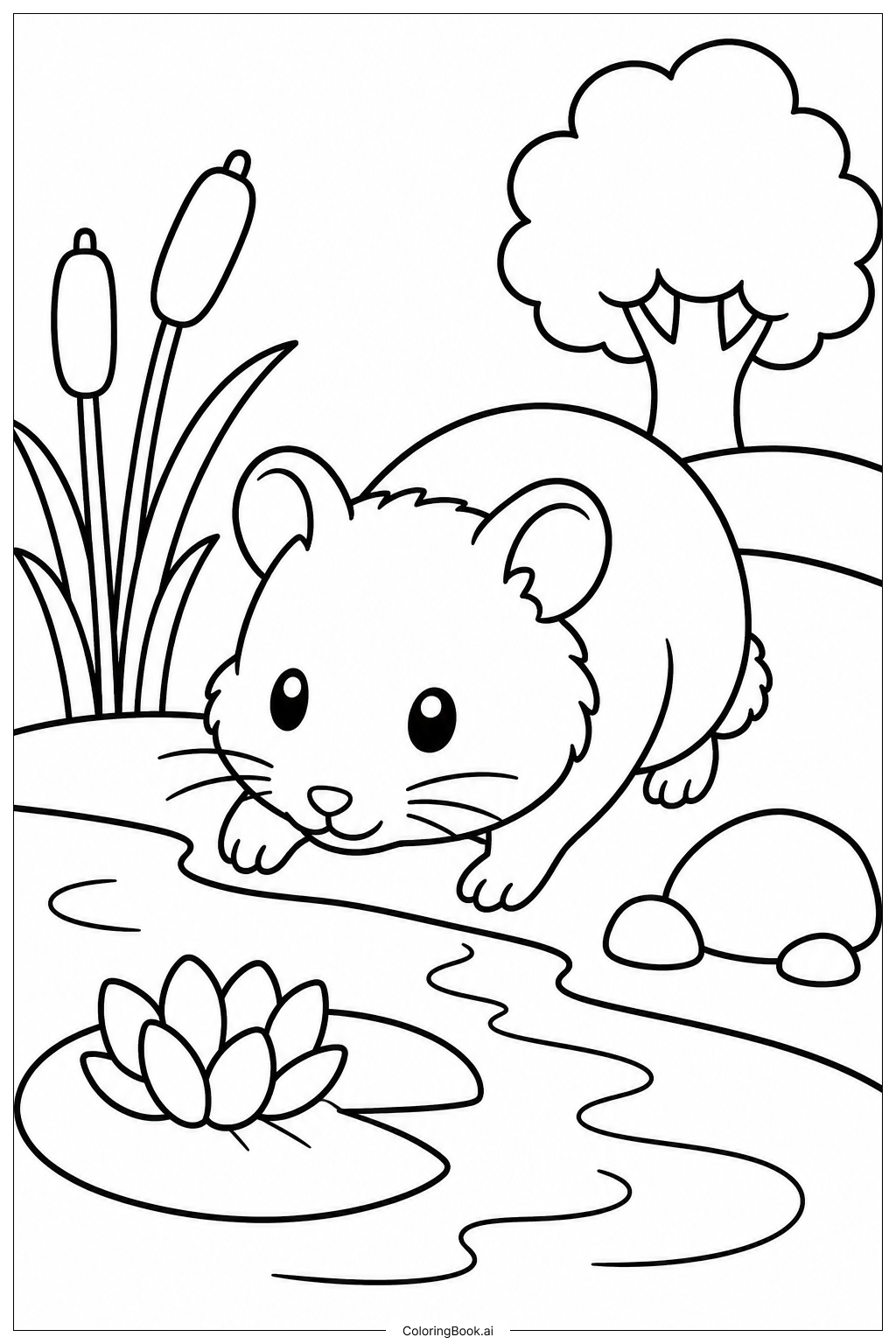
Coloring tips: How to color Hamster Exploring Pond coloring page well?
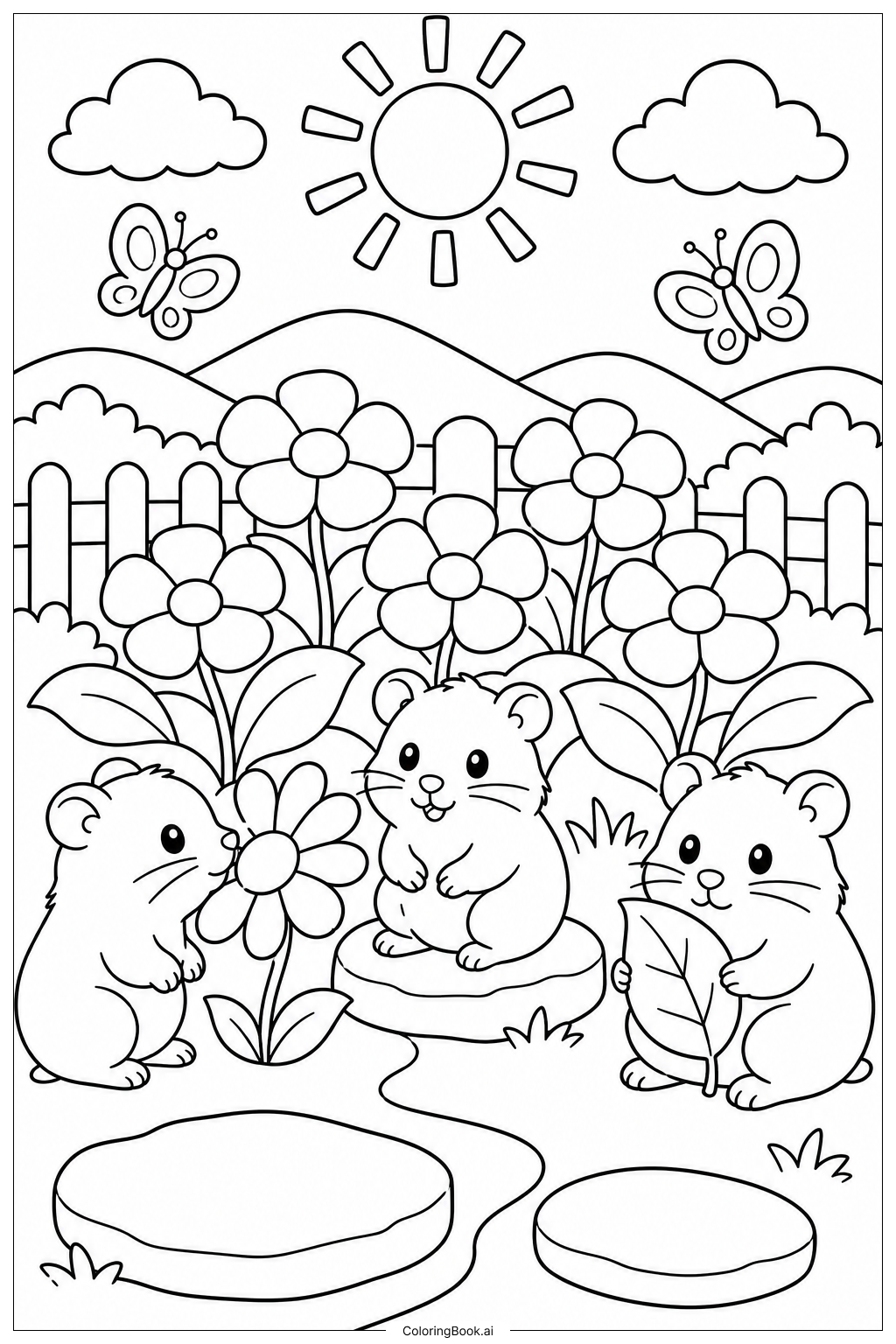
For this image, you can use warm and soft colors for the Hamster, like light brown, beige, or golden yellow to show its fur. The pond water can be colored with different shades of blue and green to make it look fresh and lively. Try coloring the lily pads in bright green and add yellow or pink for the flowers. You can give the plants around the pond various green hues to add depth. Using light blue or turquoise with white highlights on the water can create a sparkling effect. Don’t forget to color the little insects with lively colors such as orange or red to make them stand out. Feel free to mix colors gently for a natural look.
Coloring challenges: Which parts are difficult to color and need attention for Hamster Exploring Pond coloring page?
• Small Details: The Hamster’s fur and facial features are delicate and require careful coloring inside the lines to keep the picture neat. Coloring tiny whiskers and paws can be tricky for younger children.
• Water Surface: Showing the reflection and flow of the pond water involves subtle shading. Coloring smooth waves and lily pads without mixing colors too much can be difficult.
• Plant Textures: The leaves and flowers around the pond have various shapes and edges. Coloring them in different shades of green while keeping consistency takes attention.
• Background Balance: Filling the background without overpowering the central Hamster figure might challenge color choices. Too bright or too dark colors can distract from the main subject.
• Insects and Small Objects: The small bugs and details require fine motor skills and patience to color precisely, which may be hard for very young children.
Benefits of coloring books: Advantages of drawing Hamster Exploring Pond coloring page
Coloring this page helps children improve their fine motor skills and hand-eye coordination thanks to the many little details like the Hamster’s fur and pond plants. It encourages focus and concentration while applying different colors in small spaces. Choosing colors for natural elements teaches kids about nature and how to observe real-life scenes closely. Coloring water and reflections allows them to experiment with blending and shading skills. Overall, this fun and calming activity promotes creativity, patience, and a connection with the outdoors, which benefits both boys and girls.