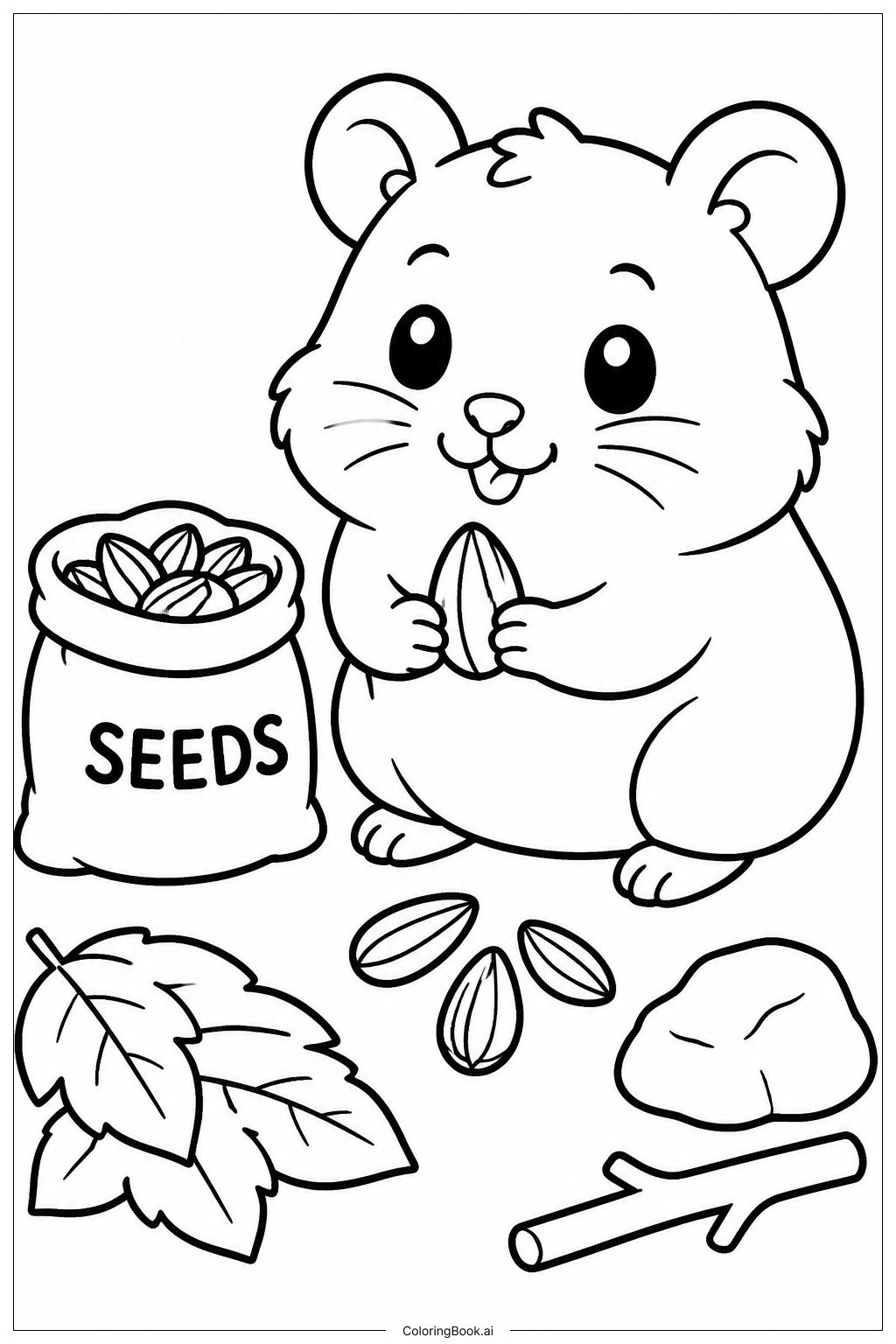
Coloring tips: How to color Hamster Collecting Seeds coloring page well?
You can use warm and soft colors for the hamster's fur, such as light brown, beige, or golden yellow. Color the seeds in shades of brown and tan to make them look natural. The plants and leaves around the hamster can be colored in various shades of green to add freshness and contrast. For the ground, try a light earthy color like light brown or soft gray. Feel free to add little highlights with brighter colors to bring a fun, lively feeling to the scene. Remember, use your favorite colors to make this hamster's world bright and cheerful!
Coloring challenges: Which parts are difficult to color and need attention for Hamster Collecting Seeds coloring page?
• Small Details: The tiny seeds require careful coloring to stay inside the small outlines without going over the edges. This helps the seeds look clear and neat.
• Fur Texture: Coloring the hamster’s fur to appear soft and fluffy can be tricky. You need to use gentle strokes to suggest the texture without making the lines harsh.
• Cheek Pouch Shadowing: The area where the cheek pouch bulges with seeds may require shading to show depth, which can be challenging for beginners.
• Plant Variety: The leaves and plants have different shapes and sizes, so selecting appropriate shades of green and coloring smoothly to separate each leaf can be difficult.
• Background Balance: Coloring the background softly without overpowering the main hamster makes the scene balanced but demands attention to color choices and pressure control.
Benefits of coloring books: Advantages of drawing Hamster Collecting Seeds coloring page
Coloring this image helps children improve fine motor skills as they work carefully on small seeds and delicate fur details. It encourages creativity by allowing kids to experiment with different colors for nature and the hamster itself. The task also promotes patience and concentration, since shading and staying inside lines require focus. Additionally, children learn about animals and nature by relating colors to real-life hamsters and plants. Coloring this lively scene can boost confidence and make learning fun while developing artistic abilities in a joyful way.