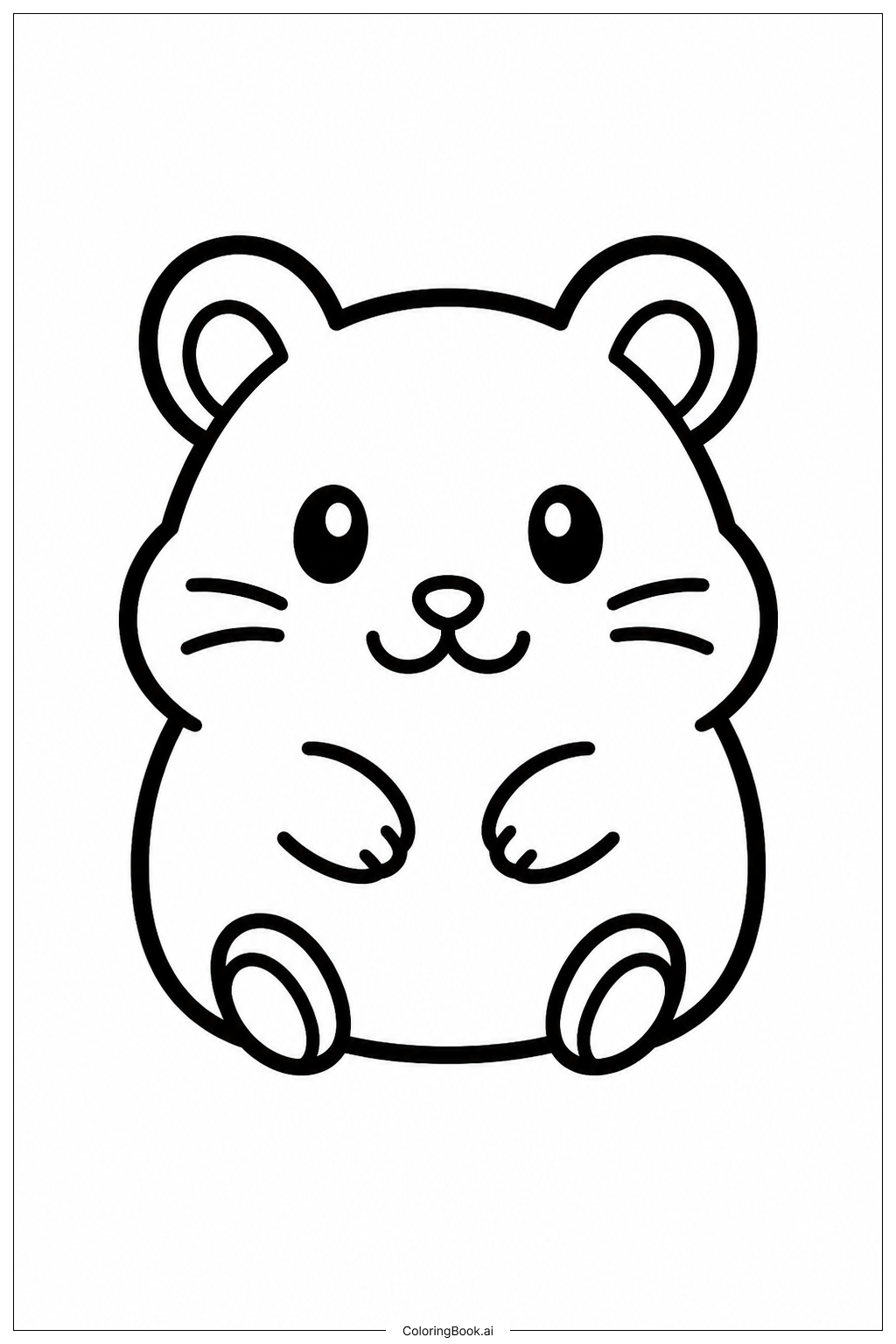
Coloring tips: How to color Chubby Hamster Sitting coloring page well?
For this Chubby Hamster Sitting image, try using warm colors like soft browns, beige, and creamy white to give the hamster a natural look. You can add lighter shades on the face and belly to highlight its fluffiness. The eyes can be colored dark brown or black with a small white dot to show shine. Use gentle shading around the paws and ears to create depth. If you want a creative twist, you could color the hamster in fun pastel tones or bright colors to make it more playful. Don’t forget to color the background with greens or light blues to make the hamster stand out on the page.
Coloring challenges: Which parts are difficult to color and need attention for Chubby Hamster Sitting coloring page?
• Shading Fur Texture: Capturing the hamster’s soft and fluffy fur can be tricky. Smooth shading with gentle strokes is needed to avoid harsh lines.
• Small Details: The tiny paws, whiskers, and facial features require careful coloring to stay inside the lines and look neat.
• Rounded Shapes: The hamster’s round body means you need to apply gradual shading to show the three-dimensional shape properly.
• Eye Highlights: Coloring the eyes realistically with reflections can be challenging for beginners.
• Background Contrast: Choosing a background color that complements but does not overpower the hamster can be difficult to balance.
Benefits of coloring books: Advantages of drawing Chubby Hamster Sitting coloring page
Coloring this Chubby Hamster Sitting image helps children practice fine motor skills and hand-eye coordination. It encourages attention to detail by focusing on small features like whiskers and paws. Choosing colors and shading techniques can boost creativity and decision-making. The friendly image also promotes relaxation and patience as kids work carefully within lines. Plus, coloring animals like hamsters can increase interest in nature and empathy for pets. Overall, it’s a fun and educational activity for kids aged 4 to 16.