Coloring tips: How to color A Robot Building A Hamburger In A Factory coloring page well?
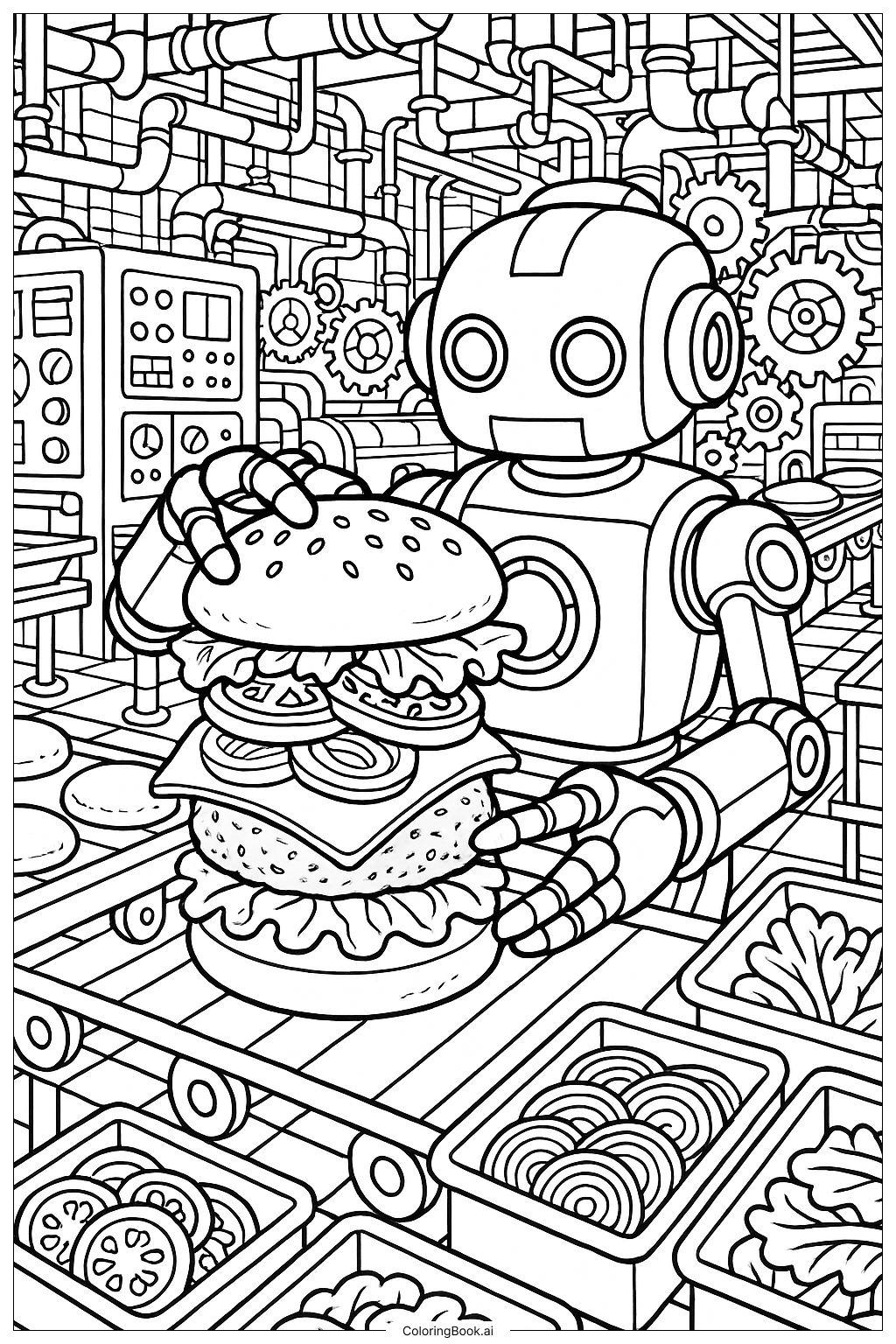
To color this image, start by choosing bright and vivid colors to make the hamburger look tasty. Use golden yellow for the bun, green for the lettuce, red for the tomato slices, and orange for the cheese. The patty can be a deep brown to show it’s cooked well. For the robot, try using metallic shades like silver, gray, or blue to give it a shiny, high-tech feel. The factory machines and tools can be colored in darker grays, blacks, or bright industrial colors like yellow and orange. You can add some light shading to create depth and make parts stand out. Feel free to get creative with background colors to show the factory’s busy atmosphere, like blues or grays.
Coloring challenges: Which parts are difficult to color and need attention for A Robot Building A Hamburger In A Factory coloring page?
• Mechanical Details: The robot has many small parts such as joints, gears, and fingers which require careful coloring within tight spaces to keep the image neat.
• Layered Ingredients: Coloring each hamburger layer clearly without blending colors can be challenging, especially between the bun, cheese, lettuce, and patty.
• Shiny Surfaces: The metallic look of the robot needs gradients or highlights to appear realistic, which can be tricky for beginners.
• Factory Background: The background contains many complex tools and machines that can be hard to color consistently and without making the picture too busy.
• Small Textures: Textures like sesame seeds on the bun, grill marks on the patty, or lettuce veins require patience and attention to detail to color well.
Benefits of coloring books: Advantages of drawing A Robot Building A Hamburger In A Factory coloring page
Coloring this image helps improve focus and hand-eye coordination, especially when working on small details like the robot’s parts and the hamburger layers. It encourages creativity by allowing you to pick colors for both food and machinery. The image also introduces children to the idea of technology blending with everyday life, such as making food with robots. This sparks curiosity and imagination about how things are made. Overall, it’s a fun way to develop fine motor skills while learning about machines, food, and factories.