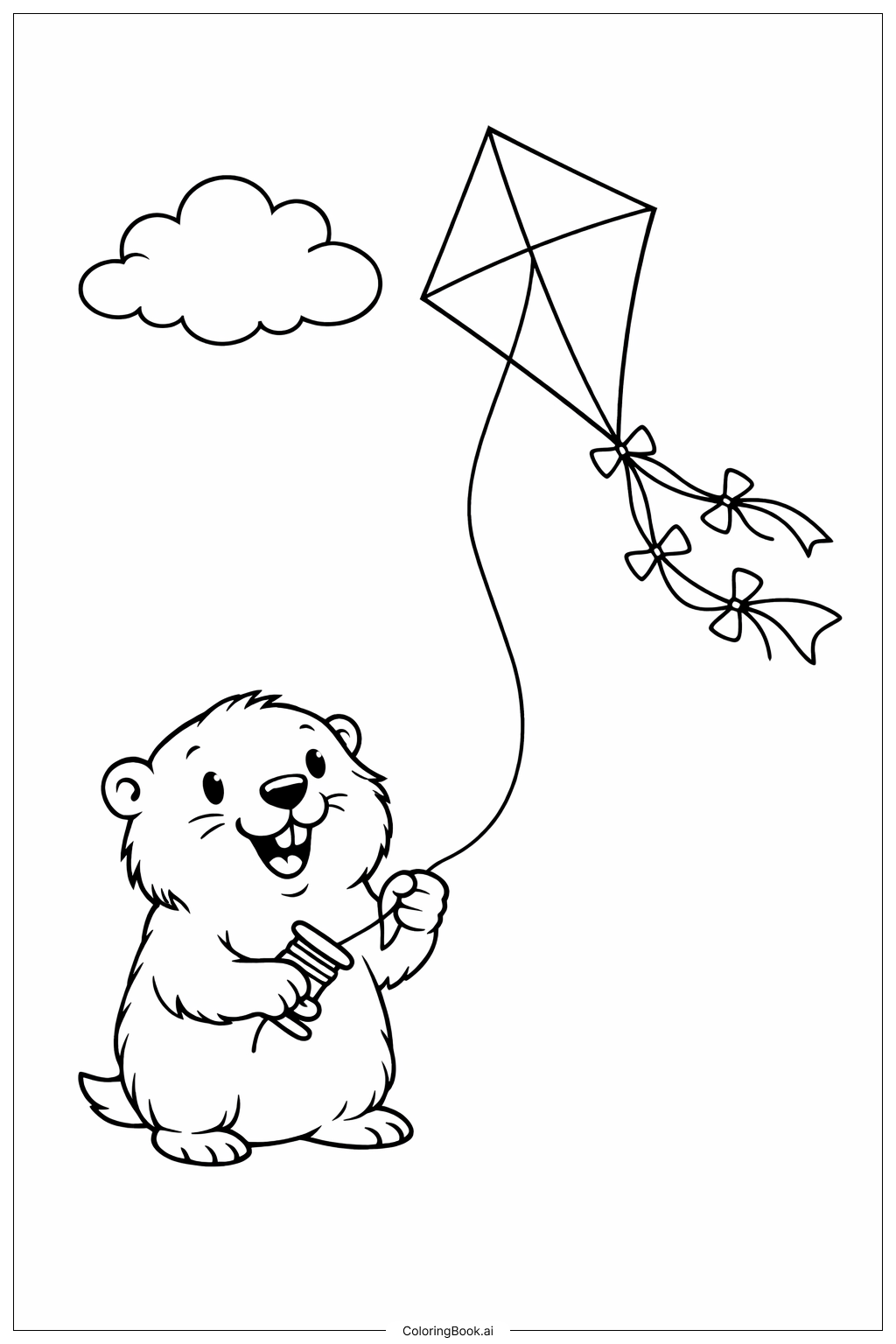
Coloring tips: How to color Groundhog With Kite coloring page well?
Start with the groundhog's body. Use warm brown tones for the fur, and add a slightly lighter tan or cream color on the belly area to give it a soft, fluffy look. Use dark brown or black for the small nose and eyes, with a tiny white dot to make the eyes look bright and lively. For the kite, choose bold and cheerful colors like red, orange, or yellow so it stands out against the sky. The kite tail ribbons can be colored in alternating colors for a fun, festive feel. Use a light sky blue for the background sky, and add soft white or pale gray for the clouds. Color the grass with shades of green, mixing a darker and lighter green for depth. Small flowers on the ground can be yellow, pink, or purple to add pops of color. The kite string can be a simple gray or light tan. Try to keep the groundhog's colors natural while making the kite and sky bright and vivid. This contrast will make the image feel lively and fun.
Coloring challenges: Which parts are difficult to color and need attention for Groundhog With Kite coloring page?
• Groundhog Fur Texture: The groundhog's body has a rounded, furry form that can be tricky to shade well. To make the fur look realistic and soft, you need to apply light and dark tones carefully. The belly should be lighter than the back and sides. Young colorists may find it hard to blend these tones smoothly without overworking the area or making it look flat.
• Small Facial Features: The groundhog's face has tiny details like small eyes, a little nose, and a subtle smile. These features are very close together and require a fine-tipped tool to color neatly. Staying inside the lines without smudging nearby areas can be a real challenge, especially for younger children still building fine motor control.
• Kite Design and Tail Ribbons: The kite has a geometric diamond shape divided into sections, and the flowing tail is made of small ribbon bows. Each section and ribbon bow should ideally be a different color for visual appeal. Keeping each small section neatly filled without color bleeding into the next one takes patience and steady hands.
• Sky and Cloud Depth: Coloring the open sky around the flying kite requires smooth, even coverage. Creating a soft gradient from deeper blue near the top to lighter blue near the horizon adds realism but is difficult to achieve with crayons or markers. Clouds need a light touch to avoid looking too heavy or gray.
• Foreground Ground Details: The grass tufts and small scattered flowers at the bottom of the scene are closely packed together. Choosing colors that complement each other without making the ground area look too busy or cluttered is a small but real challenge for colorists of all ages.
Benefits of coloring books: Advantages of drawing Groundhog With Kite coloring page
Coloring this Groundhog With Kite page offers many wonderful benefits for children and young learners. First, it helps build fine motor skills. Carefully filling in the groundhog's fur, the kite sections, and the tiny ribbon bows trains the small muscles in the hands and fingers, which supports better handwriting and drawing skills over time. Second, it encourages creativity. Choosing colors for the kite, sky, and flowers lets children express their own ideas and imagination freely. There are no wrong color choices, which builds confidence in creative decision-making. Third, it helps with focus and concentration. Staying inside the lines and working through each part of the scene one step at a time teaches patience and the ability to focus on a task. Fourth, the cheerful outdoor theme connects children to nature and the joy of simple activities like flying a kite. It can spark conversations about animals, seasons, and outdoor play. Finally, completing the page gives children a real sense of accomplishment. Finishing a coloring page and seeing the bright, colorful result is a rewarding experience that boosts self-esteem and a positive attitude toward creative work.