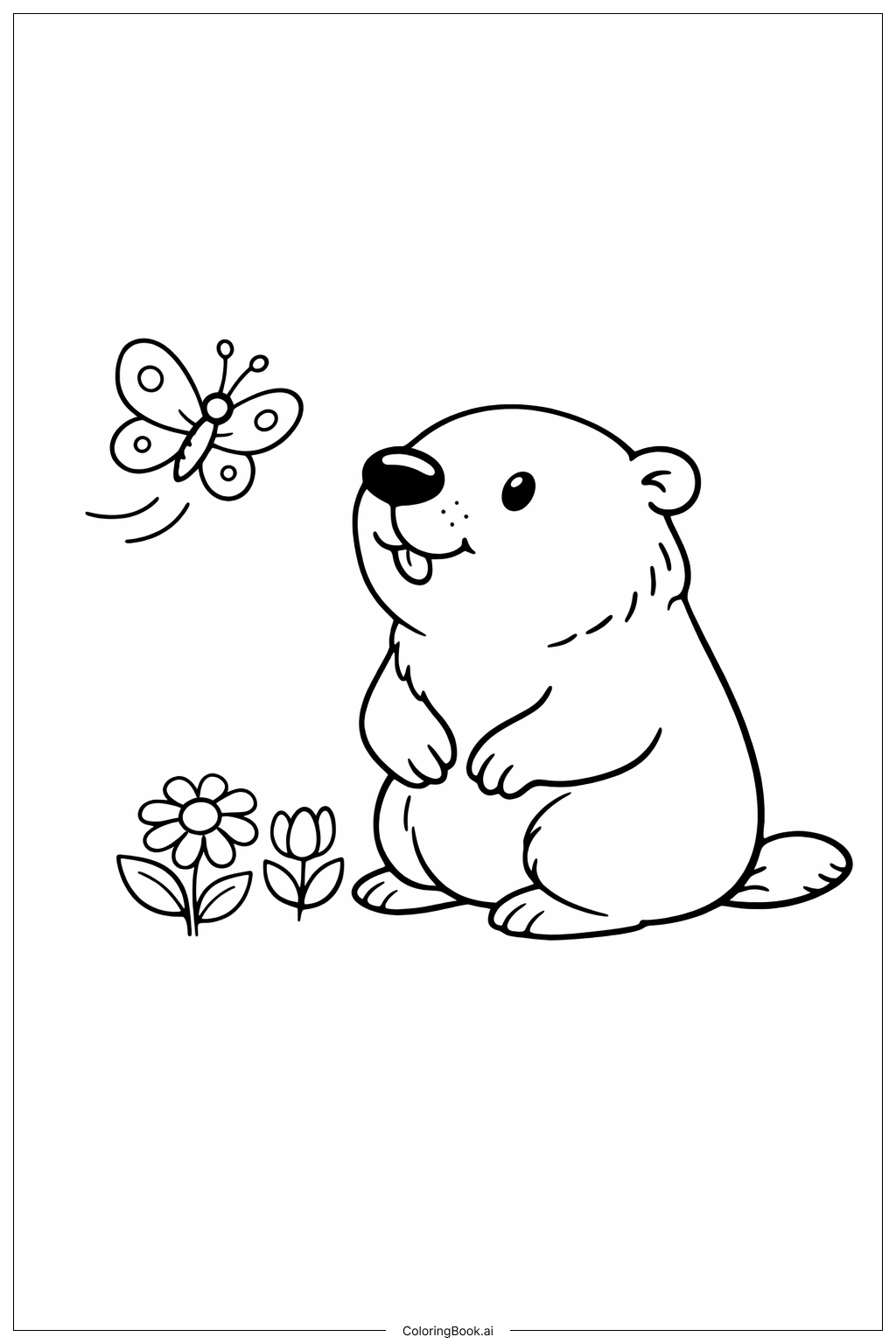
Coloring tips: How to color Groundhog With Butterfly coloring page well?
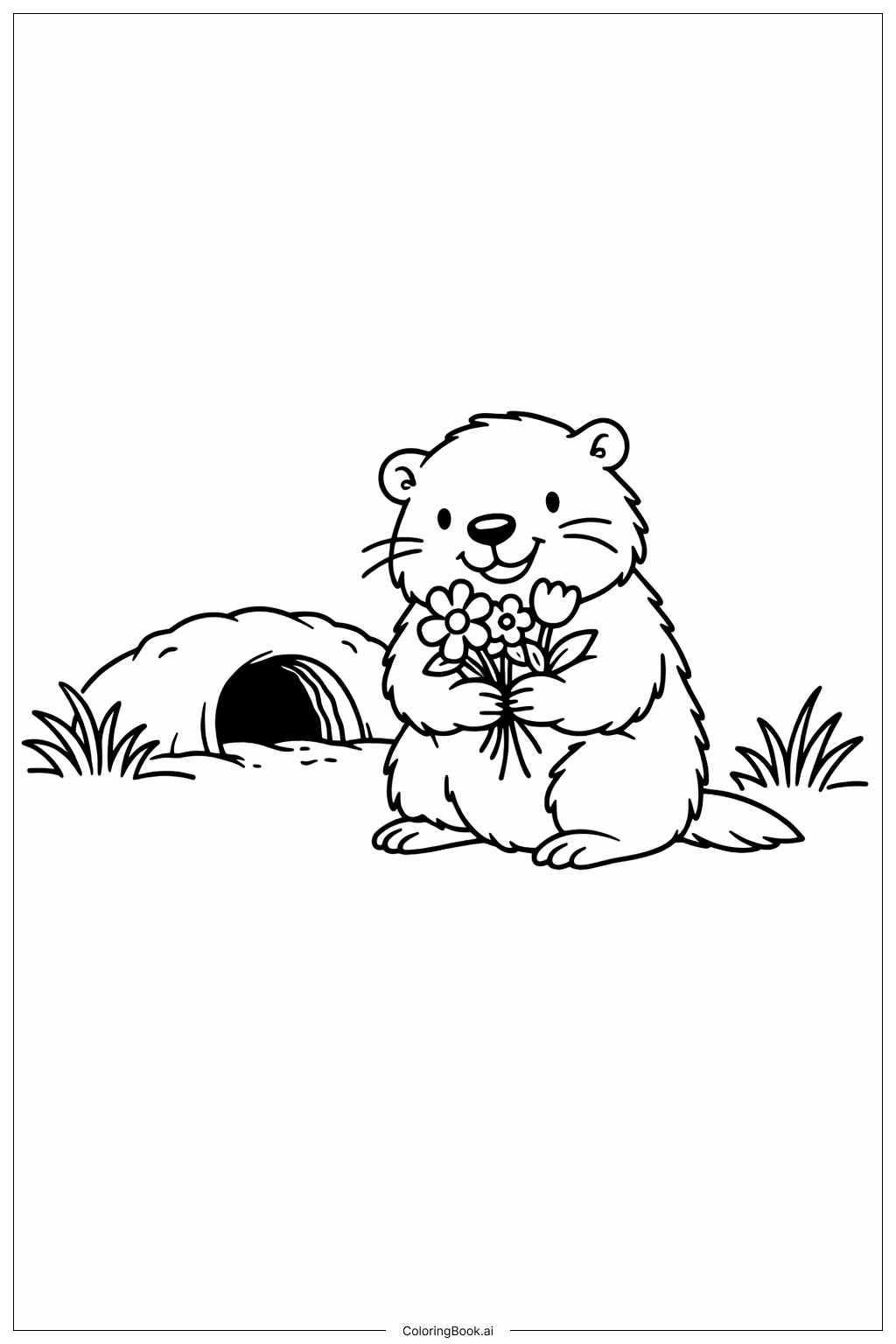
Use warm browns and tans for the groundhog's fur to give it a soft and natural look. The nose and eyes can be colored black or dark brown. Bright colors like orange, yellow, or blue would work well for the butterfly’s wings, adding a splash of vibrant color to the picture. For the flowers, use different colors like yellow petals with a green center for the daisy, and pink or red for the tulip. The leaves and stems should be various shades of green. You can add a light blue background to show the sky, making the whole scene feel open and cheerful.
Coloring challenges: Which parts are difficult to color and need attention for Groundhog With Butterfly coloring page?
1. Small details like the groundhog’s nose and eyes need careful coloring to avoid coloring outside the lines. 2. The butterfly’s wings have small patterns, requiring precision to keep the colors inside the shapes. 3. Coloring the flowers and their leaves uniformly can be tricky, as children may struggle to keep the strokes even. 4. The round shapes of the groundhog’s paws and tail need gentle shading to make them look soft and natural. 5. Avoid mixing colors outside the flowers or on the groundhog to keep the image neat and clear.
Benefits of coloring books: Advantages of drawing Groundhog With Butterfly coloring page
This coloring page helps children practice fine motor skills by coloring small shapes and details. It encourages creativity through the choice of bright and natural colors for the animals and flowers. Coloring the groundhog and butterfly teaches kids about animals and nature, making the activity both fun and educational. It also helps with focus and patience, as some areas require careful attention. Overall, this picture offers a calming and rewarding coloring experience.