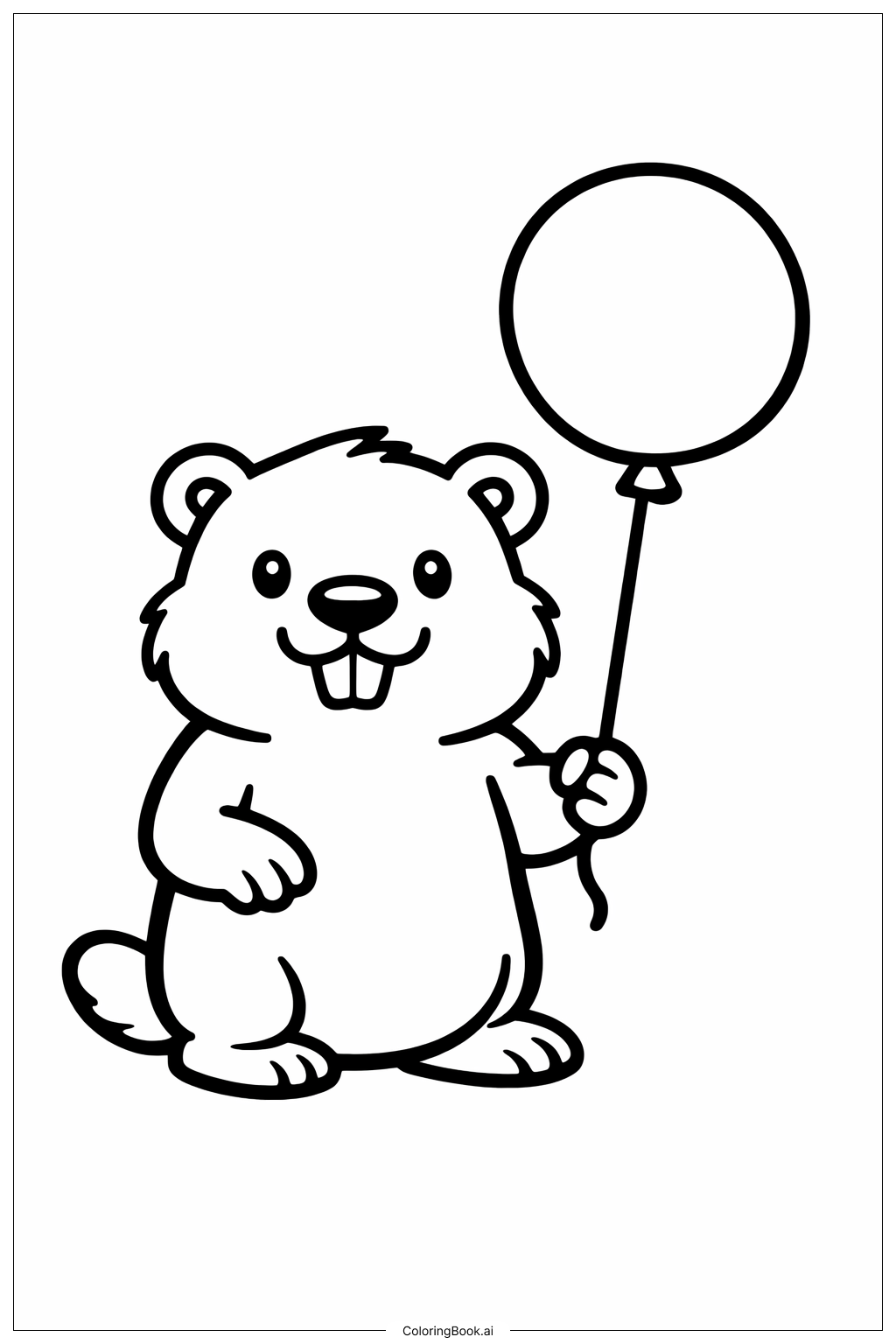
Coloring tips: How to color Groundhog With Balloon coloring page well?
Start with the groundhog's body by choosing warm brown or tan shades. Use a lighter cream or beige for the belly area to give it a soft, natural look. Add a slightly darker brown for the fur texture lines on the back and head to create depth. For the face, use a pale pink or peachy tone on the nose and inner ears. The balloon is a great place to have fun — try a bright red, yellow, blue, or even a rainbow gradient to make it pop. Use a lighter shade of the same color on one side of the balloon to show a shiny highlight. The ribbon or string can be yellow or white. If there is a background, soft greens and blues work well to suggest grass and sky. Keep your strokes light at first, then build up color slowly. Mixing two close shades of brown for the fur will make the groundhog look fluffy and realistic. This page is great for trying blending techniques!
Coloring challenges: Which parts are difficult to color and need attention for Groundhog With Balloon coloring page?
• Fur Texture Details: The groundhog's body is covered with many small lines that represent fur. Staying within these tiny sections and following the direction of each line can be tricky, especially for younger colorists. Using a sharp colored pencil or a fine-tipped marker will help keep colors neat and avoid going outside the lines.
• Shading the Round Body: The groundhog has a chubby, rounded shape. Creating a sense of volume by adding lighter tones in the center and darker tones along the edges requires some practice. Without shading, the figure can look flat. Try using two shades of brown — one light and one slightly darker — and blend them gently where they meet.
• Balloon Highlight Effect: A balloon naturally reflects light and has a shiny surface. Capturing that glossy look means leaving a small white or very light area near the top of the balloon and darkening the lower edges. This subtle contrast can be hard to achieve, especially with markers that are difficult to layer.
• The Ribbon and String: The curling ribbon tied to the groundhog's paw is a small, thin element. Coloring it neatly without accidentally coloring over the surrounding areas takes a steady hand. A fine-tip tool works best here.
• Facial Expression: The face of the groundhog has small, close-together features like eyes, a nose, and a mouth. These tiny details require careful attention and precision tools to color without smudging or blending into each other.
Benefits of coloring books: Advantages of drawing Groundhog With Balloon coloring page
Coloring this fun Groundhog With Balloon page offers a wide range of benefits for kids and adults alike. For children, it helps develop fine motor skills as they practice staying within the lines and controlling their coloring tools. Choosing colors for the groundhog's fur and the balloon encourages creative thinking and color awareness from an early age.
The playful subject matter — a happy groundhog holding a bright balloon — sparks imagination and can even inspire storytelling. Kids might imagine where the groundhog is going or what the balloon celebration is all about, boosting language and creative skills at the same time.
For older children and teens, working on the fur texture and balloon shading introduces basic art concepts like layering, blending, and creating highlights. These are foundational skills that build confidence in artistic expression.
For adults, the repetitive, focused nature of coloring provides a calming effect that helps reduce stress and anxiety. Concentrating on this cheerful scene encourages mindfulness and a mental break from daily pressures.
Overall, this coloring page combines fun, learning, and relaxation in one delightful activity. It is a great choice for classrooms, Groundhog Day celebrations, or quiet creative time at home.