Coloring tips: How to color Groundhog Planting Seed coloring page well?
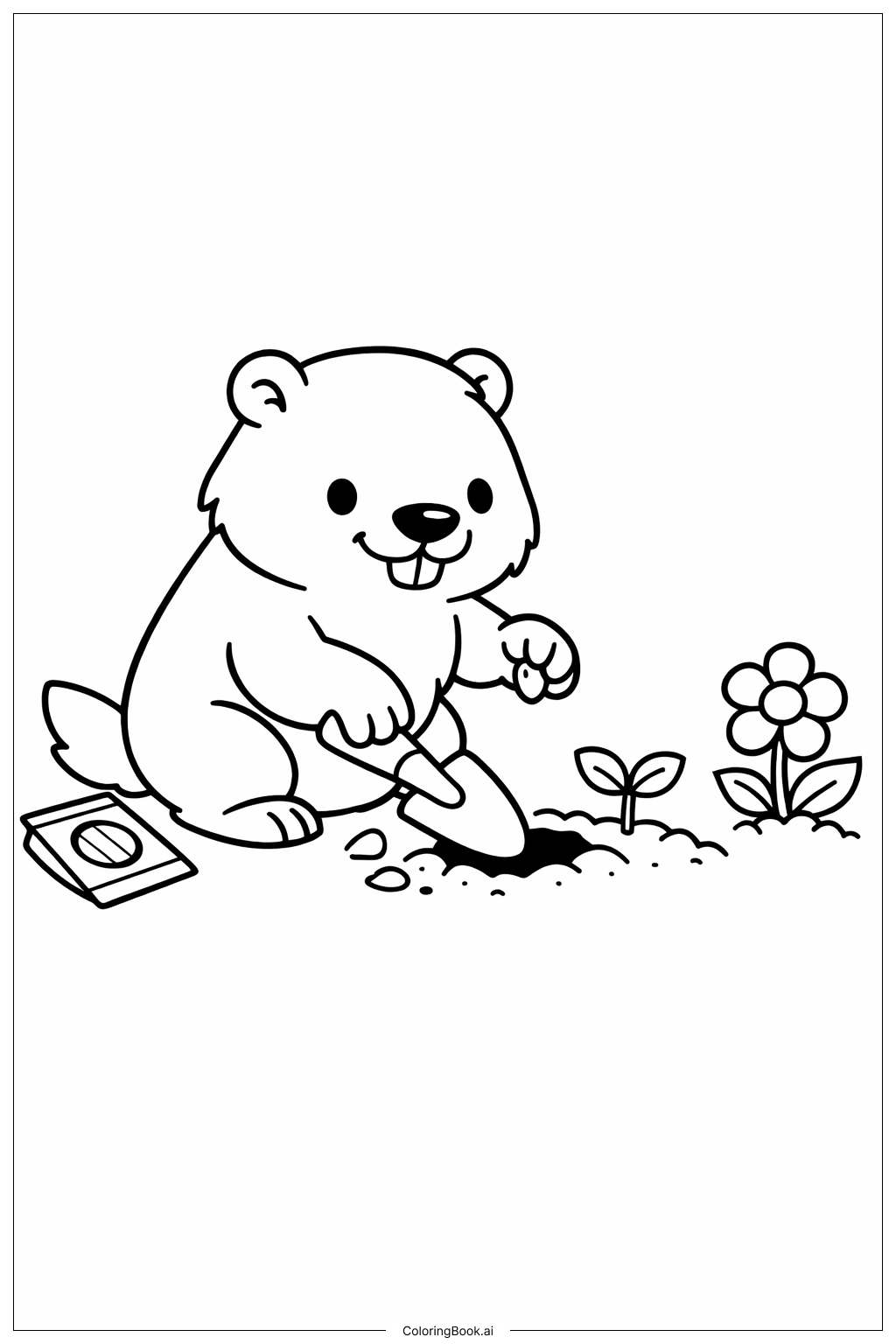
Start with the groundhog's body. Use warm brown tones like tan, chestnut, or golden brown for its fur. Leave the belly area a lighter shade, such as cream or pale yellow. Color the eyes dark brown or black with a tiny white dot for shine. For the soil and dirt mounds, use earthy shades like sienna, dark brown, or sandy beige. The garden trowel can be silver or light gray with a wooden brown handle. Color the surrounding plants and leaves in various greens — mix lime green, forest green, and olive to add depth. Give the flowers bright pops of color like red, orange, yellow, or pink to make them stand out. The sky can be a soft sky blue, with fluffy white clouds. The sun can be painted in bright yellow or golden orange. Using different shades of the same color — called shading — will make the image look more three-dimensional and lively. Have fun mixing colors and making this little gardener's world your own!
Coloring challenges: Which parts are difficult to color and need attention for Groundhog Planting Seed coloring page?
Coloring this image is a fun and rewarding experience, but there are a few areas that may take extra care and patience. Here are the main challenges to look out for:
• Groundhog Fur Texture: The groundhog's fur can be tricky to color realistically. Fur is not just one flat color — it has lighter areas on the belly and darker areas on the back and limbs. To get a natural look, try layering two or three shades of brown and using short, gentle strokes in the direction the fur grows. Blending the edges softly will help avoid hard lines.
• Soil and Earth Details: The ground and dirt mounds around the planting hole include small textures like clumps, cracks, and loose earth. Coloring these areas with several brown tones — light tan, mid-brown, and dark sienna — will give the soil a realistic and layered look. Rushing through these sections with a single color can make the scene feel flat.
• Small Object Details: The garden trowel and the tiny seed are small elements that require a steady hand. Coloring within their narrow outlines without going outside the lines can be challenging, especially for younger artists. Using a fine-tipped colored pencil or a thin marker works best here.
• Plant and Leaf Variety: The surrounding leaves and flowers each have their own shapes and outlines. Keeping each plant a slightly different shade of green or giving each flower a unique color will help them stand out from one another and avoid a muddy, blended look.
• Sky and Background Balance: The sky, clouds, and sun should feel bright without overpowering the main subject. Using light pressure for the background keeps the focus on the groundhog and garden scene in the foreground.
Benefits of coloring books: Advantages of drawing Groundhog Planting Seed coloring page
Coloring this sweet image of a groundhog planting a seed offers many wonderful benefits for children and young artists. Here is why picking up your colors and getting started is a great idea:
Build focus and patience. Carefully coloring the small details — like the tiny seed, the trowel, and the groundhog's fur — helps children practice sitting still and concentrating for longer periods of time.
Spark creativity. Choosing colors for the flowers, plants, and sky encourages free creative thinking. There is no wrong answer, and every child's version will be uniquely their own.
Learn about nature. The gardening scene introduces kids to ideas about how plants grow, the role of soil, and the beauty of caring for living things. It is a gentle, visual way to connect with the natural world.
Strengthen fine motor skills. Coloring within the lines, switching between tools, and applying pressure carefully all help develop the hand and finger muscles children need for writing and drawing.
Boost confidence and pride. Finishing a detailed coloring page gives kids a real sense of accomplishment. Displaying their artwork reminds them that they can create something beautiful with their own hands.
Encourage calm and relaxation. The quiet, rhythmic activity of coloring helps reduce stress and anxiety, making it a healthy and enjoyable way to unwind after a busy day.