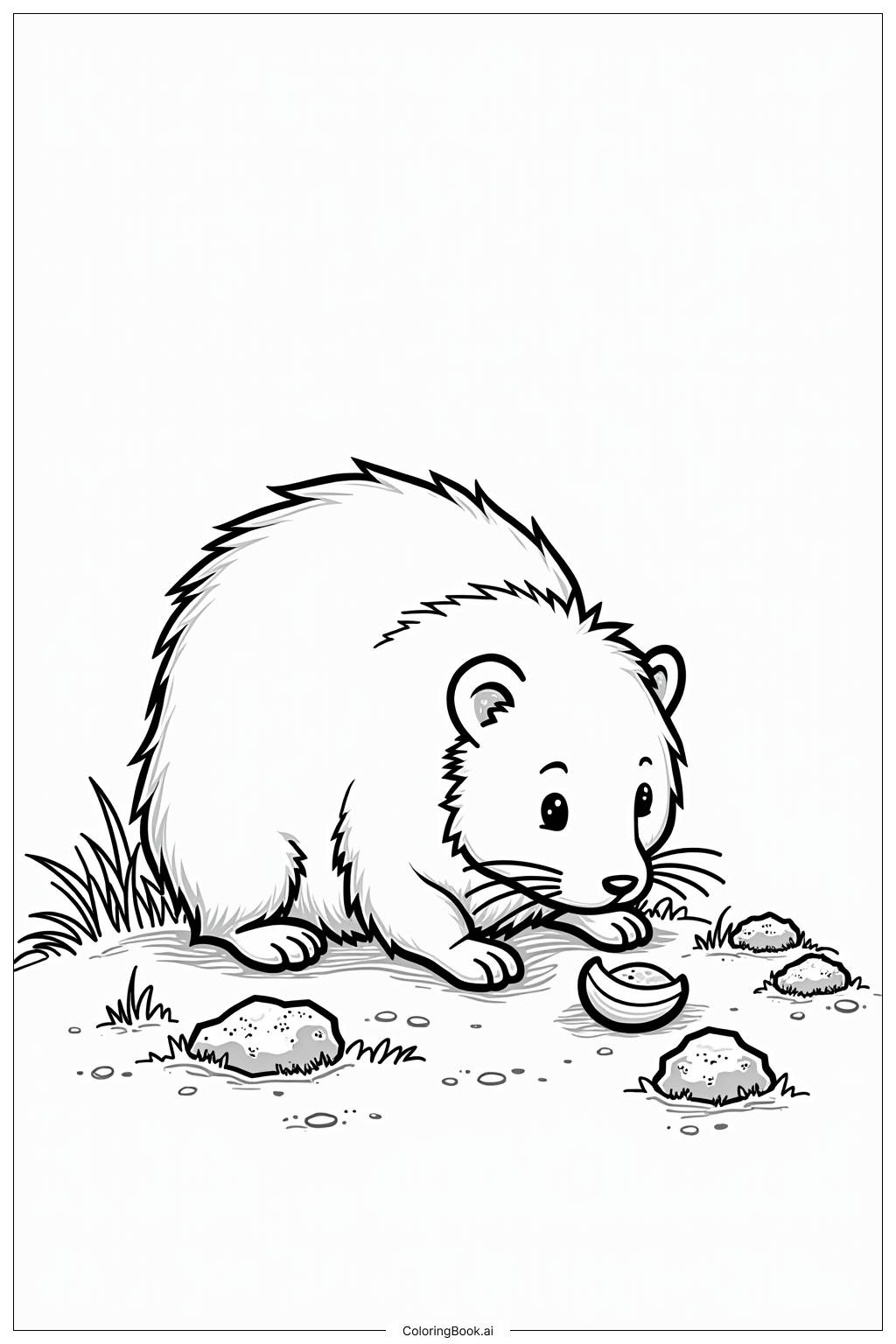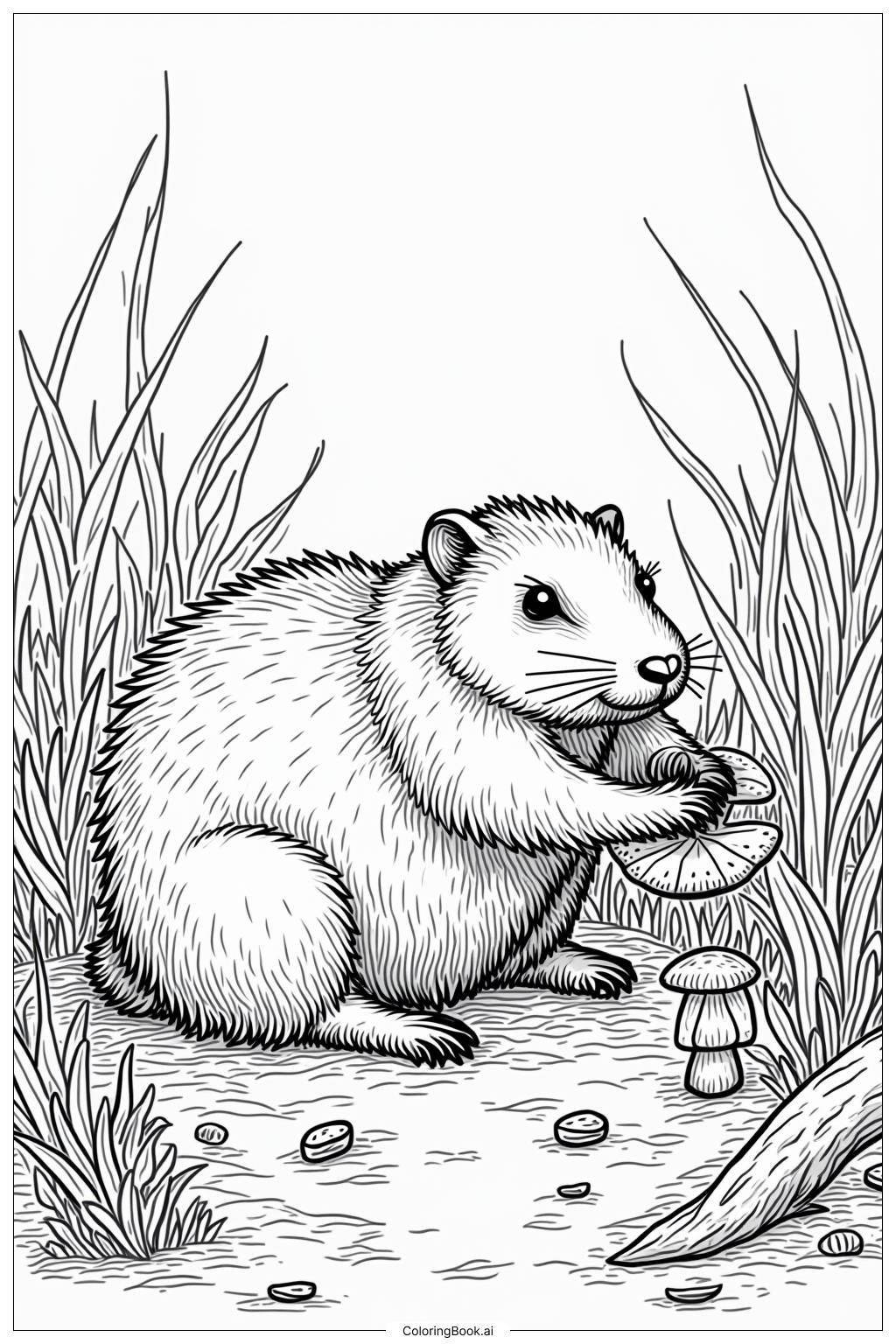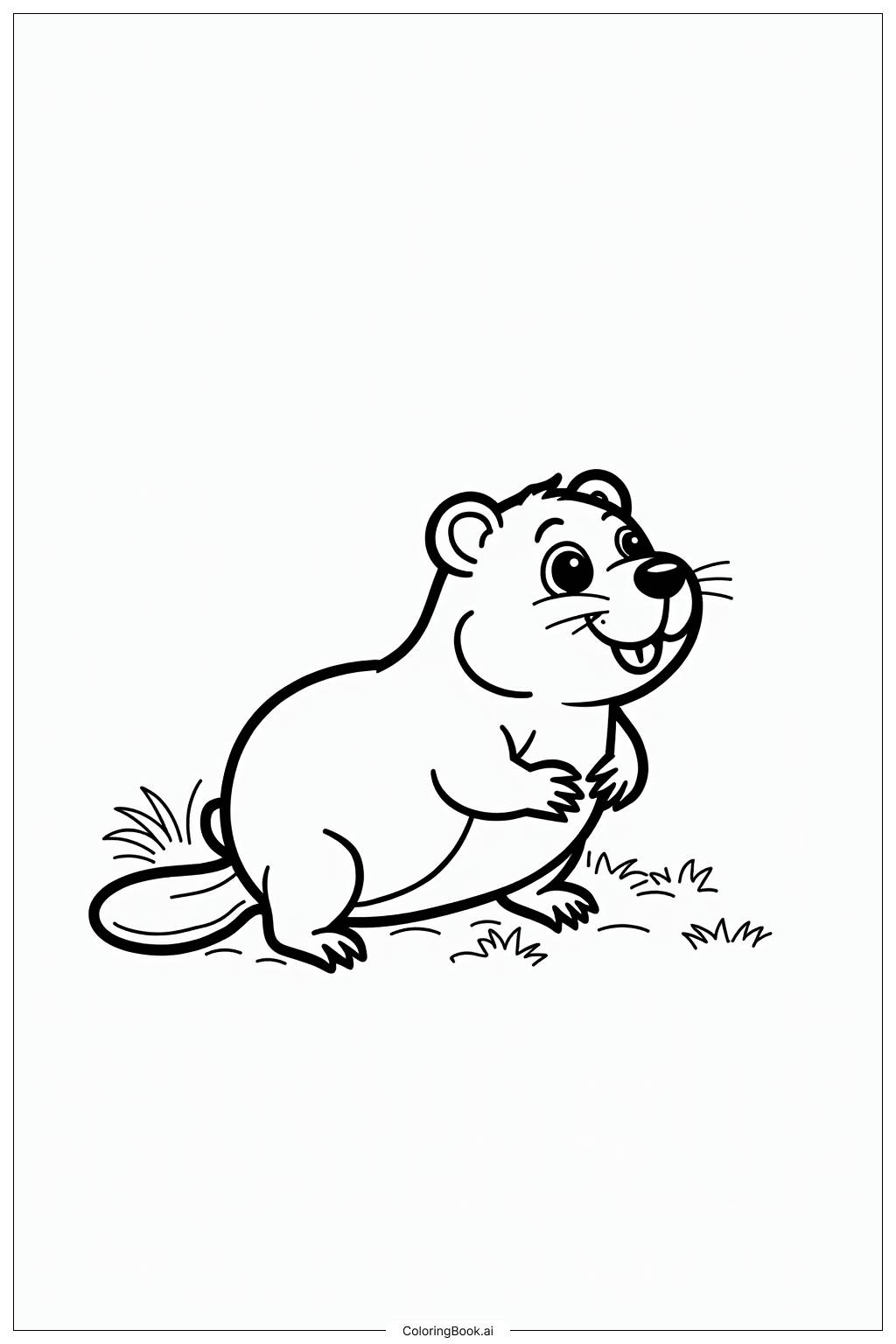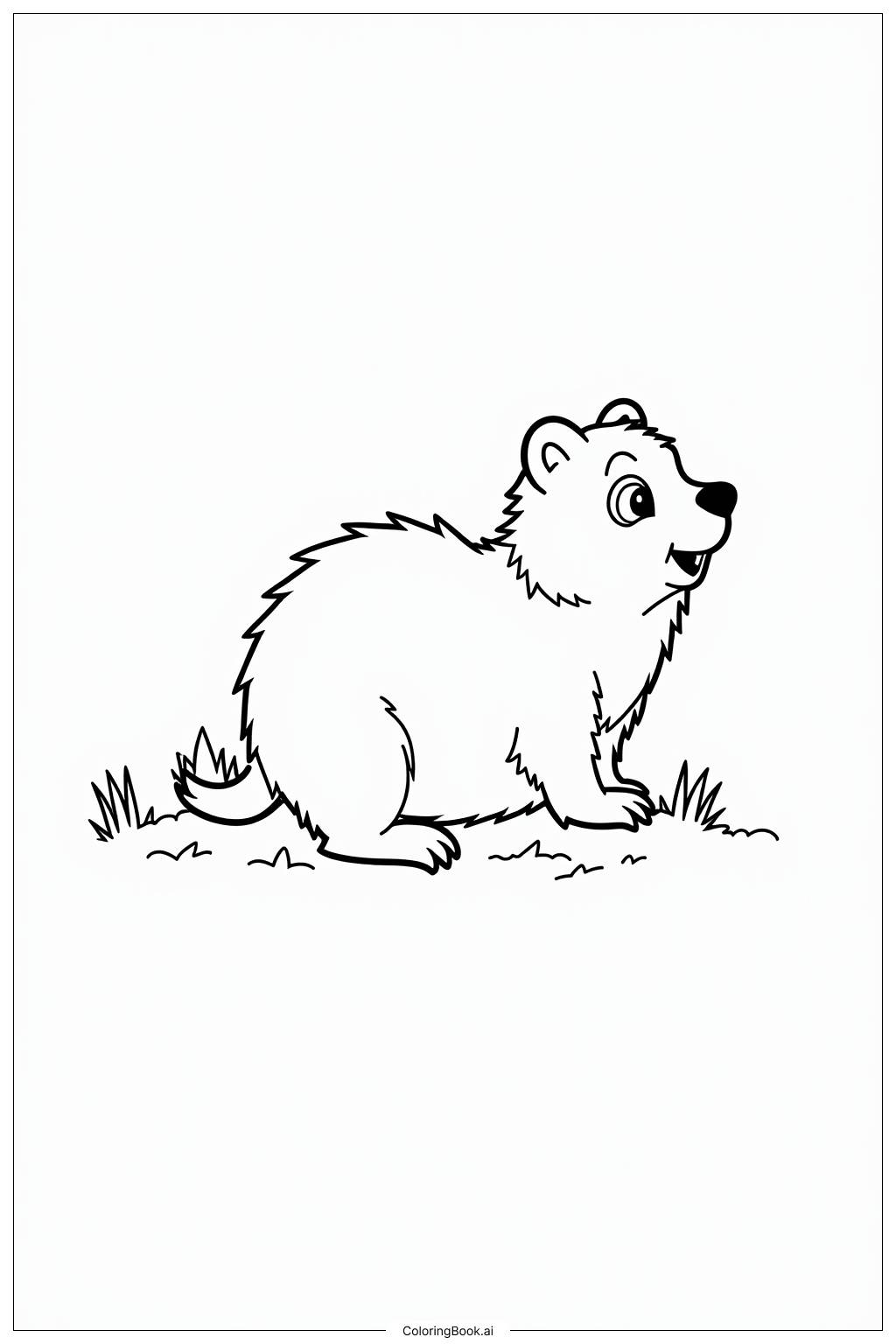
Coloring tips: How to color Ground Hog Emerging on Ground Hog Day coloring page well?
To color this image, you can use shades of brown and gray for the Ground Hog’s fur to give it a natural look. Try blending lighter browns on the face and belly, and darker brown or gray on the back and paws. For the burrow, warm soil tones like reddish brown and tan can be used to show the earth texture. The grass can be colored in fresh greens of different shades to make it appear lively. The leaves on plants could be bright green or yellowish-green to add variety. The sky in the background can be light blue with a soft white or pale yellow to suggest a calm early spring morning. Use different pencil or crayon pressures to create texture in the Ground Hog’s fur and terrain around the hole.
Coloring challenges: Which parts are difficult to color and need attention for Ground Hog Emerging on Ground Hog Day coloring page?
• Fur Texture: Capturing the fluffy texture on the Ground Hog’s fur can be challenging. It requires using short, fine strokes and mixing colors carefully to show depth and softness. Avoid coloring with one solid shade to keep the fur realistic.
• Small Details: The Ground Hog’s eyes, nose, and small paws need precise coloring to keep the features clear and expressive. Staying within the small outlines demands good control.
• Earth and Rocks: Coloring the soil and rocks involves mixing warm colors without making them look flat. Creating a natural look with shadows and highlights to show bumps and texture takes patience.
• Grass and Plants: The blades of grass and leaves vary in size and overlap. Coloring them neatly while showing variation in green tones requires attention to detail.
• Background Simplicity: The sky and hills are more open spaces with fewer lines. Using soft gradients or light blending is needed to keep the peaceful atmosphere without overdoing it.
Benefits of coloring books: Advantages of drawing Ground Hog Emerging on Ground Hog Day coloring page
Coloring this Ground Hog Emerging on Ground Hog Day image helps develop fine motor skills by practicing careful strokes on small details like the animal’s fur and face. It encourages creativity in choosing natural color combinations for the Ground Hog and its environment, promoting an understanding of nature’s tones. This activity also improves focus and patience, especially when shading textured areas such as soil and grass. For younger children, it supports color recognition and coordination, while older kids can practice blending and layering colors. Additionally, coloring a seasonal scene inspires curiosity about Ground Hog Day and the changing seasons, making learning fun and artistic at the same time.