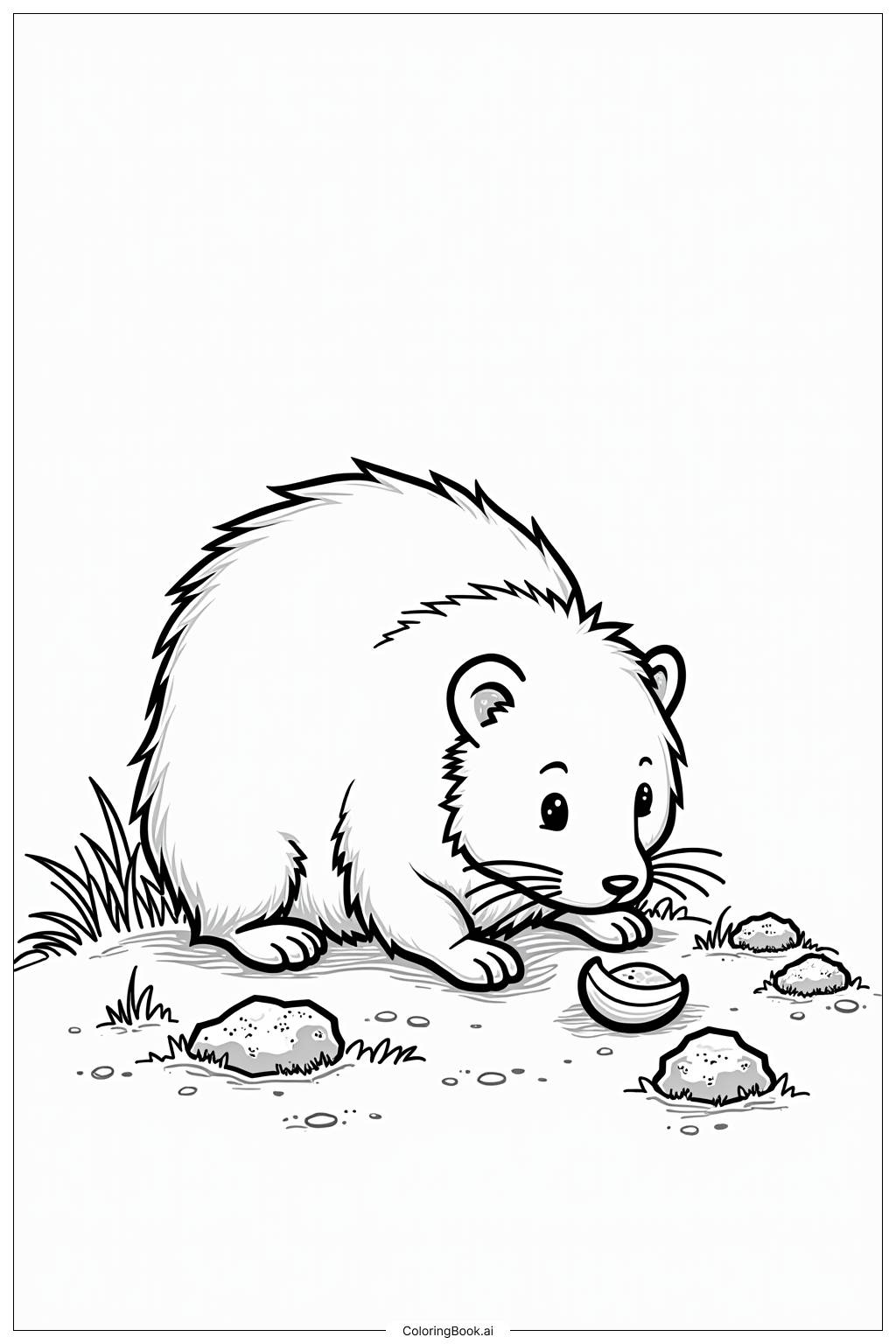
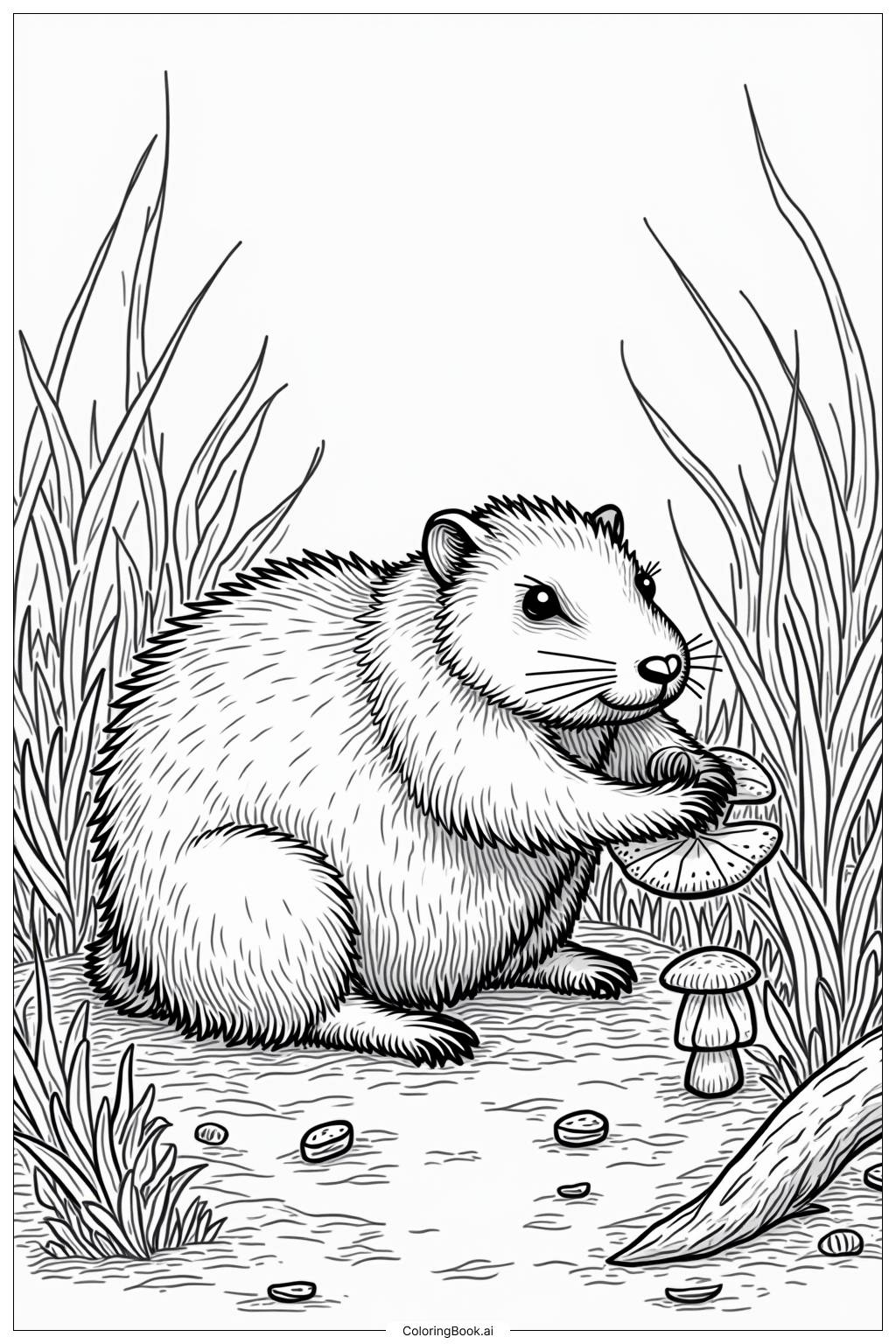
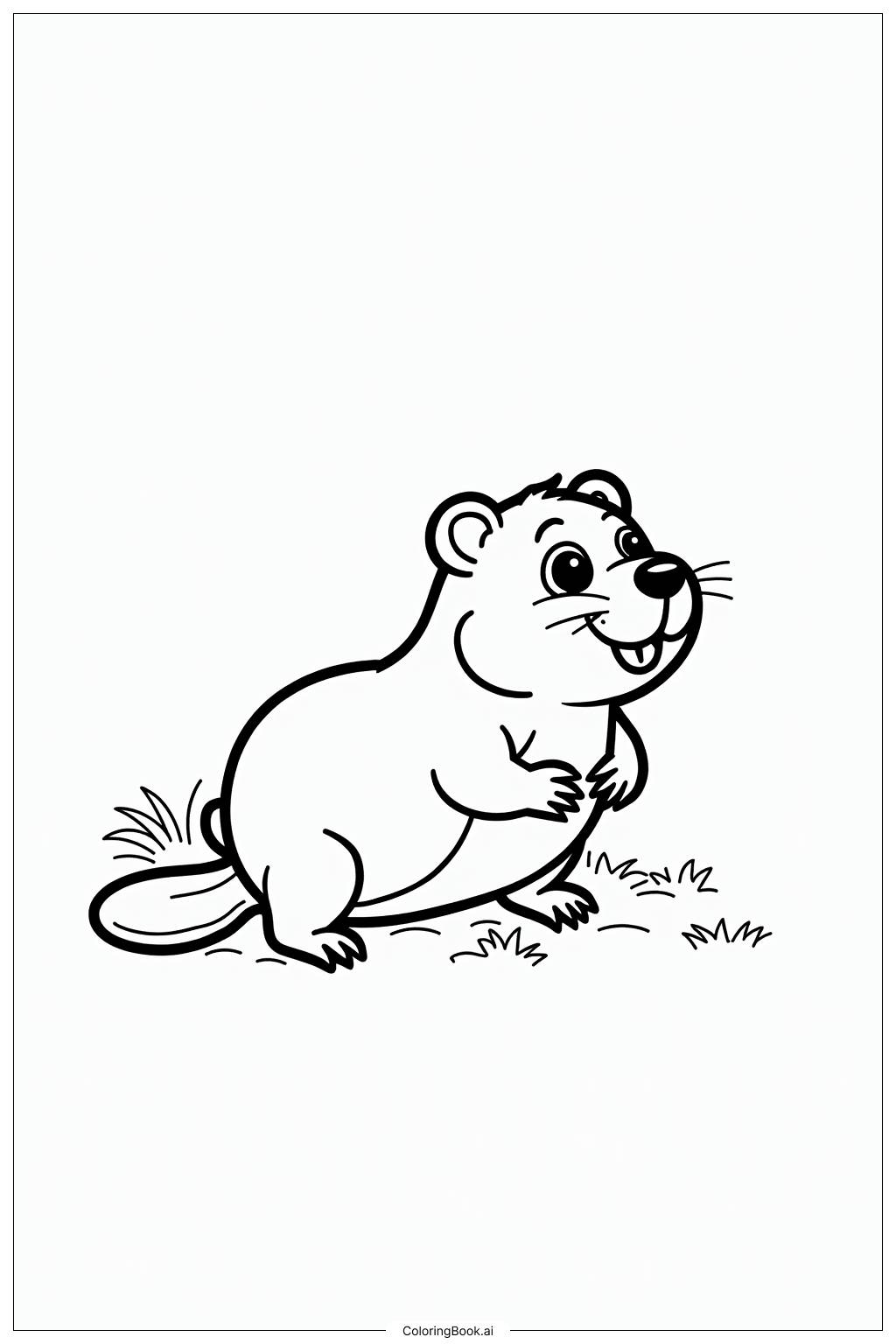
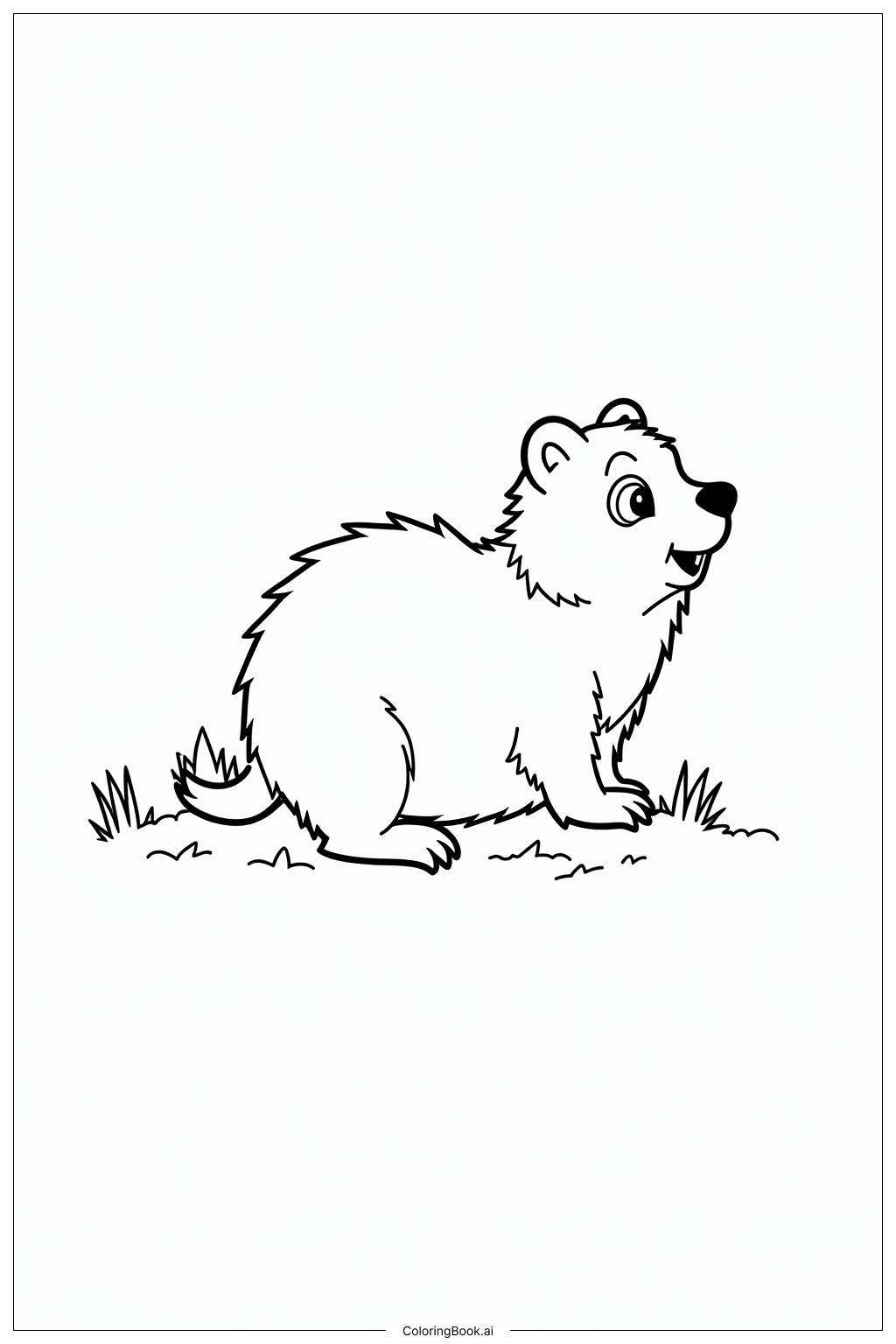
Coloring tips: How to color Ground Hog Digging Underground coloring page well?
For the groundhog's fur, use various shades of brown, from light tan to rich chocolate brown, to create depth and dimension. The belly area can be colored in lighter cream or beige tones. Use darker browns or grays for the claws to emphasize their strength. The surrounding soil can be colored in earthy tones like browns, siennas, and umbers, with darker shades deeper underground and lighter tones near the surface. Add touches of gray to rocks for contrast. Roots can be colored in tan, light brown, or even pale yellow. Consider using colored pencils to layer colors, creating shadows in the tunnel curves and highlighting areas where light might filter down from above.
Coloring challenges: Which parts are difficult to color and need attention for Ground Hog Digging Underground coloring page?
• Fur Texture Details: The groundhog's fur contains numerous lines and patterns that require careful attention to create a realistic textured appearance. Young colorists may find it challenging to maintain consistent coloring direction and pressure to suggest the natural flow of fur without crossing lines or leaving gaps.
• Underground Layering: The soil layers and tunnel walls present a unique challenge as children must understand how to create depth through color variation. Darker shades should appear in recessed areas while lighter tones highlight raised surfaces, requiring an understanding of light and shadow that develops with practice.
• Small Detailed Areas: The groundhog's claws, facial features, and the tiny roots throughout the scene contain small spaces that can be difficult for younger children or those still developing fine motor control. Staying within these narrow boundaries requires patience and a steady hand.
• Color Transitions: Creating smooth transitions between the different earth layers and the gradual shading on the groundhog's rounded body demands blending skills. Children may struggle to avoid harsh lines between colors, especially when trying to show the three-dimensional quality of the underground burrow.
• Root and Rock Integration: The scattered roots and rocks must be colored differently from the soil to stand out, yet still appear naturally integrated into the scene. Balancing contrast while maintaining visual harmony requires thoughtful color selection and planning.
Benefits of coloring books: Advantages of drawing Ground Hog Digging Underground coloring page
Coloring this Ground Hog Digging Underground page offers wonderful educational and developmental benefits. Children learn about animal habitats and the fascinating underground world while improving their fine motor skills through detailed coloring work. The various textures, from fur to soil to roots, encourage experimentation with different coloring techniques and pressure variations. This page also teaches color theory as young artists discover how to mix and layer earth tones to create realistic underground environments. The act of focusing on staying within lines and creating texture patterns promotes concentration and patience. Additionally, completing this detailed scene builds confidence and provides a sense of accomplishment, especially when children see their finished artwork come to life with color.