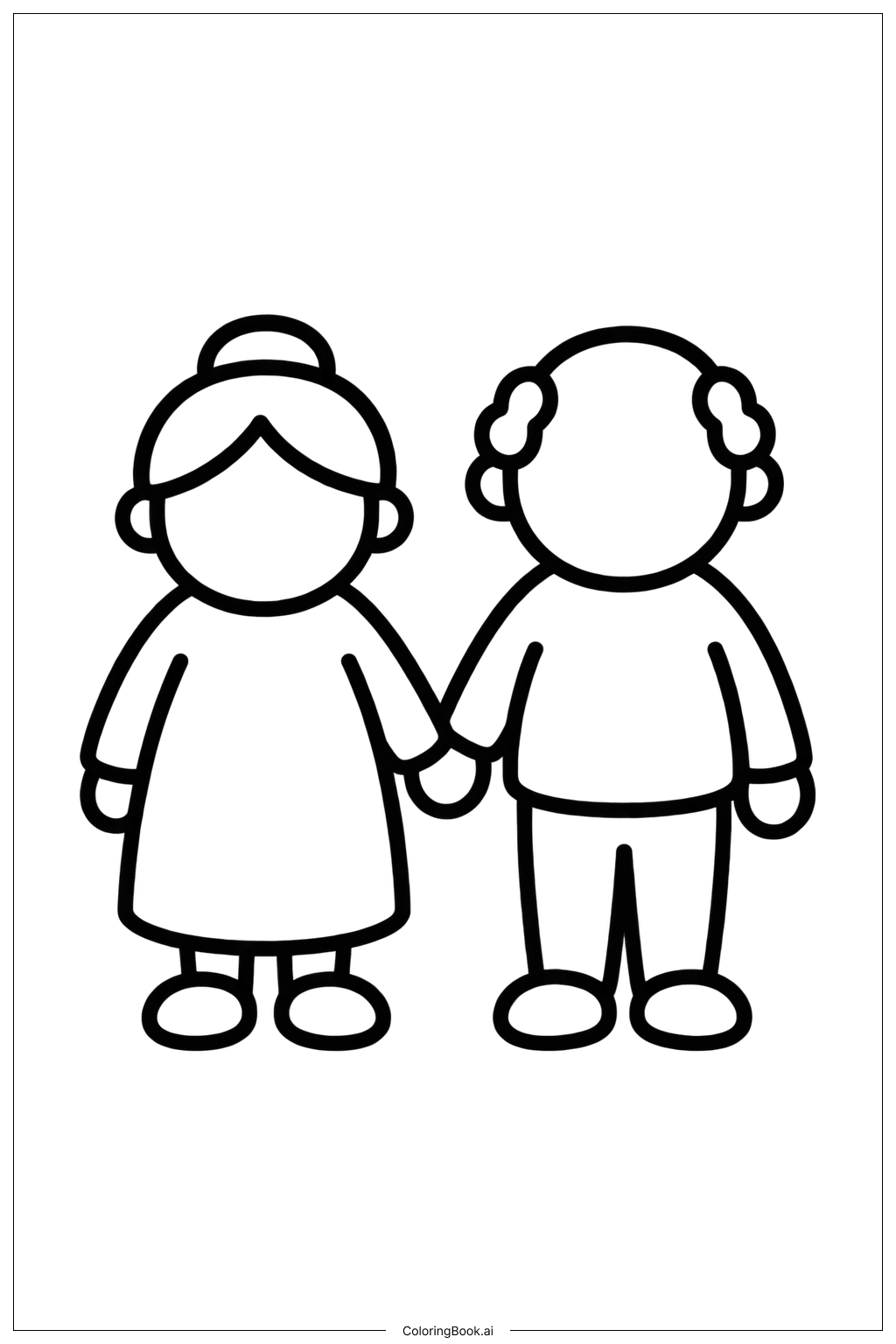
Coloring tips: How to color Grandparents Day Handshake coloring page well?
Start with skin tones for both figures, choosing warmer shades for a lifelike appearance. Consider using soft grays or silver for the grandparent's hair to show age gracefully, while the child's hair can be any vibrant color like brown, blonde, or black. For clothing, try complementary colors that create visual harmony—perhaps the grandparent in earthy tones like sage green or warm beige, and the child in brighter hues like sunny yellow or sky blue. The hearts surrounding the figures offer wonderful opportunities for variety: use different shades of red, pink, and purple to create depth and interest. Add subtle shading to the hands where they meet to emphasize the handshake connection. Consider leaving some white space in the background or adding a gentle wash of pale yellow or cream to make the figures pop forward. Small details like buttons, patterns on clothing, and facial features deserve careful attention with fine-tipped markers or colored pencils.
Coloring challenges: Which parts are difficult to color and need attention for Grandparents Day Handshake coloring page?
• Facial Features and Expressions: The faces require careful attention to detail, especially around the eyes, nose, and mouth areas. Capturing the warmth in the grandparent's expression and the child's joyful smile demands precision with smaller coloring tools. Blending skin tones smoothly without harsh lines takes practice, particularly around curved areas like cheeks and chin. Young colorists may find it challenging to stay within the facial boundary lines while maintaining consistent pressure.
• Hand Position and Shading: The clasped hands at the center create overlapping areas that require understanding of depth and dimension. Determining which hand belongs to which person and applying appropriate shading to show the three-dimensional quality of interlocked fingers presents a moderate challenge. The knuckles, fingernails, and palm creases need delicate color variation to look realistic rather than flat.
• Clothing Texture and Patterns: If the clothing includes patterns, stripes, or textured details, maintaining consistency across the garment requires patience and planning. Deciding on color schemes that work well together while keeping patterns distinct from solid areas demands color theory understanding. Folds and wrinkles in fabric need lighter and darker values of the same color to create dimension.
• Background Elements Balance: The decorative hearts and surrounding details need careful color distribution to avoid overwhelming the main subjects. Creating visual hierarchy by varying heart colors and sizes while maintaining overall balance requires thoughtful planning before beginning to color.
Benefits of coloring books: Advantages of drawing Grandparents Day Handshake coloring page
Coloring this Grandparents Day Handshake image offers numerous developmental and emotional benefits for children. It strengthens fine motor skills and hand-eye coordination as young artists carefully navigate the detailed areas like faces and hands. The act of choosing colors for different elements exercises decision-making abilities and color recognition. This particular image also provides an opportunity to discuss family relationships, respect for elders, and the special bond between generations, making it educationally valuable beyond artistic practice. The emotional theme encourages children to reflect on their own relationships with grandparents, fostering gratitude and connection. Completing this page builds confidence and provides a sense of accomplishment, especially given the moderate complexity of the interlocking hands and facial expressions. The finished artwork becomes a meaningful gift that children can proudly present to their grandparents, strengthening family bonds. Additionally, the focus required during coloring promotes mindfulness and stress relief, offering a calming activity that improves concentration spans in young learners.