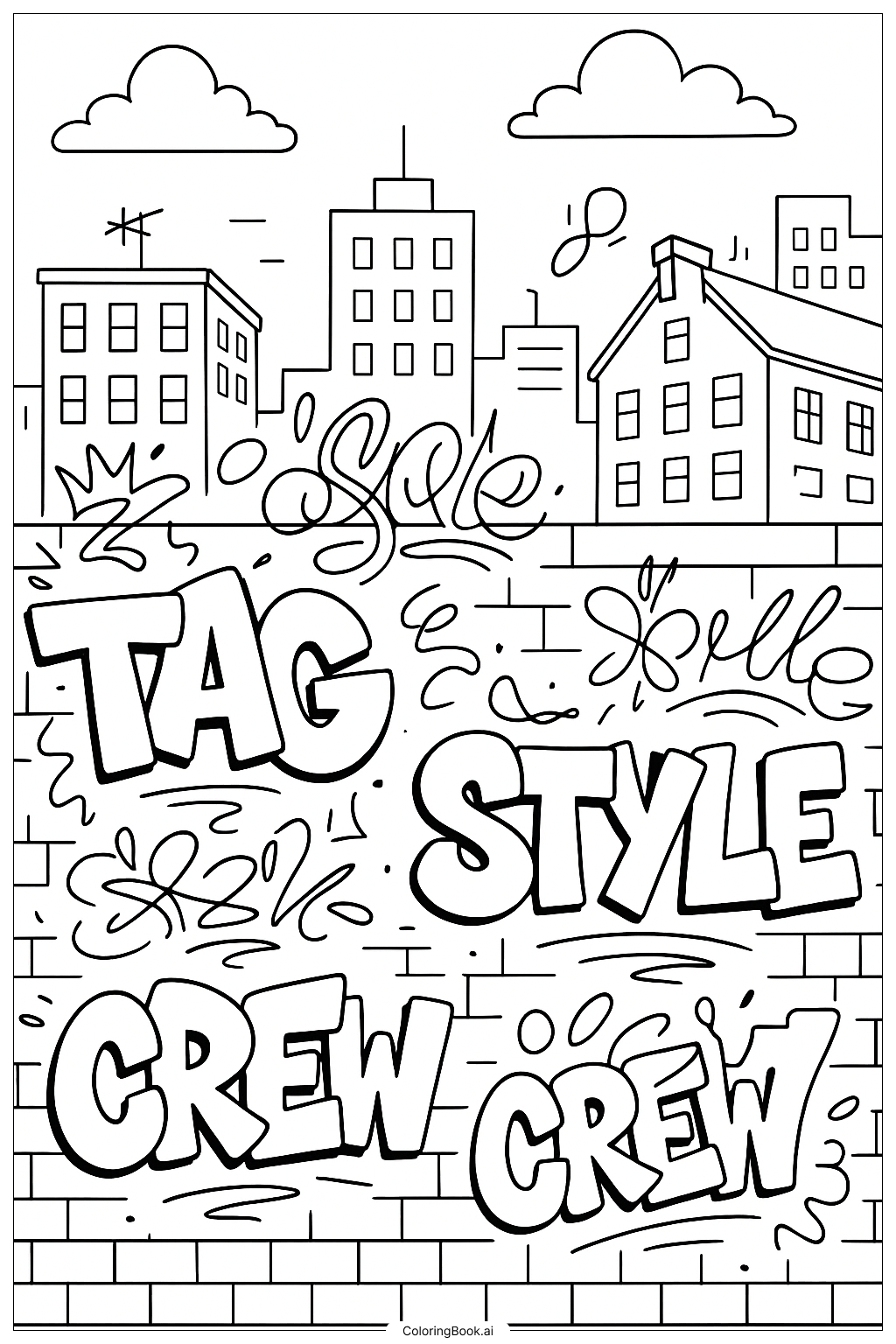
Coloring tips: How to color Graffiti Cityscape Full Of Tags coloring page well?
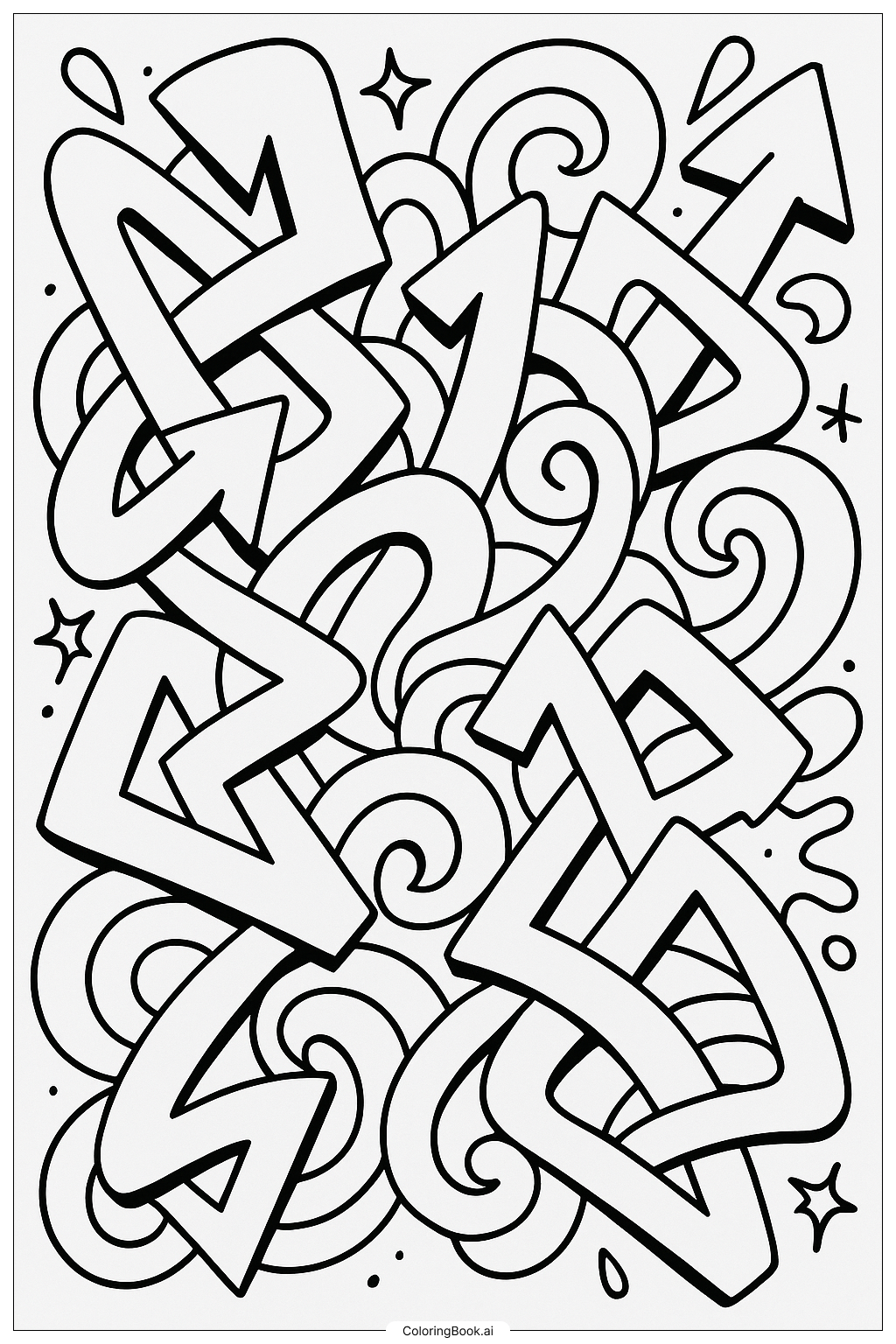
Start with the background buildings using cool colors like gray, blue, or purple to make them feel like real city walls. Then move to the graffiti tags and letters. Use bright, bold colors like red, orange, yellow, green, and electric blue to make the tags pop. Try to vary colors so that overlapping letters are easy to tell apart. Give each large piece its own color theme — for example, one in warm tones like red and orange, another in cool tones like blue and teal. Add highlights with a light color along the top edge of each letter to give a 3D effect. Use dark outlines carefully to keep things clean and bold. For the sky, try a gradient from deep blue to orange to create a dramatic sunset or nighttime city feel. Keep smaller background tags in lighter or muted tones so the main pieces stand out. Have fun mixing unexpected colors — real graffiti artists do it all the time!
Coloring challenges: Which parts are difficult to color and need attention for Graffiti Cityscape Full Of Tags coloring page?
• Overlapping Letters and Tags: One of the biggest challenges in this image is the dense layering of letters and tags. Many shapes overlap each other, making it hard to know where one letter ends and another begins. Take your time and trace each outline carefully before adding color. Using different colors for touching shapes will help separate them visually.
• Small Details and Tight Spaces: Between the large letter pieces, there are many tiny gaps, thin lines, and small decorative details. These tight spaces are difficult to fill neatly, especially with markers or thick crayons. Fine-tipped colored pencils or thin markers work best for these areas. Patience is key — try not to rush through the small sections.
• Creating a 3D Effect on Letters: Graffiti lettering often has a dimensional, three-dimensional look with highlights and shadows built in. Capturing this effect while coloring requires using at least two shades of the same color — one light and one dark. Place the lighter shade on the top or left edge of each letter and the darker shade on the bottom or right side to create depth.
• Maintaining Color Harmony Across the Scene: With so many tags and pieces filling the page, it can be easy to end up with a chaotic mix that feels visually overwhelming. Planning your color palette before you begin helps a lot. Try grouping nearby elements into warm or cool color families so the overall scene feels balanced even while staying energetic and bold.
• Background vs. Foreground Separation: Distinguishing between background buildings and foreground graffiti elements is tricky when everything is packed together. Use lighter, more muted tones for distant walls and save the brightest, most saturated colors for the main foreground tags to create a clear sense of depth.
Benefits of coloring books: Advantages of drawing Graffiti Cityscape Full Of Tags coloring page
Coloring this Graffiti Cityscape Full Of Tags page offers a wide range of creative and developmental benefits for kids and teens alike. Working through the complex layers of lettering and urban design sharpens fine motor skills and builds hand-eye coordination as colorists navigate tight spaces and intricate outlines. Choosing colors for each tag and piece encourages creative thinking and personal expression — there are no rules, just like in real street art. This kind of coloring also builds patience and focus, since the detailed composition requires careful attention to stay within lines and manage overlapping shapes. For older kids and teens, it introduces basic concepts of color theory, such as using complementary colors, creating contrast, and building depth through shading. The urban art theme connects coloring to real-world culture, sparking curiosity about graffiti history and street art as a form of communication and community identity. Completing a complex, detailed page like this also gives a strong sense of accomplishment and boosts confidence. Overall, this page is a fantastic creative outlet that blends art, culture, and skill-building in one fun activity.