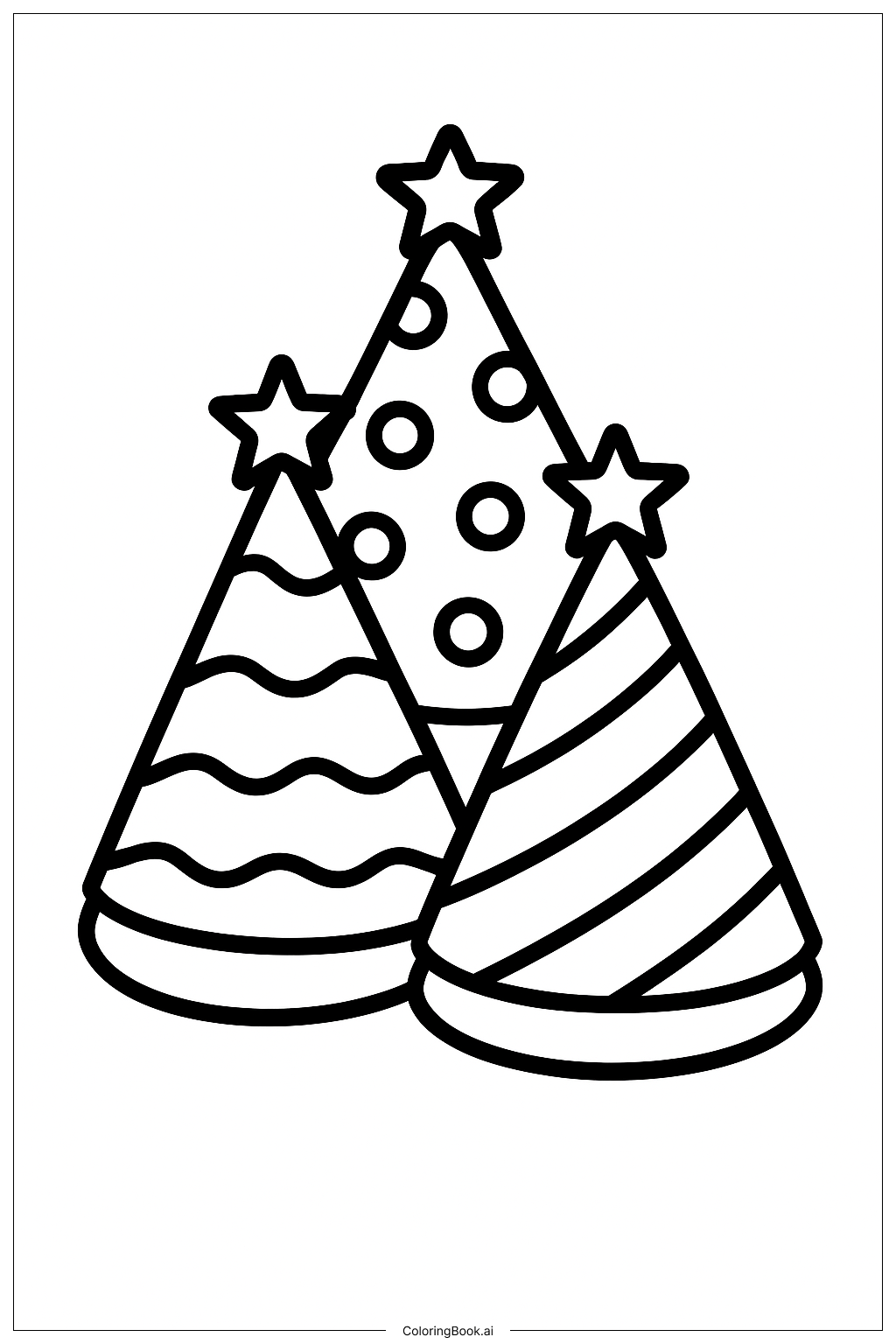
Coloring tips: How to color Graduation Party Hat Stack coloring page well?
Start with the graduation caps using traditional black or navy blue, then add gold or yellow tassels for an authentic academic look. Use bright, festive colors for the party hats - try purple, red, green, and blue to make each hat unique and celebratory. Color the ribbons in metallic shades like silver or gold to add elegance. For the decorative elements, use contrasting colors: bright yellow stars on blue backgrounds, colorful dots on lighter hats, and rainbow stripes for extra fun. The pom-poms can be colored in fluffy white or match the hat they're attached to. Consider using school colors if this is for a specific graduation celebration. Add shading with colored pencils around the edges to make the stack look three-dimensional and realistic.
Coloring challenges: Which parts are difficult to color and need attention for Graduation Party Hat Stack coloring page?
• Overlapping Layers: The stacked arrangement creates multiple overlapping sections where one hat sits atop or behind another. Children need to carefully identify boundaries between different hats and maintain consistent colors for each individual hat throughout all visible sections, which requires good spatial awareness and planning.
• Small Decorative Details: The page includes numerous tiny elements like stars, dots, tassels, and ribbon curls that require precision coloring. Younger children may find it challenging to stay within these small spaces, and the intricate patterns demand fine motor control and steady hand movements to avoid coloring outside the lines.
• Pattern Differentiation: With multiple hats featuring various patterns (stripes, dots, swirls, stars), children must decide on different color schemes for each pattern type while ensuring the overall composition remains visually balanced. This requires color planning skills and the ability to maintain pattern consistency across curved surfaces.
• Three-Dimensional Shading: To make the stack look realistic and dimensional, children should add darker shades where hats overlap and lighter tones on raised areas. Understanding where shadows fall and how to blend colors for depth perception presents a significant challenge for less experienced colorists.
• Ribbon Flow and Continuity: The streaming ribbons wind around and between hats, requiring careful tracking to maintain the same color along each ribbon's entire length as it weaves through the composition.
Benefits of coloring books: Advantages of drawing Graduation Party Hat Stack coloring page
This graduation-themed coloring page offers excellent fine motor skill development as children navigate the intricate details of party hats, tassels, and decorative elements. The various patterns and small spaces help improve hand-eye coordination and precision control. Children practice important decision-making skills by choosing appropriate color combinations and planning which colors work well together. The celebration theme provides emotional benefits by associating creativity with achievement and happy occasions, building positive associations with academic success. Working on the overlapping elements enhances spatial reasoning and problem-solving abilities as children figure out which hat is in front and which colors to use where. The detailed nature of this page encourages focus and concentration, helping children develop patience and attention span. Completing this complex design builds confidence and pride in their artistic abilities.