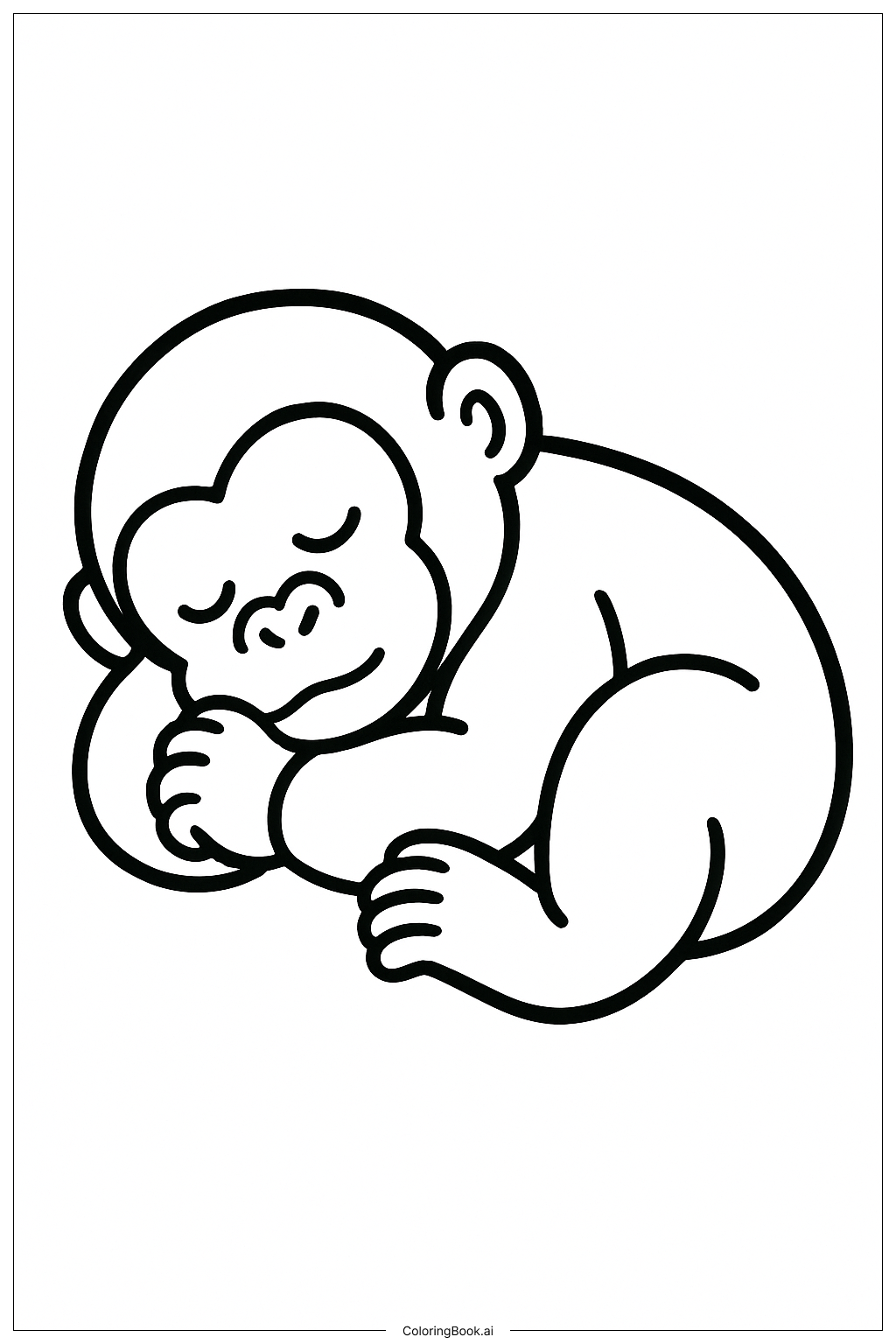
Coloring tips: How to color Sleeping Baby Gorilla coloring page well?
Start with the baby gorilla's fur. Use dark gray or dark brown for most of the body. Add lighter gray or tan tones on the belly and face to show softness. Leave the face area slightly lighter to highlight the peaceful sleeping expression. Use a warm pink or light peach for the ears and nose. For the leaves beneath and around the gorilla, use different shades of green — mix bright greens, olive greens, and dark greens to make the jungle feel alive. You can add yellow-green highlights on the leaf edges to show sunlight filtering through the trees. Use brown tones for any vines or branches. Try blending colors gently on the fur areas to give the gorilla a fluffy, realistic look. Keep the overall palette warm and natural to match the peaceful jungle mood. This image is great for practicing shading and color blending.
Coloring challenges: Which parts are difficult to color and need attention for Sleeping Baby Gorilla coloring page?
• Fur Texture Details: The baby gorilla's body is covered in short, layered fur. Recreating this texture with colored pencils or markers can be tricky. You need to use short, light strokes that follow the direction of the fur. Layering two or three shades — dark gray, medium gray, and a touch of brown — will help the fur look realistic and soft rather than flat.\n\n• Facial Expression: The gorilla's face is small and delicate, with tiny closed eyes and subtle features. Coloring such a small area requires a fine-tipped tool and a steady hand. It is easy to accidentally color outside the lines or lose the gentle, sleepy expression. Use very light pressure and soft colors to keep the face looking peaceful and sweet.\n\n• Leaf Variety and Depth: The tropical leaves in the background come in different shapes and sizes. Coloring each leaf with slightly different shades of green helps create depth and prevents the background from looking flat. Knowing when to go darker and when to go lighter on each leaf requires careful observation of the overall composition.\n\n• Contrast Between Gorilla and Background: Since both the gorilla's fur and the leaves use dark tones, keeping the two elements visually separate is a challenge. Using cooler greens for the leaves and warmer brown-grays for the fur helps define the boundary between the sleeping animal and its jungle bed.\n\n• Blending Soft Transitions: The belly and face of the baby gorilla are lighter than the rest of the body. Smoothly blending from dark fur to light belly without harsh lines takes practice, especially for younger colorists. Taking your time and using gradual, overlapping strokes is the key to a natural, soft result.
Benefits of coloring books: Advantages of drawing Sleeping Baby Gorilla coloring page
Coloring this sweet image of a sleeping baby gorilla brings many wonderful benefits for kids and families. First, it helps build focus and concentration. Staying inside the lines and choosing colors thoughtfully trains the mind to pay close attention to small details. Second, it develops fine motor skills. Using crayons, colored pencils, or markers to fill in the gorilla's fur and the surrounding leaves strengthens hand muscles and improves control, which is great preparation for writing. Third, it sparks creativity. Deciding which shades of green to use for the leaves or how to show the softness of the gorilla's fur encourages imaginative thinking and personal expression. Fourth, it is naturally calming. The peaceful scene of a sleeping baby animal creates a relaxing atmosphere, making it a perfect quiet-time activity that reduces stress and anxiety. Fifth, it builds a gentle connection to nature and wildlife. Children learn to appreciate gorillas and tropical environments in a fun, hands-on way. Sharing the coloring experience with a parent or friend also makes it a warm bonding activity. Overall, this page offers the perfect mix of fun, learning, and calm.