Coloring tips: How to color Gorilla Looking At Butterfly coloring page well?
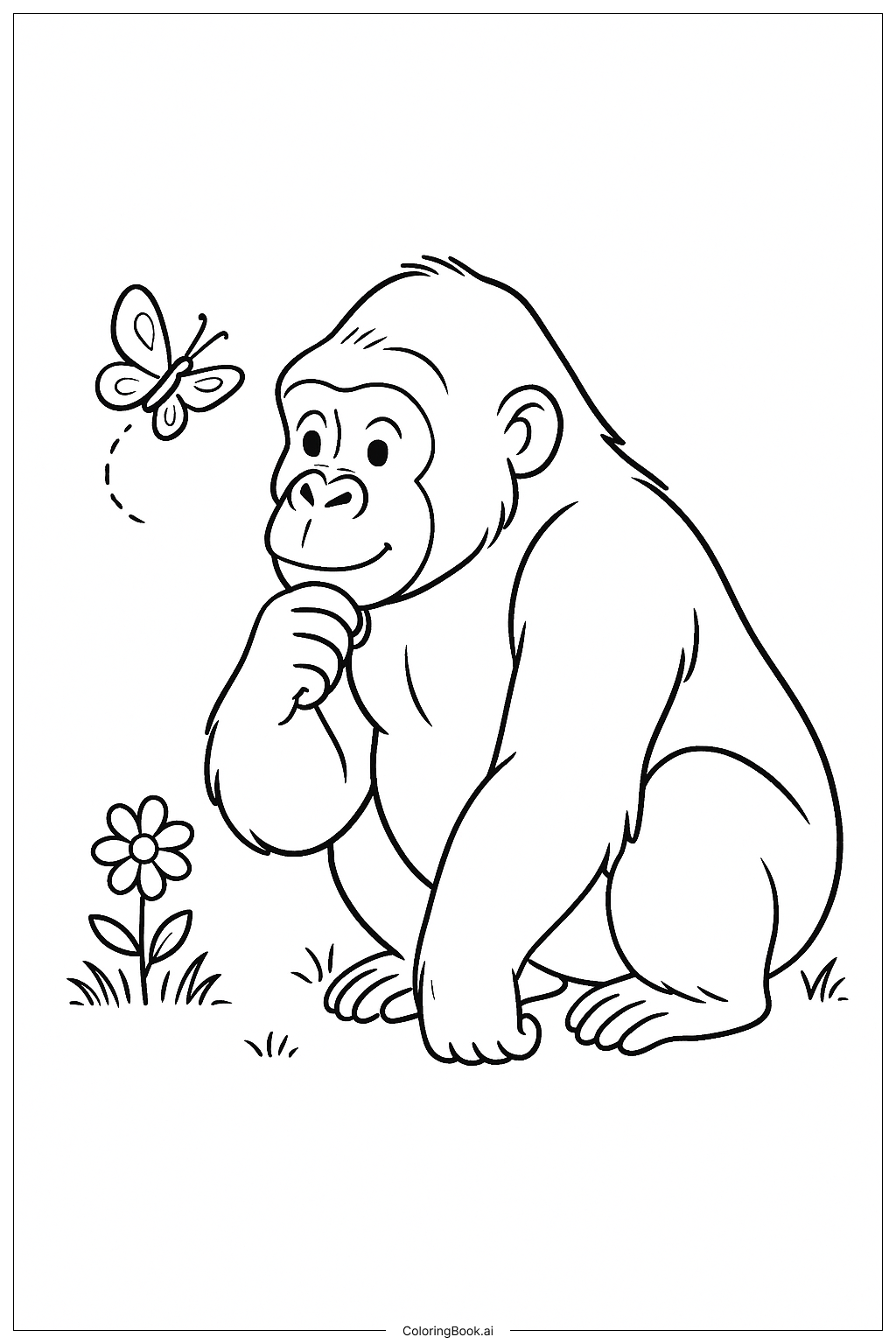
Start with the gorilla's fur using shades of dark brown, gray, and black. Use lighter tones on the chest and face to show depth. Leave some areas slightly lighter to create a soft, furry texture. For the butterfly, choose bright and cheerful colors like orange, yellow, blue, or purple. The wings look great with two or three colors blended together. Add small dots or patterns on the wings using a fine-tipped marker or colored pencil. Color the background leaves in different shades of green to make the scene feel alive. Use a light blue or pale yellow for any open sky patches. A warm golden or soft green ground will complete the cozy jungle feel. Take your time with the gorilla's face — gentle browns and soft shadows around the eyes will make it look friendly and real.
Coloring challenges: Which parts are difficult to color and need attention for Gorilla Looking At Butterfly coloring page?
• Gorilla Fur Texture: The gorilla's body is covered in thick, layered fur that requires careful shading to look realistic. Coloring each section with multiple tones of brown, gray, and black — while following the direction of fur growth — can be tricky, especially for younger colorists. Blending smoothly without making the fur look flat is the main challenge here.
• Facial Expression Details: The gorilla's face has subtle features like deep-set eyes, a broad nose, and a gently closed mouth. These small areas need precise coloring with fine-tipped tools. Getting the skin tone right around the face — which is darker and smoother than the fur — requires switching between tools and colors carefully.
• Butterfly Wing Patterns: The butterfly's wings contain delicate lines and repeating patterns that are small and closely spaced. Staying within these tiny sections without smudging or going outside the lines takes patience and a steady hand. Choosing colors that are bright but balanced so the butterfly stands out against the gorilla is also a visual challenge.
• Background Foliage Depth: The jungle leaves and plants in the background vary in size and overlap each other. Coloring them in a way that shows depth — with darker greens farther back and brighter greens in front — requires planning ahead. Without this layering effect, the background can look flat and uninteresting.
• Size and Color Contrast: Balancing the dark, heavy tones of the gorilla with the bright, light colors of the butterfly is a composition challenge. Too much dark color overall can make the butterfly disappear visually, while too much bright color can make the scene feel unbalanced.
Benefits of coloring books: Advantages of drawing Gorilla Looking At Butterfly coloring page
Coloring this image of a gorilla and butterfly offers a wonderful mix of fun and learning. It helps children develop fine motor skills as they carefully color inside detailed areas like the butterfly's wings and the gorilla's fur. Choosing colors and planning how to fill each section also builds creative thinking and decision-making skills. The image encourages children to observe nature and think about animals, sparking curiosity about wildlife and ecosystems. Seeing a powerful gorilla interact gently with a tiny butterfly teaches a beautiful lesson about kindness and peaceful coexistence. For older children and Adults, the detailed textures and shading opportunities provide a satisfying artistic challenge that builds patience and focus. Coloring is also a calming activity that helps reduce stress and anxiety, making it a healthy creative outlet for Boys and Girls of all ages. This scene can also inspire storytelling — children may imagine what the gorilla is thinking or where the butterfly came from, boosting language and imaginative skills. Overall, this coloring page combines artistic practice with emotional and educational growth in a truly enjoyable way.