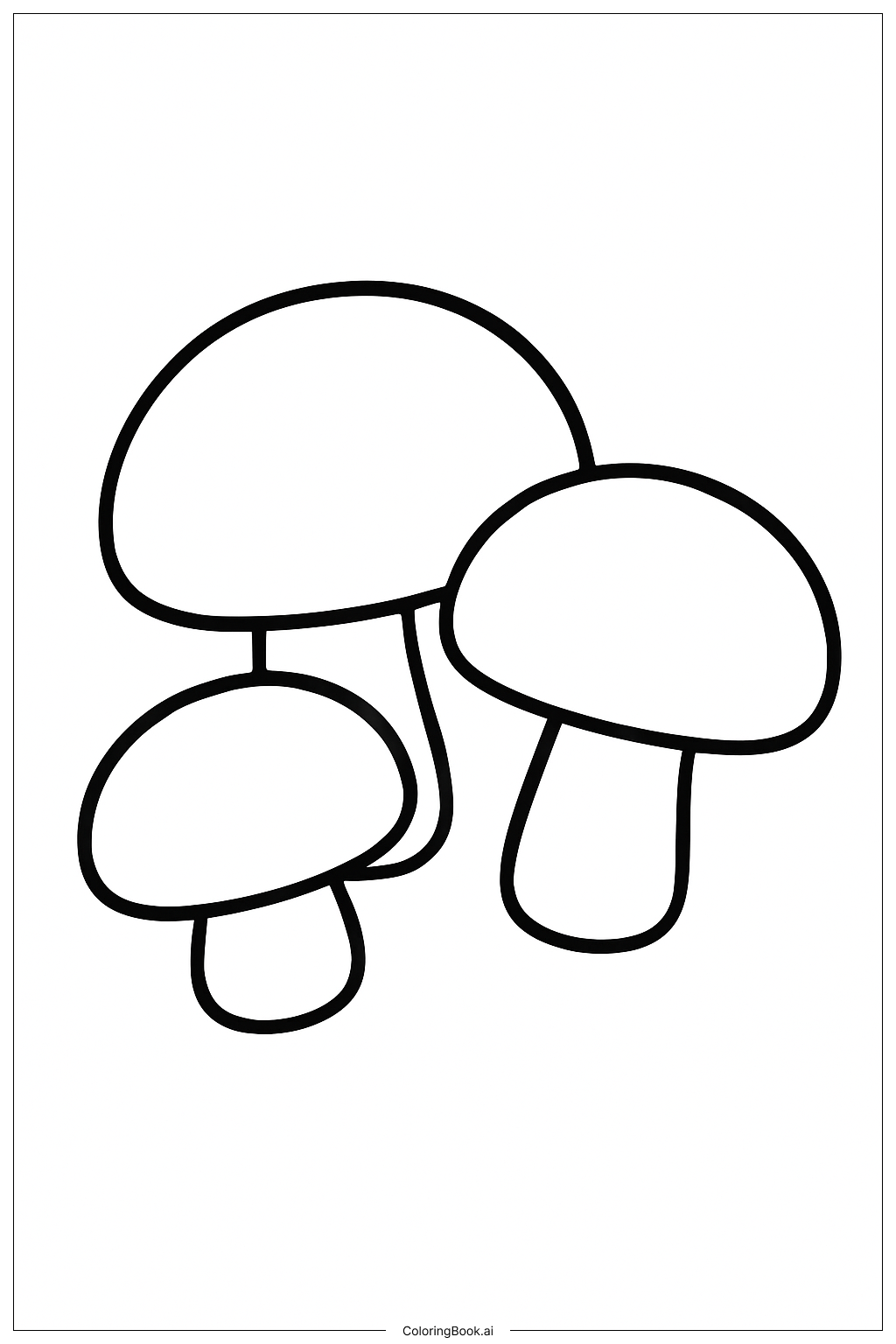
Coloring tips: How to color Three Mushrooms In The Garden coloring page well?
Start by choosing warm, earthy tones for the mushroom caps — classic reds, soft browns, or even playful purples and oranges all work beautifully. Use a lighter shade of the same color for the inner edges of the caps to create a natural curve. The stems look great in creamy white or pale tan. For the surrounding garden, go with several shades of green for the leaves and grass to add variety. Use bright, cheerful colors like yellow, pink, or violet for any small flowers in the background. Add tiny dots or spots on the mushroom caps using a darker shade of the cap color. Feel free to mix realistic tones or go fully imaginative — this scene is perfect for creative color choices.
Coloring challenges: Which parts are difficult to color and need attention for Three Mushrooms In The Garden coloring page?
• Mushroom Cap Curves: The rounded shape of each mushroom cap can be tricky to shade. Colorists need to apply lighter tones near the center and gradually darken toward the edges to create a convincing three-dimensional look. Without careful blending, the caps can appear flat and lifeless.
• Cap Spots and Patterns: Many mushrooms feature small dots or decorative patterns on their caps. Staying precise within these tiny shapes requires a fine-tipped tool. Younger colorists may find it challenging to keep colors inside these small details without smudging nearby areas.
• Overlapping Elements: The mushrooms are grouped closely together, and their stems and caps may overlap with leaves and grass in the background. Keeping each element visually distinct requires careful color selection and clean boundary work, especially where two similar-colored areas meet.
• Layered Background Foliage: The leaves, blades of grass, and small flowers behind the mushrooms form a layered scene. Using multiple shades of green without muddying them together takes patience and planning. Choosing the right contrast between foreground mushrooms and background plants is key to making the composition pop.
• Soil and Ground Texture: The ground area around the mushroom bases includes texture details like roots, pebbles, or dirt lines. Coloring this zone realistically requires mixing warm browns and tans while leaving lighter highlights to suggest uneven, natural ground — a subtle challenge that rewards careful attention.
Benefits of coloring books: Advantages of drawing Three Mushrooms In The Garden coloring page
Coloring this garden mushroom scene offers a wide range of benefits for kids and beginners alike. Working with the rounded shapes of the mushroom caps helps develop fine motor control and pencil grip. Choosing colors for each element — caps, stems, leaves, and flowers — encourages creative decision-making and builds confidence in personal expression.
The layered garden background teaches colorists how to think about foreground and background, which supports early spatial reasoning skills. Selecting multiple shades of green for the foliage introduces the concept of color variation and tonal depth in a simple, approachable way.
For younger children, the clear outlines and familiar garden theme make the page easy to approach without feeling overwhelmed. For older kids, the added details like spots, textures, and overlapping plants provide just enough challenge to stay engaged and develop patience.
Spending quiet time with a coloring page like this also promotes relaxation and focus. It encourages mindfulness by keeping attention anchored to a calm, creative task. Overall, this scene is a wonderful way to blend artistic skill-building with the simple joy of bringing a friendly garden to life.