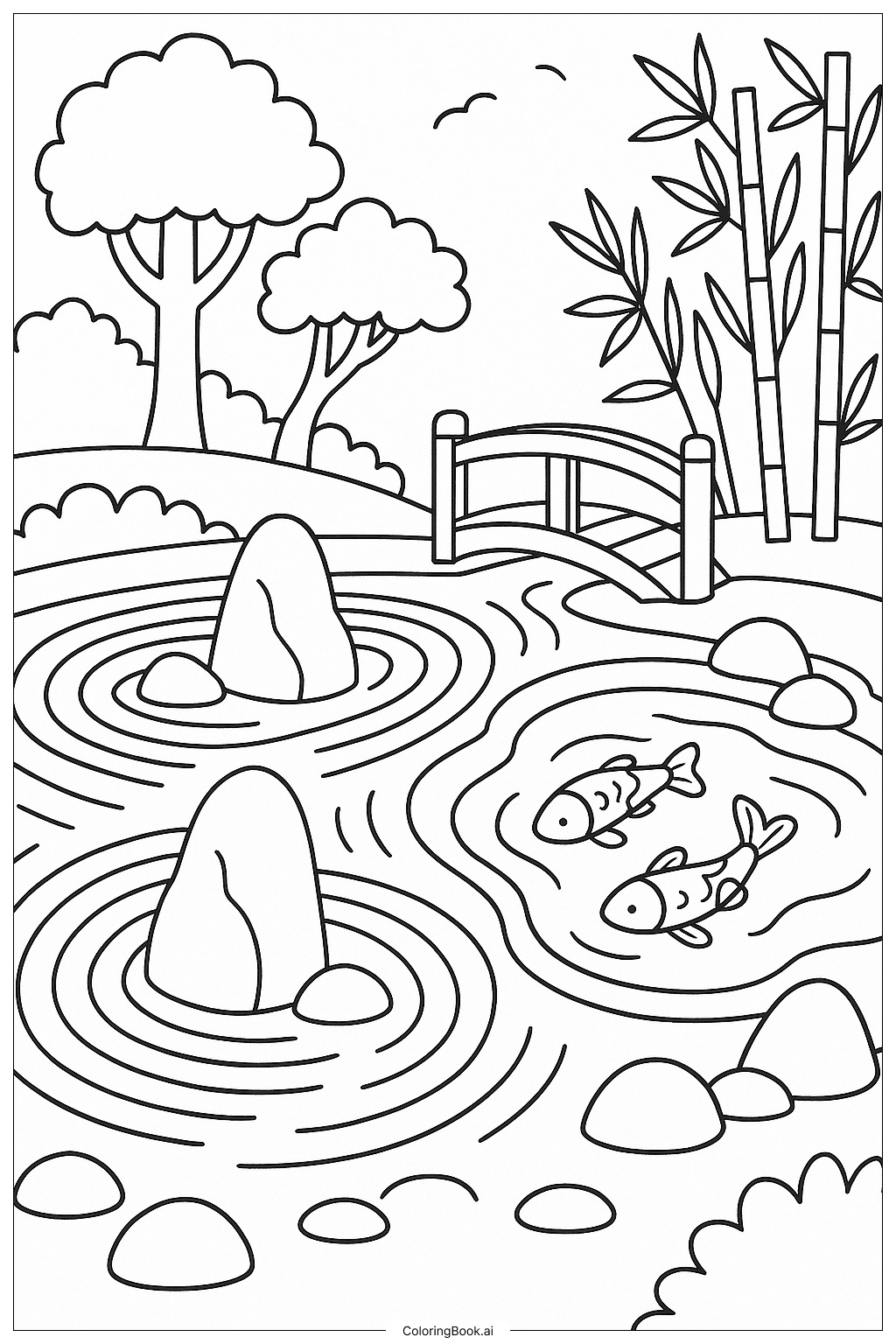
Coloring tips: How to color A Realistic And Lush Japanese Zen Garden coloring page well?
Start with soft earth tones for the gravel and stones using light grays and beiges. Color the bamboo in various shades of green, from lime to forest green, adding yellow highlights for a sunny effect. The stone lantern and Buddha statue work beautifully in gray tones with hints of moss green for aged appearance. Use rich greens for the surrounding plants and grasses, varying the shades to create depth. The wooden bridge can be colored in warm browns or natural wood tones. Consider adding subtle shadows with darker colors to enhance dimension. For a peaceful atmosphere, use cool colors like blues and purples in the background foliage. You can also add small touches of color with imaginary flowers in pink, purple, or white to bring life to the garden.
Coloring challenges: Which parts are difficult to color and need attention for A Realistic And Lush Japanese Zen Garden coloring page?
• Intricate Bamboo Details: The bamboo stalks feature numerous segments and overlapping leaves that require careful attention to keep colors within the lines. Each segment needs individual coloring, and the layered leaves demand patience to create realistic depth and variation in green tones.
• Gravel Pattern Precision: The raked gravel shows flowing curved lines and patterns around stones that require steady hand control. Maintaining consistent color while following the directional flow of the rake marks can be challenging, especially when working around the individual pebbles and rocks scattered throughout.
• Layered Foliage Depth: Multiple layers of plants, grasses, and leaves overlap throughout the scene, making it difficult to distinguish where one element ends and another begins. Creating realistic depth requires careful color selection and shading techniques to make foreground elements stand out from background vegetation.
• Small Detailed Elements: The Buddha statue, stone lantern, and individual stones contain fine details and texture marks that require precision coloring. These small areas demand careful brush or pencil control to avoid coloring outside the lines while still achieving satisfying coverage and detail work.
Benefits of coloring books: Advantages of drawing A Realistic And Lush Japanese Zen Garden coloring page
Coloring this Japanese Zen garden offers wonderful relaxation and mindfulness benefits. The repetitive patterns in the raked gravel provide a calming, meditative coloring experience similar to the peaceful purpose of real Zen gardens. Children develop fine motor skills and hand-eye coordination while working on the intricate bamboo segments and small details. The scene teaches patience and focus as they carefully color within the detailed lines. Learning about Japanese culture and garden design principles happens naturally through this artistic activity. The variety of textures, from smooth stones to delicate leaves, encourages experimentation with different coloring techniques and blending methods. Completing this complex image builds confidence and provides a strong sense of accomplishment. The nature theme helps reduce stress and promotes calmness, making it perfect for quiet time activities.