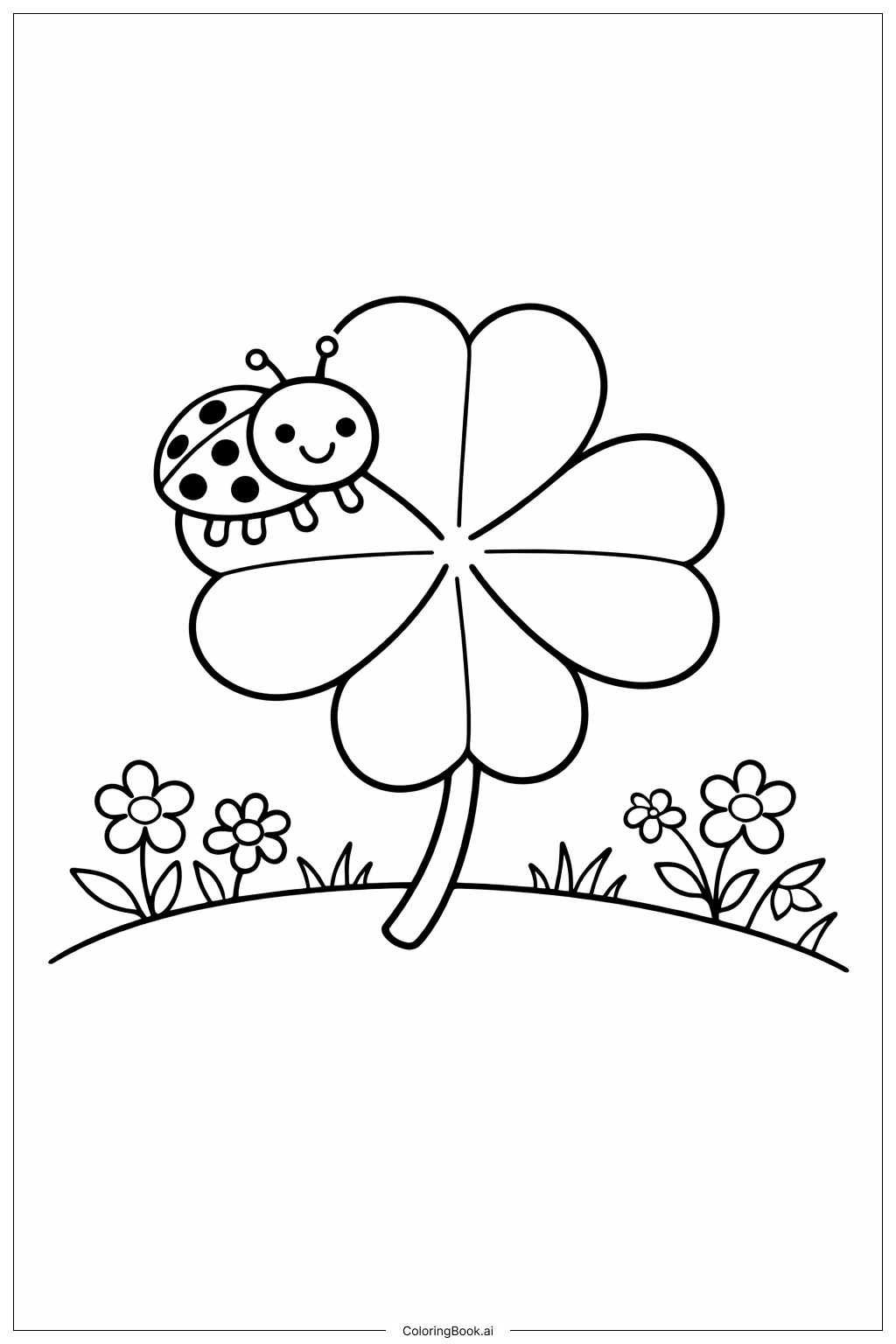
Coloring tips: How to color Four Leaf Clover With Ladybug coloring page well?
Use bright and cheerful colors to bring this picture to life. For the four-leaf clover, try a fresh green color with some variation on each leaf to make it look natural. The ladybug can be colored red with black spots, and its face can be left white or light pink for a cute look. The small flowers can be colored in different shades like yellow, pink, or purple for variety. Make the grass green, and feel free to add small details like blue sky or sunshine around the scene to make it more lively.
Coloring challenges: Which parts are difficult to color and need attention for Four Leaf Clover With Ladybug coloring page?
1. Staying inside the lines: The small parts of the ladybug, like its legs and antennae, can be tricky to color without going outside the lines. 2. Coloring the heart-shaped leaves: Each leaf has a curved shape that might be challenging for younger children to color evenly. 3. Small flowers and grass: The tiny petals and blades of grass require careful coloring attention to avoid smudges. 4. Maintaining color consistency: Keeping the green shades of the clover balanced while adding shading or highlights can be difficult. 5. Coloring the ladybug's spots evenly: Making sure the spots are filled neatly without overlapping the red body can be a challenge.
Benefits of coloring books: Advantages of drawing Four Leaf Clover With Ladybug coloring page
Coloring this picture helps improve hand-eye coordination and fine motor skills by focusing on small details like the ladybug’s spots and petals of the flowers. It encourages creativity with choices of colors for the clover, flowers, and surroundings. The simple design makes it fun and not frustrating, building confidence in young artists. Coloring nature scenes can also be calming and teach kids to appreciate the little things in the environment, like lucky four-leaf clovers and friendly insects.