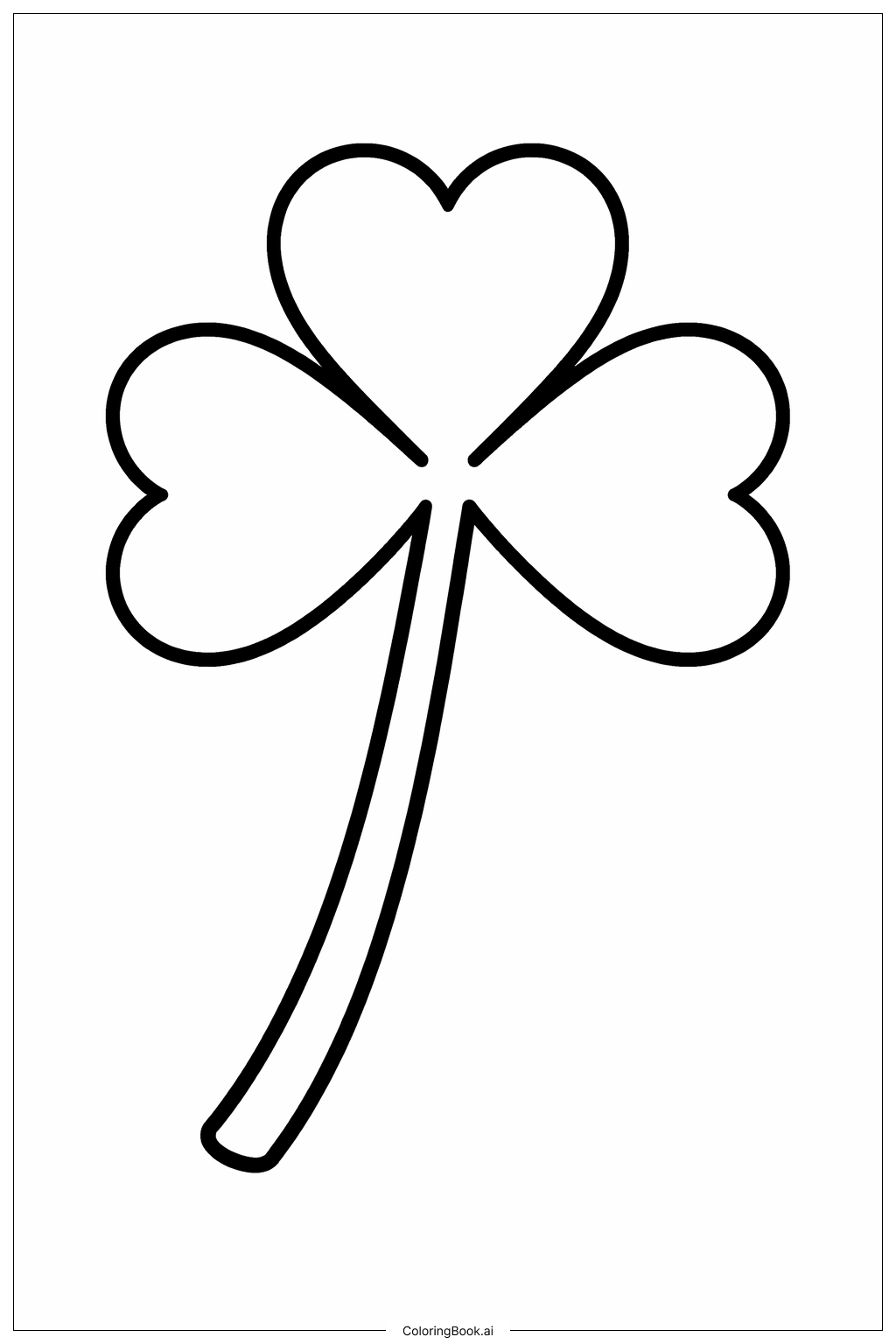
Coloring tips: How to color Four Leaf Clover Large Stem coloring page well?
When coloring this Four Leaf Clover Large Stem image, try using different shades of green for the leaves to create depth and interest. You can start with light green on one side of each leaf and gradually add darker green on the opposite side to make the leaves look three-dimensional. The stem can be colored in a fresh, mid-green shade to complement the leaves. For a creative touch, you might add gentle yellow or light blue highlights to the leaves to make them glow. Using crayons or colored pencils with smooth strokes will work well. Younger artists can keep their colors solid and bright, while older kids can experiment with shading and blending to make the clover look more realistic.
Coloring challenges: Which parts are difficult to color and need attention for Four Leaf Clover Large Stem coloring page?
• Leaf Edges: The smooth but rounded edges of the four leaf clover require careful coloring to stay within the lines and maintain the shape's gentle curves. This can be tricky for younger children who are still developing fine motor skills. • Symmetry: Since the four leaves are symmetrically arranged, maintaining consistent coloring on each leaf helps the image look balanced, which might be challenging to coordinate without making some leaves darker or lighter than others. • Stem Shape: The large, curved stem is a long, narrow shape that needs steady hand control to color evenly without coloring outside the lines. • Layering Colors: Adding shading and light effects on the leaves to create depth will require blending skills and an understanding of light source, which can be difficult for beginners. • Small Details: The point where the leaves connect at the center has small spaces which require careful attention to avoid overlapping colors and to keep each leaf distinct.
Benefits of coloring books: Advantages of drawing Four Leaf Clover Large Stem coloring page
Coloring this Four Leaf Clover Large Stem image helps children improve their fine motor skills as they practice controlling their coloring tools within the curved shapes. It encourages attention to detail and symmetry, fostering concentration and patience. Experimenting with different shades of green and blending techniques promotes creativity and understanding of color theory. Completing the image gives a rewarding sense of accomplishment, inspiring confidence. Additionally, the clover symbolizes luck and positivity, making the coloring experience uplifting. This image is suitable for a wide age range, allowing both younger and older children to improve their skills at their own pace while enjoying a calming and cheerful activity.